Asphalt paving company also offering concrete work, excavating, and snow removal services.
Contact Info
-
130 Co Rd 70
Stillwater, NY 12170 - Call: 518-935-3068
- Text: 518-935-3068
- Mon - Sun: 7am - 7pm
Contact Info
Hear From Our Clients
You’re not looking for a sales pitch. You need to know what happens when you call, what the work involves, and whether your driveway or parking lot will actually hold up through another brutal winter.
Here’s what that looks like. You call and talk directly to the owner—not a salesperson reading from a script. Someone who’s been doing this for over 25 years shows up to assess your property, looks at drainage issues, checks the base, and tells you exactly what needs to happen. No vague “we’ll figure it out later” answers.
The estimate breaks down materials, labor, and timeline. If your base is shot, you’ll know before work starts—not after the crew shows up. If you only need resurfacing instead of a full tearout, that’s what you’ll hear. The goal is getting your pavement right, not maximizing the invoice.
Once work begins, the same owner who gave you the estimate manages the project. You’re not handed off to someone new. Questions get answered the same day. Weather delays? You’ll know immediately, along with the new schedule. When the job’s done, you get a walkthrough explaining what was installed and how to maintain it.
That’s the difference between working with someone who’s accountable and someone who disappears after cashing your check.
We’ve been handling paving, asphalt, excavation, and foundation work across Fox Hill and the surrounding region for more than two decades. Owner-operated from day one, which means every project gets the same level of attention whether it’s a residential driveway or a commercial parking lot.
We run year-round. When temperatures drop and paving season ends, our focus shifts to foundations, excavation, and land clearing. That means you’re working with a team that’s available when you need us—not just when the weather’s perfect.
Fox Hill properties face specific challenges. The soil composition here, combined with freeze-thaw cycles and heavy precipitation, means your pavement needs proper base preparation and drainage solutions. That’s not something you learn from a YouTube video. It comes from decades of troubleshooting local conditions and knowing which shortcuts lead to callbacks six months later.
You won’t find gimmicks here. No pressure tactics, no bait-and-switch pricing, no disappearing after the deposit clears. Just straightforward communication, competitive rates, and work that’s built to last.
First, the owner comes out to evaluate your property. This isn’t a five-minute glance from the curb. We’re looking at drainage patterns, checking for base failures, measuring the area, and discussing what you actually need versus what you’ve been told by other contractors.
You’ll get an honest assessment. If your asphalt has a few cracks but the base is solid, resurfacing might be the smart move. If water’s pooling because the grade is wrong, that gets addressed before new asphalt goes down. The estimate covers everything—removal of old material if needed, base repair or installation, asphalt thickness, compaction, and cleanup.
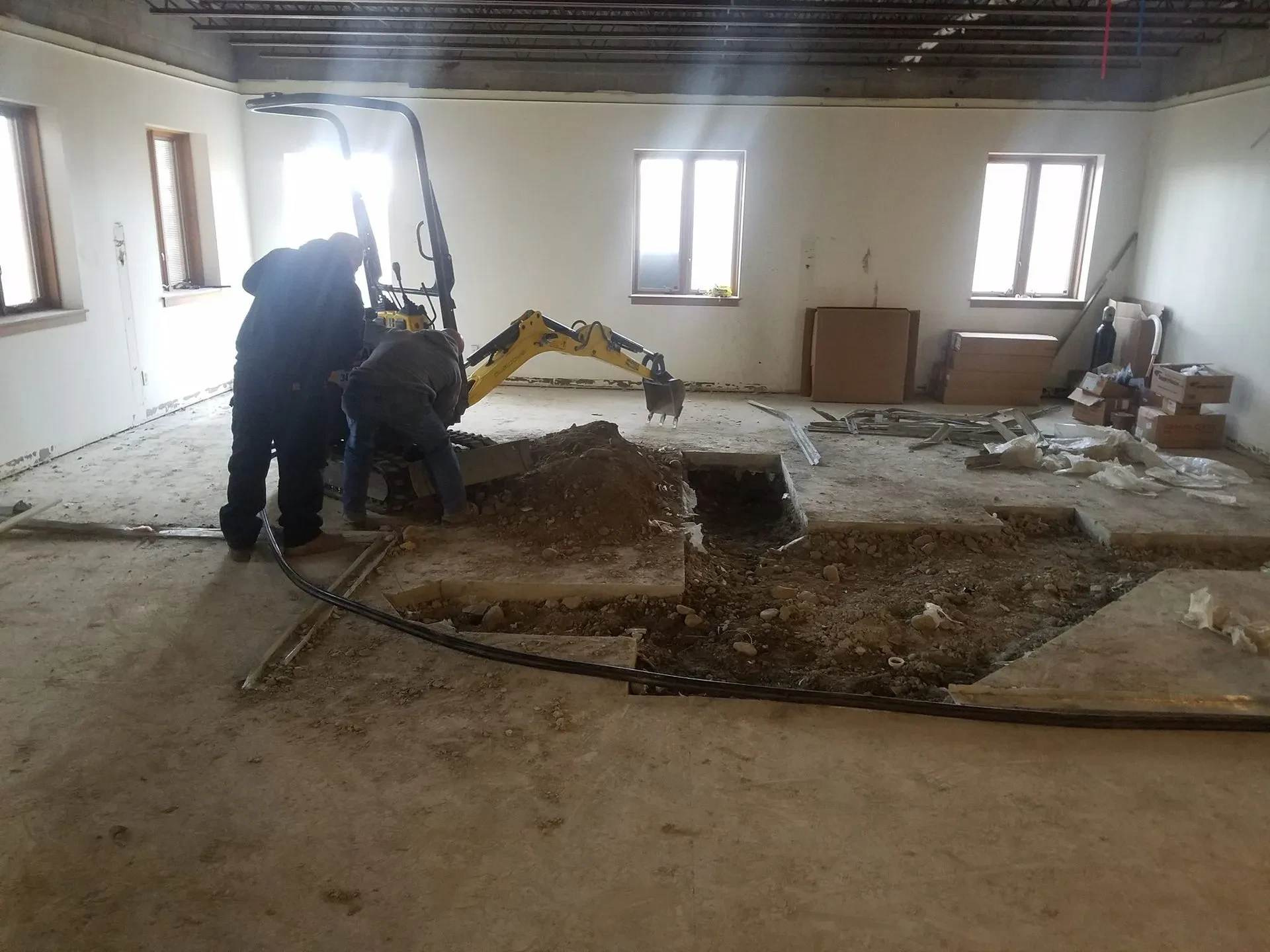
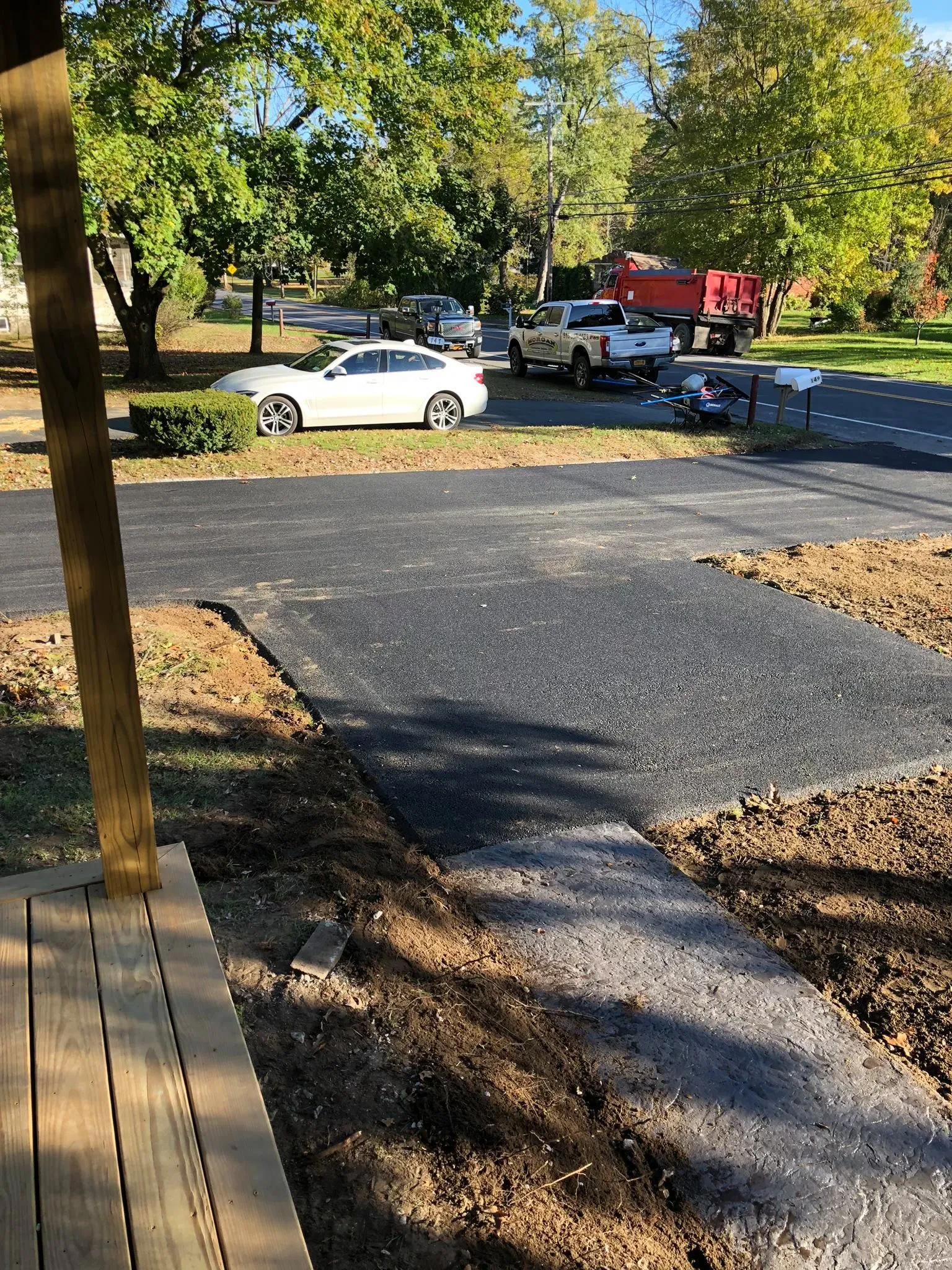
Once you approve the scope and schedule, our crew shows up on time with the right equipment. Site prep happens first: removing old pavement, grading the base, ensuring proper drainage slope, and compacting the foundation. This step determines whether your pavement lasts five years or twenty-five.
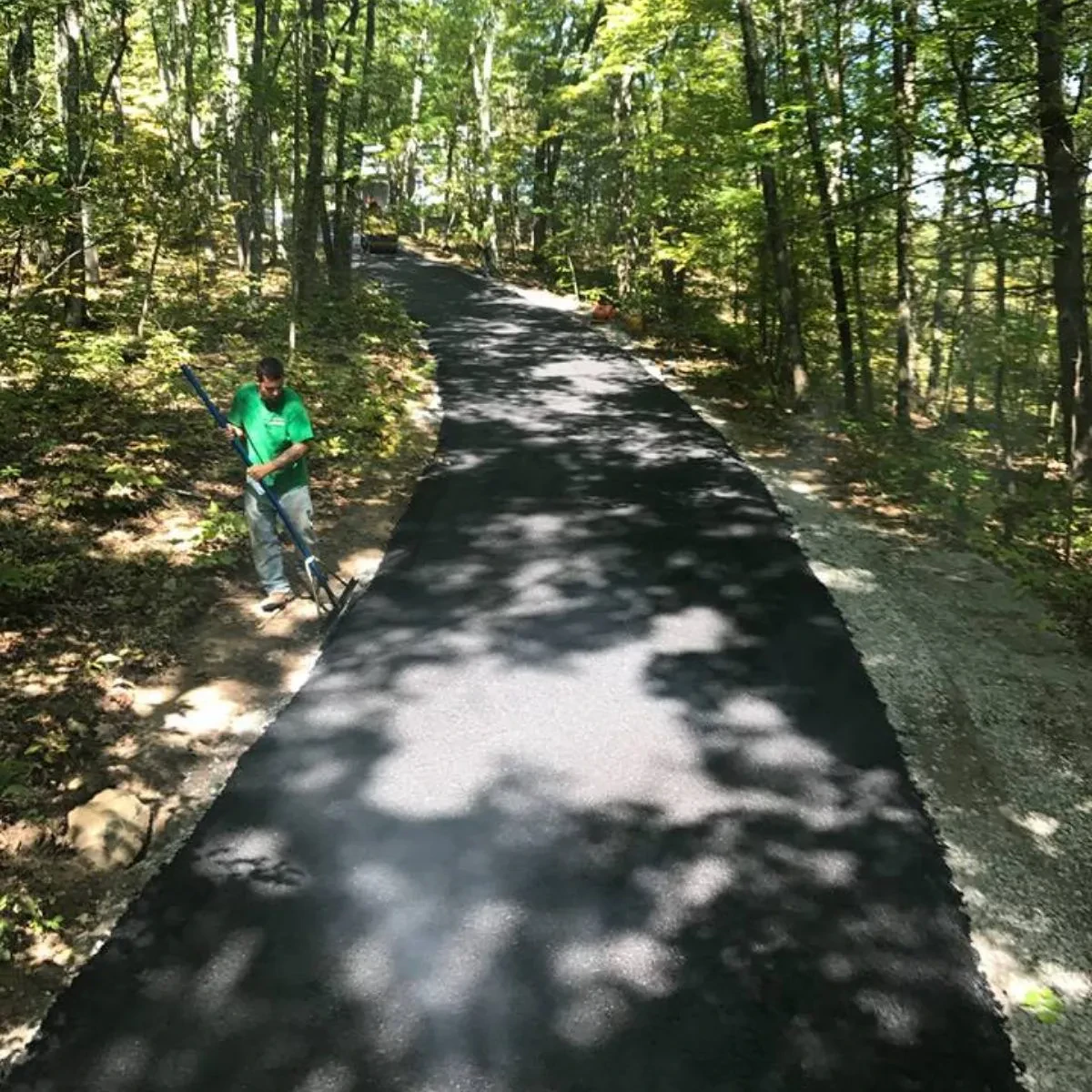
Next comes the asphalt installation. Hot mix asphalt gets delivered, spread evenly to the specified thickness, and compacted while it’s still workable. Timing matters here—asphalt needs to be above 50°F for proper compaction, which is why we watch the forecast and adjust schedules accordingly.
Final grading, edge work, and cleanup follow. You get a walkthrough explaining cure times (typically 24-48 hours before heavy use) and maintenance recommendations. Sealcoating every 2-3 years protects your investment from weather damage and extends pavement life significantly.
The owner stays involved through completion. Questions don’t get routed through three people before someone calls you back. You’re working with the person who’s accountable for the results.
Ready to get started?
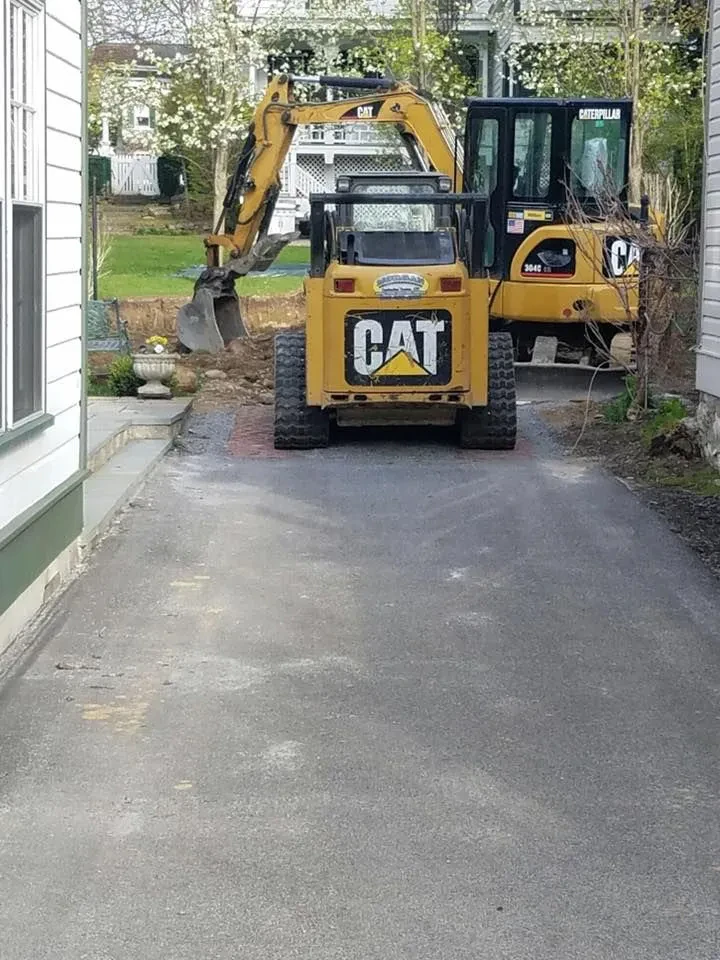
Every paving project starts with site evaluation and preparation. That means assessing drainage, checking the existing base condition, and identifying any underlying issues that’ll cause problems later. For Fox Hill properties specifically, this often involves addressing water management—because standing water is the fastest way to destroy even the best asphalt installation.
You’re getting proper base preparation, which many contractors skip to save time. The base layer needs adequate depth, proper material (crushed stone or gravel), and thorough compaction. Skimp here and you’ll have settling, cracking, and premature failure regardless of asphalt quality.
Asphalt installation includes the right thickness for your application. Residential driveways typically need 2-3 inches over a solid base. Commercial parking lots handling heavier vehicles require 3-4 inches minimum. The mix gets delivered hot, spread uniformly, and compacted immediately for maximum density.
Grading and slope work ensures water flows away from buildings and doesn’t pool on the surface. Fox Hill’s climate means freeze-thaw cycles will exploit any drainage weakness. Proper slope (typically 1-2% grade) prevents water infiltration that leads to base erosion and potholes.
Edge work and transitions get finished cleanly. Where your new pavement meets existing concrete, buildings, or landscaping, the edges are cut straight and finished properly. This isn’t just aesthetic—poorly finished edges crack and crumble quickly.
You’ll receive maintenance guidance specific to your installation. When to apply the first sealcoat (usually 6-12 months after installation), how to handle minor cracks before they become major problems, and what to watch for as the pavement ages.
For commercial projects, line striping, ADA-compliant markings, and signage coordination can be included. The goal is delivering a complete, functional surface—not just laying asphalt and leaving you to figure out the rest.
Driveway paving costs in Fox Hill typically run $7 to $15 per square foot installed, depending on site conditions, base preparation needs, and asphalt thickness. A standard two-car driveway (roughly 600 square feet) usually falls between $4,200 and $9,000 for complete installation.
Here’s what affects that price. If your existing driveway needs removal, that adds $1-3 per square foot for demolition and disposal. Base repair or installation is another variable—if the foundation is solid, you save money. If it needs rebuilding because of settling or poor drainage, that increases the total.
Asphalt thickness matters too. Residential driveways handling normal vehicle traffic need 2-3 inches over a proper base. If you’re parking heavier vehicles or have steep grades, 3-4 inches provides better longevity. Thicker asphalt costs more upfront but reduces maintenance expenses over the pavement’s lifespan.
Fox Hill’s soil and drainage characteristics sometimes require additional site work. Properties with high water tables or poor natural drainage need proper grading and potentially drainage solutions before paving. Addressing these issues during installation prevents costly repairs later.
The most accurate way to know your cost is getting a site evaluation. Anyone quoting prices over the phone without seeing your property is guessing—and those guesses rarely match the final bill.
This depends on three factors: the extent of surface damage, the condition of the base layer, and the pavement’s age. Surface cracks and minor potholes can usually be repaired if the base is still solid and the asphalt is less than 15-20 years old.
Here’s how to evaluate it. If you have isolated cracks less than a quarter-inch wide and no base settlement, crack filling and sealcoating can extend the pavement’s life for several more years. This costs a fraction of replacement and buys you time.
If you’re seeing alligator cracking (interconnected cracks forming a pattern), widespread potholes, or areas where the pavement has sunken, the base has likely failed. Patching the surface without fixing the foundation just delays the inevitable. You’ll keep throwing money at repairs that don’t last.
Pavement age is the other consideration. Asphalt typically lasts 15-30 years depending on installation quality, climate, and maintenance. If your driveway is approaching 20 years old with moderate damage throughout, replacement makes more financial sense than ongoing repairs.
Water damage accelerates deterioration. If you see standing water, drainage issues, or water seeping up through cracks, the base is compromised. This situation requires removal and proper reconstruction with corrected drainage.
An honest contractor will tell you when repairs are wasting your money. If the recommendation is replacement, ask why and what specific conditions justify that cost. You should understand whether it’s the surface, the base, drainage problems, or a combination.
Late spring through early fall offers the best conditions for asphalt paving in Fox Hill. Specifically, you want consistent temperatures above 50°F during installation and for at least 24-48 hours afterward while the asphalt cures.
Here’s why temperature matters. Asphalt is delivered hot (around 275-300°F) and needs time to be spread and compacted before it cools. When ambient temperatures drop below 50°F, the asphalt cools too quickly for proper compaction. This leads to weak spots, premature cracking, and reduced pavement life.
Summer (June through August) provides ideal weather but comes with peak-season pricing and longer wait times. Contractors are booked solid, and you’ll pay a premium—often 15-25% more than shoulder season rates.
Spring and fall offer a sweet spot. Temperatures are usually adequate for quality installation, contractors have more availability, and pricing is more competitive. The risk is weather unpredictability. A sudden cold snap or extended rainy period can delay your project.
Winter paving is generally not recommended except for emergency repairs. Cold-mix asphalt can be used for temporary fixes, but it’s not suitable for new installations or major resurfacing. If you need work done in winter, plan for a temporary repair followed by proper installation once temperatures improve.
Fox Hill’s climate means you’re also planning around freeze-thaw cycles. Getting paving done before winter hits gives the asphalt time to cure properly before being subjected to harsh conditions. Spring installations after the last frost also work well, assuming the ground has dried out from snowmelt.
Properly installed asphalt in Fox Hill typically lasts 15-30 years, with the wide range depending on installation quality, maintenance, and usage. Fox Hill’s freeze-thaw cycles, precipitation, and temperature extremes are tough on pavement—which makes proper installation and ongoing maintenance critical.
The base layer determines longevity more than anything else. Asphalt installed over a properly prepared, well-compacted base with correct drainage will outlast thicker asphalt over a weak foundation every time. If water infiltrates the base through cracks or poor drainage, freeze-thaw cycles destroy the foundation from underneath. You’ll see settling, cracking, and potholes within a few years regardless of surface quality.
Maintenance significantly extends pavement life. Sealcoating every 2-3 years protects against UV damage, water penetration, and oxidation. Addressing small cracks promptly prevents them from expanding into major problems. Properties that receive regular maintenance often see 25-30 year lifespans. Neglected pavement rarely makes it past 15 years.
Usage affects durability too. Residential driveways with normal vehicle traffic experience less wear than commercial parking lots with constant heavy vehicle use. If you’re parking commercial trucks, RVs, or heavy equipment, you need thicker asphalt (3-4 inches minimum) to handle the load.
Climate-specific factors matter here. Fox Hill experiences temperature swings, heavy rain, snow, and freeze-thaw cycles that expand any weakness in the pavement. Asphalt needs to be flexible enough to handle expansion and contraction without cracking. The mix design should account for local conditions—something we understand from years of working in the area.
If someone guarantees 40-50 year lifespan for asphalt in this climate, they’re either misinformed or dishonest. Concrete might last that long, but asphalt doesn’t—and anyone with experience knows it.
Permit requirements for driveway paving in Fox Hill depend on the scope of work and local regulations. Generally, if you’re replacing an existing driveway with the same footprint and materials, permits may not be required. Expanding the driveway, changing drainage patterns, or altering the connection to the street typically requires permits.
Here’s what usually triggers permit requirements. Any work that affects stormwater drainage or runoff often needs approval. If you’re expanding your paved area, municipalities want to ensure you’re not creating drainage problems for neighboring properties. Changes to the curb cut or street connection definitely require permits and possibly DOT approval depending on the road classification.
New construction or significant alterations to existing driveways typically need building permits. This includes situations where you’re paving a previously unpaved area, significantly expanding the size, or making changes that affect property grading.
The permit process isn’t something to skip. Building without proper permits can result in fines, having to remove completed work, or complications when you sell your property. Title companies and buyers’ attorneys often check for permit compliance, and unpermitted work can delay or derail a sale.
We handle permit applications as part of our service. We know local requirements, have relationships with building departments, and can navigate the process efficiently. When getting estimates, ask explicitly whether permits are needed and who’s responsible for obtaining them. That cost and responsibility should be clear in your contract.
If you’re unsure about your specific situation, contact Fox Hill’s building department before starting work. They can tell you definitively whether your project requires permits and what the process involves. A five-minute phone call can save you significant headaches later.
New asphalt requires specific maintenance to maximize its lifespan in Fox Hill’s harsh climate. The first year is critical for establishing proper care habits that’ll protect your investment for decades.
Wait 6-12 months before applying the first sealcoat. Fresh asphalt needs time to cure fully before sealing. Sealcoating too early traps volatile oils that need to evaporate, which can cause premature deterioration. After that initial waiting period, plan to sealcoat every 2-3 years. This protects against UV damage, water infiltration, and oxidation that causes asphalt to become brittle and crack.
Address cracks immediately when they appear. Small cracks (less than quarter-inch wide) can be filled with crack sealant to prevent water infiltration. Once water gets into cracks, Fox Hill’s freeze-thaw cycles expand those cracks rapidly. What starts as a hairline crack in fall can become a major problem by spring if water freezes and expands repeatedly.
Keep the surface clean. Oil, gasoline, and other petroleum products break down asphalt binder. Clean up spills promptly with detergent and water. Regular sweeping removes debris that can trap moisture against the surface.
Ensure proper drainage continues working. Check that water flows off the pavement and doesn’t pool anywhere. Standing water accelerates deterioration and creates ice hazards in winter. If you notice new pooling areas, address drainage issues before they damage the base layer.
Avoid heavy loads during extreme heat. Asphalt softens in high temperatures. Parking heavy vehicles or equipment in the same spot during summer heat can create depressions. Distribute weight when possible, or use plywood under heavy loads to spread the weight.
Winter maintenance matters too. Use calcium-based ice melt products instead of rock salt when possible. Rock salt can damage asphalt and concrete. Snow removal should be done carefully—metal plow blades set too low can gouge the surface. Mark edges clearly so snow removal doesn’t damage pavement edges.
These maintenance steps aren’t complicated, but they make the difference between pavement that lasts 15 years and pavement that’s still solid after 25-30 years.
Other Services we provide in Fox Hill