Asphalt paving company also offering concrete work, excavating, and snow removal services.
Contact Info
-
130 Co Rd 70
Stillwater, NY 12170 - Call: 518-935-3068
- Text: 518-935-3068
- Mon - Sun: 7am - 7pm
Contact Info
Hear From Our Clients
You need asphalt that holds up when temperatures swing from summer heat to below-freezing winters. Proper installation when conditions are right. Not rushed jobs that crack by spring.
Most paving failures happen because someone cut corners on the base, skipped proper drainage, or laid asphalt when it was too cold to compact correctly. Water pools. Cracks spread. You’re replacing the surface years before you should have to.
Here’s what proper installation looks like: graded site for drainage, stable base installed first, asphalt laid and compacted while hot enough to bond correctly. Timing matters as much as materials. Install too late in fall when temperatures drop below 50°F, and the asphalt won’t cure right no matter who’s doing the work.
We’ve been handling asphalt paving, excavation, and foundation work across Waterford and the Capital District for over 25 years. You’re not dealing with a call center or a crew that shows up once and disappears. The owner manages every project from the first conversation through final walkthrough.
That matters when you need straight answers about whether your driveway needs full replacement or if an overlay will actually hold up. It matters when the schedule shifts or you have questions mid-project. You get someone who knows the work, knows the local conditions, and has a reputation in this community to protect.
Waterford sits right where the Erie Canal meets the Hudson. Anyone who’s paved here knows what that means for drainage and freeze-thaw cycles. The ground moves, water finds weak spots, and winter is brutal on anything installed incorrectly. Local knowledge isn’t something you pick up from a manual.
First step is looking at what you actually have. Is the existing base salvageable? Does water drain away from structures? Are there underground issues that’ll cause problems later? You need honest answers before any equipment shows up.
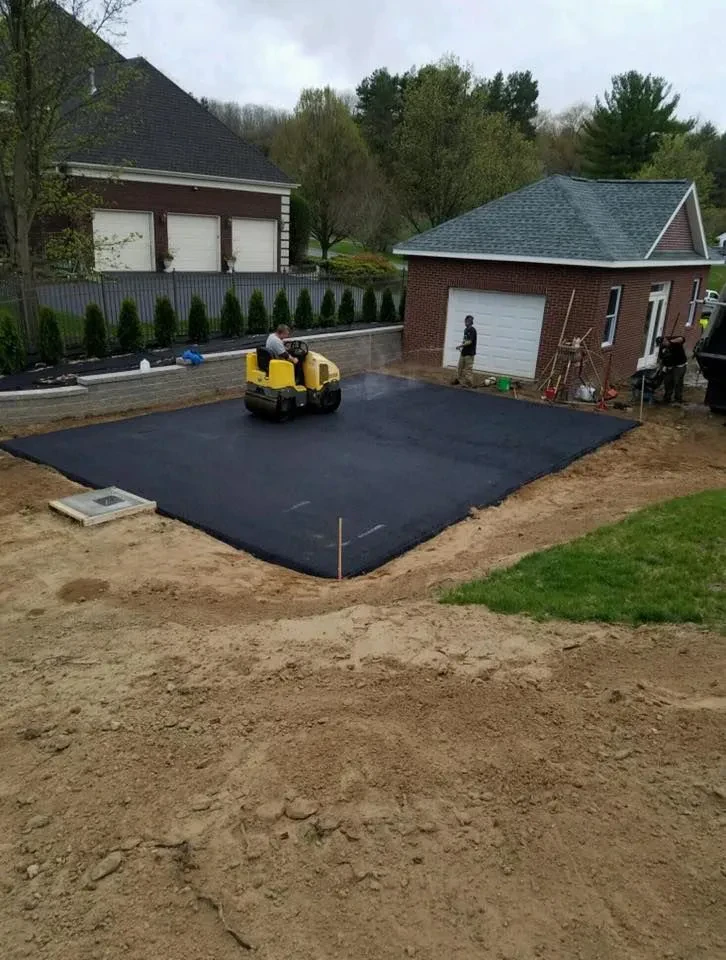
If the site needs excavation, that happens first. We remove old pavement if it’s too far gone, grade for proper drainage, and build a stable aggregate base. Skipping this step or doing it poorly is how you end up with a driveway that sinks or cracks within a year.
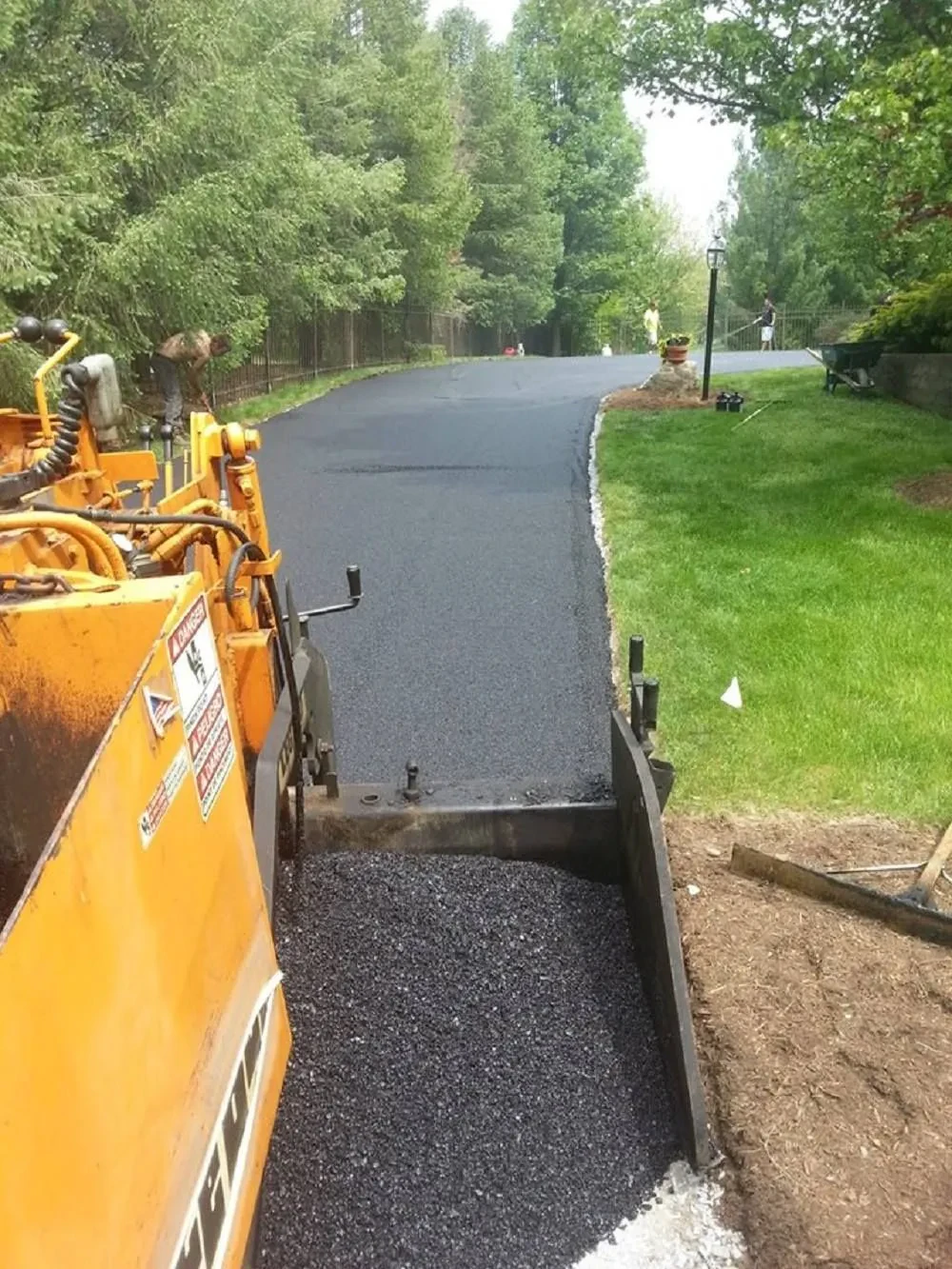
Once the base is ready and weather conditions are right, hot asphalt gets delivered and laid while it’s between 250-300°F. It needs to be spread evenly and compacted immediately while still hot enough to achieve proper density. This isn’t something you can rush or do in cold weather.
After installation, the asphalt needs time to cure before you drive on it. Light traffic might be okay after 24 hours, but heavy vehicles should wait longer. Rush it, and you’ll create ruts and damage that could’ve been avoided by just being patient.

Ready to get started?
Residential driveways in Waterford typically need 2-3 inches of asphalt over a properly prepared base. That’s enough for regular vehicle traffic if the installation is done correctly. Go thinner to save money, and you’re setting yourself up for problems.
Commercial parking lots and high-traffic areas need 4 inches or more. Heavier vehicles, constant use, and the need for the surface to last 20+ years all factor into that thickness. It costs more upfront, but it’s cheaper than replacing a parking lot that failed prematurely.
The Capital District weather creates specific challenges that matter in Waterford. Winter temperatures regularly drop well below freezing, spring brings freeze-thaw cycles, and summer heat can soften asphalt that wasn’t installed with the right mix. You need a contractor who understands how seasonal changes affect pavement in Saratoga County.
Drainage is critical here. Water that doesn’t drain properly becomes ice in winter, and ice expansion destroys asphalt from underneath. Proper grading during installation prevents these issues, but it requires someone who’s paying attention to more than just laying down a black surface.
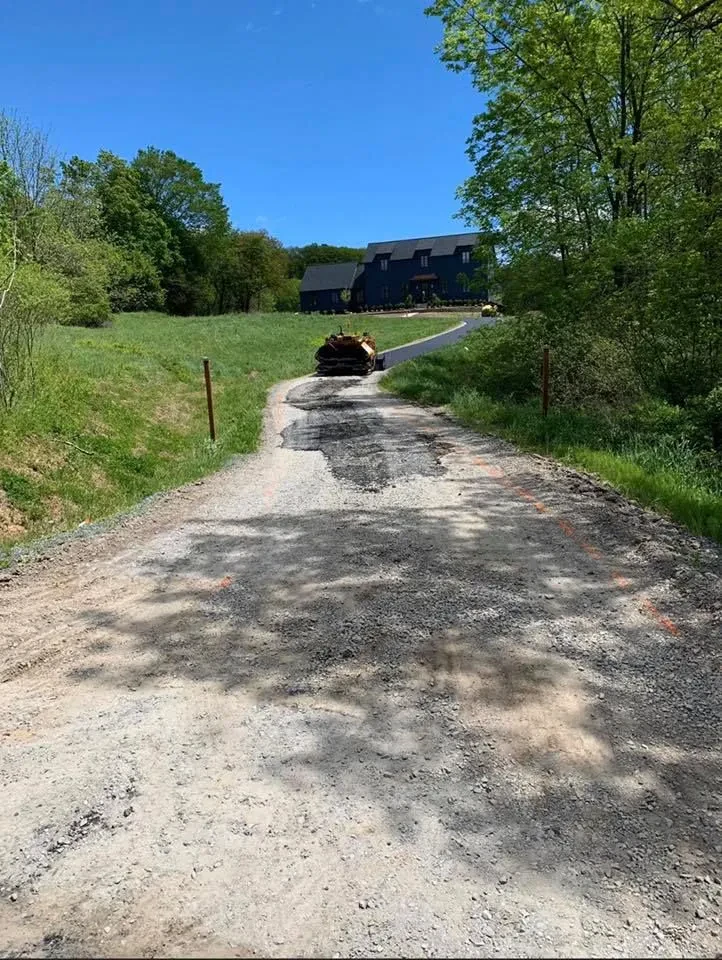
The ideal window for asphalt installation in Waterford runs from late spring through early fall, with the best results happening when temperatures consistently stay above 50°F both during installation and for several days after. That temperature threshold isn’t arbitrary—asphalt needs to be laid hot (250-300°F) and compacted immediately while it’s still pliable enough to achieve proper density.
When ambient temperatures drop below 50°F, the asphalt cools too quickly. It becomes difficult to compact properly, doesn’t bond well to the base layer, and won’t cure correctly. You end up with a surface that looks fine initially but develops problems within the first year.
In the Capital District, that typically means wrapping up paving projects by mid-October at the latest. Once November hits, temperatures become too unpredictable. If you’re planning a project, start the conversation in summer so the work happens during optimal conditions, not when the calendar forces compromises.
Most residential driveways in Waterford run between $7-$15 per square foot installed, which puts a standard 600-square-foot driveway somewhere in the $4,200-$9,000 range. That’s a wide spread because the actual cost depends on factors that vary significantly from one property to another.
If you already have a decent base and just need new asphalt over it, you’re looking at the lower end. If the existing driveway needs to be removed, the site requires grading, or there are drainage issues to address, costs move higher. Thickness matters too—going with 3 inches instead of 2 inches adds material cost but extends the lifespan considerably.
The cheapest quote isn’t always the best value. Some contractors cut costs by skimping on base preparation, using thinner asphalt than appropriate, or rushing installation during suboptimal weather. Ask what’s included in the quote—excavation depth, base material quality, asphalt thickness, and drainage work. Those details explain why one bid is $5,000 and another is $8,000.
An overlay means laying new asphalt directly over your existing driveway, while replacement involves removing the old surface entirely and starting fresh. The right choice depends on the current condition of what you have.
Overlay works when your existing asphalt has minor surface wear but the base underneath is still solid and draining properly. If you’ve got some fading, minor cracks that have been filled, but no major structural issues, an overlay can add years of life at roughly half the cost of replacement.
Replacement becomes necessary when the base has failed, you’ve got significant cracking or heaving, drainage problems, or the existing asphalt is just too deteriorated to support a new layer. Laying fresh asphalt over a failing base is like painting over rot—it looks better temporarily but the underlying problems continue getting worse.
An honest assessment requires someone to actually look at your driveway, not just quote you over the phone. The base condition, drainage patterns, and extent of existing damage all factor into which approach makes sense.
Light vehicle traffic is usually fine after 24-48 hours, but full curing takes significantly longer—anywhere from several months to a year depending on weather conditions. The asphalt needs to be firm enough that tires won’t leave ruts or marks, but it continues hardening well after that initial period.
During the first 48 hours, the asphalt is most vulnerable. It’s still releasing heat and hasn’t reached full strength. Driving on it too soon, especially with heavy vehicles, can create permanent impressions. Even turning your steering wheel while stationary can leave marks.
After that initial curing window, you can use the driveway normally, but some precautions make sense for the first few months. Avoid parking in the exact same spot every day, be careful with heavy equipment or delivery trucks. The surface is still gaining strength.
Temperature affects curing speed. Asphalt installed during warm weather firms up faster than installations done in cooler conditions. We’ll give you specific guidance based on when your project happens and what the forecast looks like.
Yes, and the maintenance isn’t complicated, but skipping it significantly shortens your pavement’s lifespan. The two main tasks are sealcoating every 2-3 years and addressing cracks promptly when they appear.
Sealcoating protects asphalt from UV damage, water infiltration, and chemical exposure from gas or oil drips. The sealant fills small surface voids and creates a protective barrier that slows deterioration. It also keeps the surface looking fresh instead of faded and gray. Sealcoating costs roughly $1-$2 per square foot, which is minimal compared to premature replacement.
Crack filling is the other critical maintenance task. Small cracks let water penetrate below the surface. In Waterford’s climate, that water freezes and expands during winter, making cracks larger and eventually breaking apart the base. Catch cracks early while they’re small, and filling them is quick and inexpensive.
A properly installed asphalt driveway should last 20-30 years with basic maintenance. Without it, you might get 10-15 years before problems force replacement. The maintenance costs are a fraction of what you’d spend installing new asphalt.
Generally no, and any contractor suggesting otherwise should raise red flags. Asphalt installation requires ambient temperatures above 50°F for proper compaction and curing. Waterford winters regularly drop well below that threshold, making quality asphalt work essentially impossible from late fall through early spring.
The physics don’t change based on how skilled the crew is. When it’s cold, asphalt cools too rapidly after being laid. It becomes stiff before it can be properly compacted, won’t bond correctly to the base, and develops problems almost immediately. You might end up with what looks like a finished driveway, but it’ll start failing as soon as temperatures fluctuate.
Some emergency repairs can be done with cold-patch asphalt during winter, but that’s a temporary fix, not a permanent solution. Cold-patch is designed to fill potholes and get you through until proper hot-mix asphalt can be installed during appropriate weather.
If you need paving work and it’s late fall or winter, the honest answer is waiting until spring. We shift to foundation work and excavation during winter months specifically because asphalt installation should wait for proper conditions. Any contractor willing to install asphalt in January is either desperate for work or doesn’t understand how the material performs.
Other Services we provide in Waterford