Asphalt paving company also offering concrete work, excavating, and snow removal services.
Contact Info
-
130 Co Rd 70
Stillwater, NY 12170 - Call: 518-935-3068
- Text: 518-935-3068
- Mon - Sun: 7am - 7pm
Contact Info
Hear From Our Clients

You’re not looking for the cheapest option. You’re looking for a driveway that won’t buckle after the first freeze, crack by year two, or turn into a pothole minefield before you’ve even paid it off.
That’s where most paving jobs go wrong. Thin asphalt over a rushed base. Contractors who vanish the second the check clears. Work done too late in the season when temperatures drop and the asphalt never sets right.
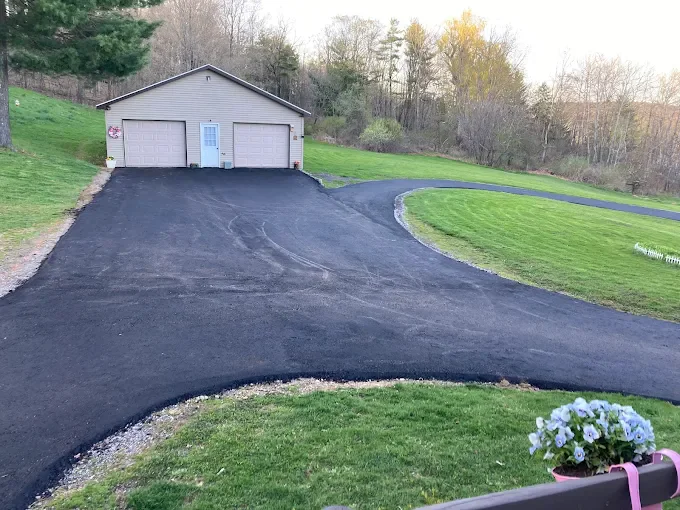
Here’s what happens when it’s done correctly: proper excavation, a compacted gravel base that drains water away from the surface, and 2.5 to 3 inches of quality asphalt laid at the right temperature. The driveway cures properly. It handles freeze-thaw cycles. It lasts 20+ years with basic maintenance. You’re not calling someone back in two years to fix what should’ve been done right the first time.
We’ve been handling paving, asphalt, excavation, and foundation work in Batchellerville and across Saratoga County for more than two decades. The owner is involved from your first call to the final pass of the roller.
That means no runaround. No miscommunication between a salesperson and a crew that’s never met you. You talk directly to the person making decisions, managing the job, and standing behind the work.
Batchellerville winters are brutal. Freeze-thaw cycles destroy poorly installed driveways within a couple of seasons. We understand the local climate, the soil conditions, and what it takes to build a surface that holds up year after year. This isn’t a crew flying in from three counties over. We’re professionals with deep roots in the community who’ve earned trust through consistent, reliable work.

First, the site gets assessed. That means looking at drainage, grading, and the condition of any existing surface. If your current driveway is a disaster, it gets removed. You can’t pave over a failing base and expect different results.
Next comes excavation and grading. The ground is leveled, sloped for proper water runoff, and prepped with a compacted gravel base. This is the step that separates driveways that last from ones that fail. Shortcuts here show up later as cracks, buckling, and standing water.
Once the base is set, the asphalt goes down. It’s delivered hot, spread evenly, and compacted while it’s still at the right temperature. Timing matters. If it cools too fast, it won’t bond correctly. If the weather’s too cold, the whole job gets pushed. That’s why most paving in upstate New York wraps up by early fall.
After the asphalt is laid and compacted, it needs time to cure. You’ll be able to walk on it within a day, but heavy vehicles should stay off for at least 48 hours. Then it’s ready to handle whatever you throw at it—daily traffic, snowplows, freeze-thaw cycles, the works.
Ready to get started?
A proper driveway paving job in Batchellerville starts with excavation and site prep. That includes removing old, damaged asphalt or concrete, grading the surface for drainage, and installing a compacted stone base. Without this step, nothing else matters.
The asphalt itself is high-grade material designed to handle the temperature swings common to Saratoga County. Freeze-thaw cycles are relentless here. Water gets into cracks, freezes, expands, and tears apart anything that wasn’t built to withstand it. Quality asphalt mix, proper thickness, and correct installation are what keep that from happening.
Drainage is critical. Standing water is the fastest way to destroy a driveway. The surface is sloped to move water off and away from the pavement. If your property has drainage issues, those get addressed during the grading phase. It’s not an optional add-on. It’s part of doing the job right.
We also handle driveway restoration and resurfacing for surfaces that are structurally sound but showing wear. If the base is solid and the damage is surface-level, an overlay can extend the life of your driveway without the cost of full replacement. But if the base has failed, resurfacing is just putting new asphalt on top of a problem. That’s when full removal and replacement is the honest recommendation.
For a residential driveway in Batchellerville, you’re looking at a minimum of 2.5 to 3 inches of compacted asphalt over a properly prepared gravel base. That base typically runs 4 to 8 inches deep, depending on soil conditions and drainage needs.
Thinner asphalt might save money upfront, but it won’t hold up. Freeze-thaw cycles in upstate New York are brutal, and anything under 2.5 inches is going to crack and fail faster than it should. If you’re parking heavier vehicles or equipment, you might need to go thicker—3 to 4 inches—to handle the load without developing ruts or depressions.
The base matters just as much as the asphalt thickness. If the ground underneath isn’t compacted and graded correctly, even thick asphalt will buckle. A solid stone base provides the support and drainage that keep everything stable for the long haul.
Late spring through early fall is your window. You need consistent temperatures above 50 degrees, ideally in the 65 to 75-degree range, for asphalt to cure properly.
Once temperatures start dropping in late fall, asphalt cools too quickly. It won’t compact right, and the bond between the layers weakens. Most paving operations in upstate New York shut down after Thanksgiving because the ground freezes and conditions just aren’t suitable anymore.
If you’re planning a driveway project, get it scheduled by late summer or early fall at the latest. Waiting until October is risky. A cold snap can push your project into the next season, and by then you’re dealing with winter damage to whatever surface you currently have. Plan ahead, and you’ll avoid the rush and the weather-related delays.
It comes down to the condition of your base. If the gravel base underneath your asphalt is still solid and the damage is limited to surface cracks or wear, resurfacing can work. That means applying a new layer of asphalt over the existing surface to restore appearance and function.
But if you’re seeing serious issues—buckling, large cracks, sections that have sunk or shifted, or areas where water pools—that’s a sign the base has failed. Resurfacing won’t fix a bad foundation. You’re just covering up a problem that’s going to come back, usually within a year or two.
An honest contractor will assess the base and tell you which option makes sense. If the base is compromised, full removal and replacement is the right call. It costs more upfront, but it’s the only way to get a driveway that’s actually going to last.
Freeze-thaw cycles are the biggest culprit. Water seeps into small cracks or gaps in the asphalt, freezes when temperatures drop, and expands. That expansion forces the cracks wider. When it thaws, the water drains out, leaving a bigger gap. The cycle repeats all winter, and by spring, you’ve got serious damage.
Poor drainage makes it worse. If water sits on the surface or doesn’t drain away from the driveway, it has more opportunities to seep in and cause problems. That’s why proper grading and sloping during installation are so critical.
Thin asphalt and a weak base are the other major causes. If the asphalt is too thin or the gravel base wasn’t compacted correctly, the driveway doesn’t have the structural integrity to handle freeze-thaw stress. Cracks form faster, and they spread. Proper installation—adequate thickness, quality materials, and a solid base—prevent most of these issues before they start.
With proper installation and regular maintenance, you’re looking at 20 to 25 years, sometimes longer. The key factors are the quality of the base, the thickness of the asphalt, and how well you maintain it over time.
Sealcoating every few years protects the surface from UV damage, water penetration, and the wear and tear of daily use. Filling cracks as soon as they appear keeps water from getting in and causing bigger problems. Neglect those things, and even a well-built driveway will deteriorate faster.
Climate plays a role too. Upstate New York winters are hard on asphalt. Freeze-thaw cycles, snowplows, and road salt all take a toll. A driveway installed correctly with those conditions in mind will outlast one that wasn’t. That’s why working with a contractor who understands the local climate and builds accordingly makes a difference in how long your driveway holds up.
Start with experience and local reputation. A contractor who’s been in business for years and has a track record in your area is more likely to understand the climate, soil conditions, and what it takes to build a driveway that lasts. Ask for references, check reviews, and look at examples of past work.
Make sure they’re licensed and insured. That protects you if something goes wrong during the job. A legitimate contractor won’t hesitate to provide proof of insurance and licensing. If they dodge the question or can’t produce documentation, walk away.
Get a detailed, written estimate that breaks down materials, labor, and the scope of work. If the price seems too good to be true, it probably is. Low bids usually mean shortcuts—thinner asphalt, a rushed base, or a crew that’s going to disappear the second the job is done. You want transparency, not gimmicks. And you want someone who’s going to stand behind their work with a warranty that actually means something.
Other Services we provide in Batchellerville