Asphalt paving company also offering concrete work, excavating, and snow removal services.
Contact Info
-
130 Co Rd 70
Stillwater, NY 12170 - Call: 518-935-3068
- Text: 518-935-3068
- Mon - Sun: 7am - 7pm
Contact Info
Hear From Our Clients

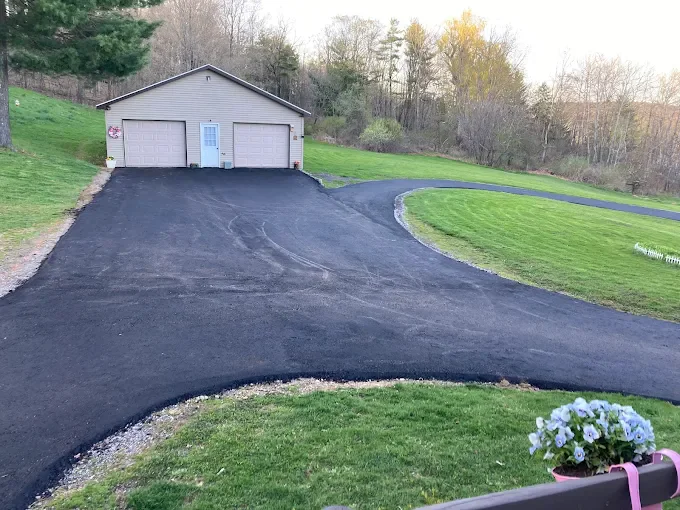
Your driveway stops being a problem. No more dodging potholes on your way in. No more water pooling near your foundation after every storm. No more wondering if this winter will be the one that finally destroys what’s left of your asphalt.
When the base is prepared correctly and the materials are quality, your driveway handles what New York throws at it. Freeze-thaw cycles don’t crack it apart in two years. Heavy vehicles don’t leave ruts. Rain drains where it’s supposed to go—away from your house, not toward it.
You get curb appeal that actually adds value. A smooth surface that makes snow removal easier. And peace of mind knowing the work was done by someone who’s been doing this for over two decades, not a crew that’ll disappear after cashing your check.
We’ve been serving Clifton Gardens and the surrounding region for more than 25 years. This is an owner-operated business, which means when you call, you’re talking to the person who’ll actually be on your property managing the work.
No sales team. No middleman. No runaround.
Clifton Gardens properties deal with specific challenges—soil conditions that shift, drainage issues common to the area, and winters that test every inch of asphalt. We know these conditions because we’ve been working here long enough to see what holds up and what fails. That experience shows up in how the base is prepared, how drainage is handled, and how materials are selected for jobs that need to last.

First, the owner comes out to assess your driveway. Not a salesperson—the person who’ll be managing your project. You’ll get a transparent estimate that breaks down what’s included, what materials will be used, and what the timeline looks like. No vague numbers. No pressure.
If your existing driveway needs to be removed, that’s handled first. The old asphalt gets torn out, and the area is graded properly to ensure water drains away from your foundation. Base preparation is where most contractors cut corners, and it’s also where most driveways fail. We don’t skip this step. A compacted gravel base goes down—thick enough to support your vehicles and handle freeze-thaw cycles without shifting.
Once the base is solid, quality asphalt goes down at the right thickness. Not a thin layer that’ll crack in a year. Not a “skim coat” designed to look good just long enough to cash the check. Proper depth, proper compaction, proper materials. The crew works efficiently because they’ve done this thousands of times, and the owner’s on-site to make sure every phase meets the standard.
When the job’s done, you’ll know exactly how to care for your new driveway and when you can start using it. Straightforward instructions, no guesswork.
Ready to get started?
Every driveway paving project includes proper site preparation, quality materials, and owner oversight from start to finish. That means your old asphalt gets removed if needed, the base is graded and compacted to local standards, and drainage is addressed so water doesn’t pool or flow toward your foundation.
Clifton Gardens sits in a region where winter freeze-thaw cycles destroy poorly installed driveways within a few seasons. We account for this by using base materials and asphalt thickness designed to handle the climate. The asphalt mix isn’t loaded with recycled filler that breaks down fast—it’s quality material that holds up under traffic and temperature swings.
You also get direct communication with the owner throughout the process. No wondering what’s happening or when the crew will show up. No surprise charges halfway through the job. The estimate you receive is the price you pay, and any questions you have get answered by someone who actually knows the work, not a call center.
Projects are scheduled based on weather conditions because asphalt needs proper temperatures to cure. Rushing a job in cold weather or laying asphalt in the rain creates problems down the line. We won’t cut corners just to get your money faster—we’d rather do it right and have you refer us to your neighbors.
A properly installed asphalt driveway in Clifton Gardens should last 15 to 25 years, sometimes longer with regular maintenance. The lifespan depends heavily on how the base was prepared, the thickness of the asphalt, and the quality of materials used.
New York’s freeze-thaw cycles are tough on asphalt. Water seeps into small cracks, freezes, expands, and breaks the surface apart. If the base wasn’t compacted correctly or if the asphalt layer is too thin, you’ll see failure in just a few years. That’s why proper installation matters more than the lowest price.
We prepare every driveway base to handle local soil conditions and drainage patterns. The asphalt goes down at the right thickness—not a skim coat that looks good for six months. With basic care like sealcoating every few years and addressing small cracks before they spread, your driveway should hold up well beyond the typical lifespan you’d get from a rushed job.
The best time to pave a driveway in New York is between late spring and early fall—typically April through October. Asphalt needs warm temperatures to cure properly, and trying to pave outside this window can lead to problems.
When temperatures drop below 50°F, asphalt doesn’t compact correctly. It cools too fast, which means it won’t bond properly or achieve the durability it’s supposed to have. Cold weather paving often results in premature cracking and surface failure. Rain is another issue—water interferes with compaction and weakens the base, so paving during wet conditions is a bad idea.
We schedule paving projects during optimal weather windows to ensure the asphalt cures correctly. If you’re planning a driveway project, reaching out in early spring gives you the best chance of locking in a slot during the ideal paving season. In winter, our focus shifts to other services like excavation and foundation work, so the crew stays busy year-round but we won’t rush a paving job in conditions that compromise quality.
A residential driveway in Clifton Gardens should have at least 2.5 to 3 inches of compacted asphalt over a properly prepared base. Some contractors will try to get away with thinner layers to save money, but that’s a shortcut that leads to early failure.
The base is just as important as the asphalt thickness. You need 4 to 8 inches of compacted gravel or stone underneath the asphalt to provide a stable foundation. If your soil has drainage issues or high clay content, the base might need to be thicker or reinforced with geotextile fabric to prevent shifting.
Thicker asphalt costs more upfront, but it lasts significantly longer and handles heavy vehicles, freeze-thaw cycles, and daily wear much better than a thin layer. We don’t cut corners on thickness because we’d rather install a driveway that lasts 20 years than one that starts cracking in three. When you get an estimate, ask specifically how thick the asphalt will be and what the base preparation includes—those details tell you whether you’re getting quality work or a quick cash grab.
Driveways in Clifton Gardens crack quickly because of poor base preparation, inadequate asphalt thickness, low-quality materials, or improper drainage. New York’s freeze-thaw cycles make these problems worse—water gets into small cracks, freezes, expands, and tears the asphalt apart.
If the base wasn’t compacted properly or if the contractor skipped the gravel layer entirely, the asphalt has nothing solid to rest on. When the ground shifts or settles, the asphalt cracks. If water pools on your driveway instead of draining away, it seeps into the surface and accelerates damage during winter.
Some contractors use asphalt mixes with high percentages of recycled material to save money. That asphalt breaks down faster and doesn’t hold up to temperature swings or heavy traffic. Others lay asphalt too thin—maybe 1.5 inches instead of the 2.5 to 3 inches needed for residential driveways. It looks fine at first, but it fails within a few years.
We address all of these issues upfront. The base gets graded and compacted correctly. Drainage is handled so water flows away from your foundation. Quality asphalt goes down at the right thickness. That’s how you avoid the cycle of constant repairs and early replacement.
Driveway paving costs in Clifton Gardens typically range from $4 to $7 per square foot for residential projects, depending on the size of the driveway, the condition of the existing surface, and what prep work is needed. A standard 600-square-foot driveway usually falls between $2,400 and $4,200, though costs can vary based on site-specific factors.
If your existing driveway needs to be removed, that adds to the cost. If the base requires extensive grading or if drainage issues need to be corrected, that also affects the price. Properties with difficult access or challenging soil conditions may require additional prep work, which increases the total.
We provide transparent estimates that break down what’s included—removal, base prep, asphalt thickness, materials, labor, and any site-specific work. You won’t get a vague number that balloons halfway through the project. The estimate you receive is the price you pay, and if any unexpected issues come up during the job, they’re discussed before additional work is done. Competitive pricing doesn’t mean the cheapest bid—it means fair pricing for quality work that actually lasts.
Whether you can pave over your existing driveway depends on its condition. If the current asphalt is relatively sound with only minor surface cracks and no major structural issues, an overlay might work. But if your driveway has deep cracks, potholes, drainage problems, or an unstable base, paving over it is just putting new asphalt on top of a failing foundation—and it’ll fail again quickly.
An overlay can save money in the short term, but it doesn’t fix underlying problems. If water pools on your driveway, if sections have settled unevenly, or if the base was never prepared correctly, an overlay won’t solve those issues. You’ll end up with the same problems showing through the new surface within a year or two.
We assess every driveway before recommending overlay or removal. If the base is solid and the existing asphalt just needs a fresh surface, an overlay makes sense. If there are structural issues, drainage problems, or significant damage, removal and proper reinstallation is the better investment. The owner will walk you through what’s happening with your driveway and explain why one approach makes more sense than the other—no upselling, just honest assessment based on 25+ years of experience.
Other Services we provide in Clifton Gardens