Asphalt paving company also offering concrete work, excavating, and snow removal services.
Contact Info
-
130 Co Rd 70
Stillwater, NY 12170 - Call: 518-935-3068
- Text: 518-935-3068
- Mon - Sun: 7am - 7pm
Contact Info
Hear From Our Clients

You get a surface that doesn’t crack apart after two winters. No pooling water after every rainstorm. No sinking spots where your car bottoms out.
A properly installed asphalt driveway handles freeze-thaw cycles without falling apart. It drains correctly so water goes where it’s supposed to go—away from your foundation, not into it. The base is compacted right, the thickness is what it should be, and you’re not calling someone back in three years wondering why it’s already crumbling.
You also get your time back. No more patching potholes every spring or worrying if your driveway is going to survive another winter. Just a clean, functional surface that does its job without becoming a project.
We’ve been handling paving, asphalt, excavation, and foundation work in Starks Knob and across Saratoga County for over 25 years. You’re working with the owner from the first call to the final pass—not a sales rep who disappears after you sign.
That means straightforward answers, honest pricing, and someone who’s actually accountable if something needs attention. No gimmicks. No pressure. Just real information so you can make a decision that makes sense for your property and your budget. Whether it’s a new driveway installation or fixing drainage issues before they get worse, the approach stays the same: do it right, keep it simple, and stay reachable.

First, the existing surface gets evaluated. If there’s old asphalt or concrete that’s failing, it comes out. If the base is soft or poorly compacted, that gets addressed before anything else happens. Skipping this step is how driveways fail early.
Next comes base preparation. A proper granular base—usually 6 to 8 inches—gets laid down and compacted in layers. This is the foundation that keeps your driveway from sinking or shifting when the ground freezes and thaws. Grading happens here too, so water drains away from your home instead of pooling on the surface.
Then the asphalt goes down. For residential driveways, that’s typically 2 to 3 inches of hot mix asphalt, applied evenly and compacted while it’s still hot. The edges get finished clean, and the surface is left to cure properly. After about six months, sealcoating can be applied to protect against oxidation, water infiltration, and UV damage. That’s the process. No shortcuts.
Ready to get started?
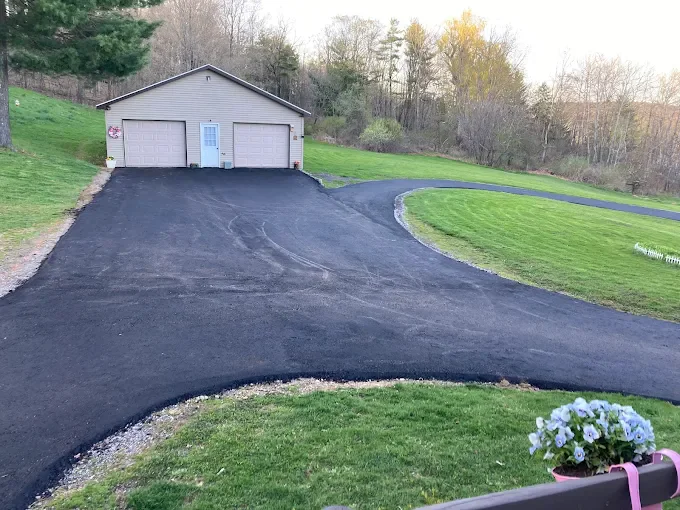
This isn’t just asphalt getting dumped on your property. It’s proper excavation if needed, a compacted base that won’t settle, correct drainage slope so water doesn’t sit, and asphalt thick enough to handle vehicles and weather without cracking apart in two years.
In Starks Knob and the surrounding Saratoga County area, freeze-thaw cycles are brutal. Water gets into cracks, freezes, expands, and tears driveways apart. That’s why base prep and thickness matter here more than in other climates. A driveway installed correctly handles those cycles without turning into a patchwork of repairs every spring.
You also get direct communication with the owner throughout the project. Questions get answered. Timelines are clear. If something changes, you hear about it. And if you need emergency work or seasonal services like land clearing when paving season slows down, that’s available too. The goal is a driveway that works, looks clean, and doesn’t become a recurring expense.
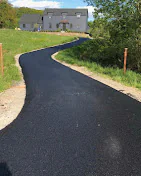
A properly installed asphalt driveway in this area should last 8 to 10 years before you see significant cracking or surface wear. If you’re getting potholes or major cracks within the first few years, something was done wrong during installation—usually poor base preparation, inadequate compaction, or asphalt that was laid too thin.
New York’s freeze-thaw cycles are hard on driveways. Water seeps into small cracks, freezes, expands, and makes those cracks bigger. That’s why the base matters so much. If the foundation is solid and the drainage is right, the asphalt can handle those temperature swings without falling apart.
Sealcoating every 2 to 4 years helps extend the life even further. It fills in small surface cracks before water can get in and protects the asphalt from oxidation and UV damage. Regular maintenance makes a difference, but the real work happens during installation. Get that part right, and you’re not dealing with repairs every other year.
Most early cracking comes down to three things: poor base preparation, asphalt that’s too thin, or bad drainage. If the base isn’t compacted properly or the wrong materials are used, the ground shifts and settles unevenly. That puts stress on the asphalt, and cracks form.
Thin asphalt is another common problem. Some contractors cut corners and lay down 1 to 1.5 inches instead of the 2 to 3 inches residential driveways actually need. That might save them money, but it won’t hold up under vehicle weight or freeze-thaw cycles. The surface starts breaking down almost immediately.
Drainage issues accelerate everything. If water pools on your driveway instead of running off, it’s going to find its way into cracks and under the surface. When that water freezes, it expands and destroys the asphalt from below. Proper grading and slope during installation prevent this. If your driveway is cracking early, one of these three things—or all of them—was likely skipped or done wrong.
Asphalt driveway paving in this area typically runs $5 to $13 per square foot, depending on the scope of work. A standard two-car driveway—around 400 to 600 square feet—usually costs between $2,000 and $7,000. That includes excavation if needed, base preparation, asphalt installation, and grading for proper drainage.
The price varies based on a few factors. If your existing driveway needs to be removed, that adds to the cost. If the base is in bad shape or the ground is soft and needs extra work, that affects pricing too. Driveways with steep slopes or complicated layouts cost more because they require more labor and materials to get right.
Cheaper isn’t always better. A low quote often means thin asphalt, poor base materials, or shortcuts that lead to problems down the road. You’ll end up paying more in repairs within a few years. A fair price from an experienced contractor who does the work correctly is a better investment than a bargain job that fails early. Get a detailed estimate that breaks down what’s included, and make sure you’re comparing the same scope of work when you look at quotes.
No. New asphalt needs time to cure before you sealcoat it. That usually takes about six months. The asphalt has oils in it that need to evaporate and harden properly. If you seal it too early, you trap those oils in and the surface stays soft, which can lead to tracking, scuffing, and premature wear.
After that initial curing period, sealcoating is one of the best things you can do to extend the life of your driveway. It fills in small surface cracks, protects against water infiltration, and shields the asphalt from UV rays and oxidation. Without it, the asphalt fades to gray and becomes brittle, making it more prone to cracking.
Plan to reseal every 2 to 4 years depending on traffic and weather exposure. It’s a relatively inexpensive maintenance step that prevents much bigger repair costs later. Just make sure the driveway is clean and dry before application, and avoid using it for at least 24 hours after the sealcoat is applied so it has time to cure properly.
Resurfacing means adding a new layer of asphalt over the existing surface. It works if the base is still solid and the damage is mostly cosmetic—minor cracks, fading, or surface wear. The old asphalt gets cleaned, repairs are made to any bigger cracks, and a new layer (usually 1.5 to 2 inches) is applied on top. It’s less expensive than a full replacement and can add several years of life.
Replacement means tearing out the old driveway completely and starting over. You’d do this if the base has failed, there are major drainage issues, or the asphalt is severely cracked and crumbling. Trying to resurface a failing base just delays the inevitable. The new asphalt will crack and sink along with everything underneath it.
The decision comes down to what’s happening below the surface. If the base is compromised, resurfacing is a waste of money. If the base is still solid and the damage is limited to the top layer, resurfacing can be a smart, cost-effective option. We can tell the difference pretty quickly just by looking at the driveway and checking for soft spots or drainage problems.
Water pooling usually means the driveway wasn’t graded correctly during installation. Asphalt driveways need a slight slope—typically 1 to 4 percent—so water runs off the surface instead of sitting in low spots. If that slope isn’t there, or if the ground has settled unevenly, water collects in depressions and stays there.
Pooling water is more than just an inconvenience. It accelerates deterioration. Water works its way into the asphalt through small cracks and pores, and when it freezes, it expands and makes those cracks bigger. Over time, those low spots turn into bigger problems—crumbling edges, potholes, and base failure.
Fixing it depends on how bad the issue is. Minor depressions can sometimes be patched and leveled. Larger drainage problems might require regrading or adding drainage solutions like channels or catch basins. If the base has already failed because of prolonged water exposure, you’re looking at more extensive work. The key is addressing it before the damage spreads. Ignoring pooling water doesn’t make it go away—it just makes the repair more expensive later.
Other Services we provide in Starks Knob