Asphalt paving company also offering concrete work, excavating, and snow removal services.
Contact Info
-
130 Co Rd 70
Stillwater, NY 12170 - Call: 518-935-3068
- Text: 518-935-3068
- Mon - Sun: 7am - 7pm
Contact Info

Hear From Our Clients
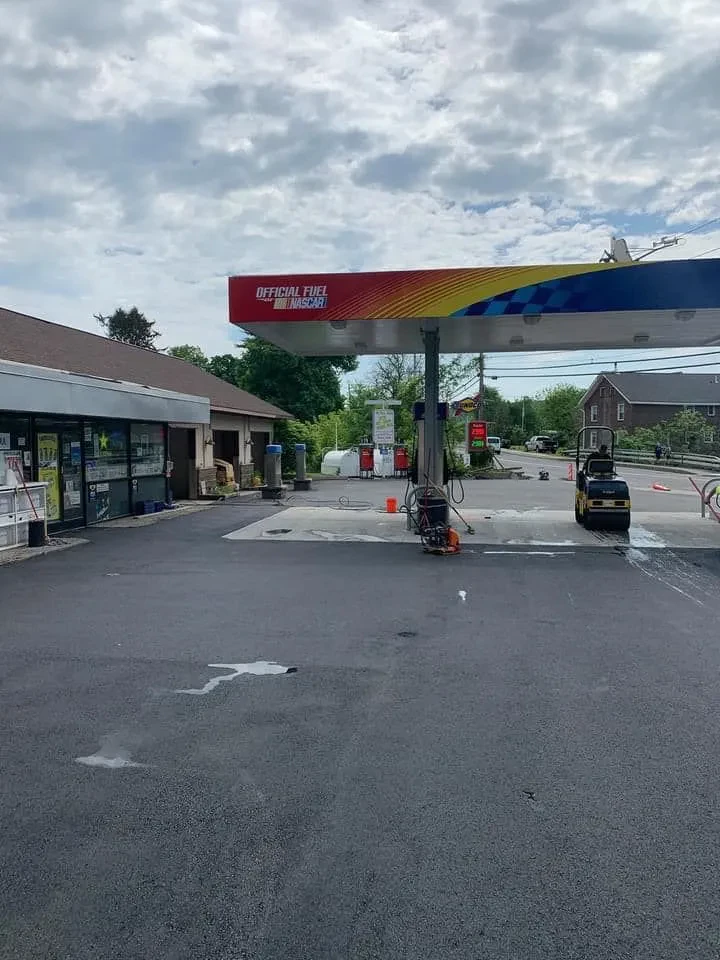
Your parking lot stops being a headache. No more potholes swallowing tires every spring. No more water pooling in the same spots after every rain. No more wondering if the base will hold or if you’ll be tearing it all up in three years.
When the job’s done, you’ve got a level surface that drains properly, striping that’s crisp and compliant, and asphalt that can take 20 to 30 years of traffic without falling apart. That’s what happens when the site prep is done right and the installation isn’t rushed.
You also get someone who answers the phone. We manage your project from the estimate to the final walkthrough, so you’re not chasing down different people when you have a question. If something needs adjusting, it gets handled—no runaround.
We’ve been handling paving, asphalt, excavation, and foundation work in the Coons area for over two decades. We’re owner-operated, which means the person you talk to during the estimate is the same person overseeing your job. No handoffs. No confusion.
We run year-round. Paving and asphalt work happens in the warmer months when conditions are right. When winter hits, our focus shifts to foundations and land clearing. That seasonal flexibility means our crew stays sharp and we stay stable.
Our pricing is competitive and honest. You get a straightforward number based on the actual scope of work—no gimmicks, no surprise charges later. If there’s a better way to handle drainage or grading, you’ll hear about it upfront, not after the contract is signed.

First, we evaluate the site. That means looking at drainage, checking the existing base if there is one, and figuring out what prep work is needed. If the ground won’t support the pavement or water doesn’t have anywhere to go, we address that before any asphalt goes down.
Next comes site preparation. We clear the area, grade it to the right slope, and install a stable aggregate base. This step matters more than most people realize—skip it or do it poorly, and your parking lot won’t last half as long as it should.
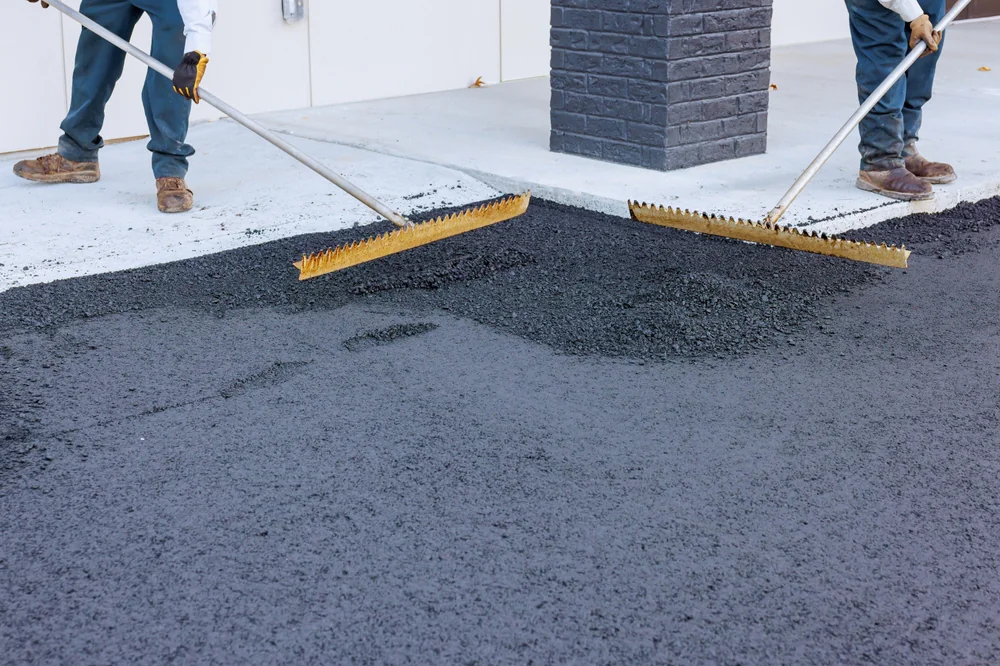
Then we lay the asphalt. Hot-mix asphalt is spread evenly and compacted while it’s still hot to create a smooth, level surface with clean edges. Thickness depends on your traffic load—heavier vehicles need a thicker layer.
Finally, finishing work happens. That includes line striping for parking spaces, ADA-compliant markings if needed, and any signage. You’re left with a functional lot that’s ready to handle traffic and weather for decades if you keep up with basic maintenance like sealcoating every few years.
Ready to get started?
Every parking lot paving job we do includes proper site preparation—clearing, grading, and installing a compacted aggregate base that won’t shift or settle. Drainage is built into the design so water moves off the surface instead of pooling and seeping into cracks.
The asphalt itself is hot-mix, applied at the right thickness for your specific use. A residential lot with light car traffic doesn’t need the same depth as a commercial property with delivery trucks rolling through daily. You get what actually makes sense for how the lot will be used.
In Coons and the surrounding area, weather is a factor. Freeze-thaw cycles, road salt, and temperature swings all take a toll on asphalt. That’s why proper installation matters here more than in milder climates. A well-built lot with good drainage can handle New York winters without cracking apart or developing potholes every spring.
Line striping, ADA-compliant markings, and any necessary signage are part of the package. If your lot needs accessible parking spaces or specific traffic flow markings, we handle that during finishing. You don’t have to hire another contractor to come back and paint lines.

A properly installed asphalt parking lot in Coons can last 20 to 30 years if the base is built right and you keep up with basic maintenance. The key word is “properly.” That means a stable aggregate base, correct asphalt thickness for your traffic load, and drainage that actually works.
New York’s freeze-thaw cycles are tough on pavement. Water gets into small cracks, freezes, expands, and makes those cracks bigger. If your lot doesn’t have good drainage or the base wasn’t compacted correctly, you’ll start seeing problems in just a few years instead of decades.
Maintenance extends lifespan significantly. Sealcoating every two to four years protects the surface from water, UV damage, and chemical spills. Filling small cracks before they turn into potholes prevents water from reaching the base layer. Neglect maintenance, and even a well-built lot will deteriorate faster than it should.
Resurfacing means adding a new layer of asphalt over the existing surface. It works when the base is still solid but the top layer is worn, faded, or has minor cracking. Resurfacing typically costs $1 to $3 per square foot and can add 10 to 15 years to your lot’s life.
Full replacement means tearing out everything down to the subbase and rebuilding from scratch. You’d do this when the base has failed, there’s widespread structural damage, or more than 25-35% of the surface needs major repair. Replacement costs $4 to $10 per square foot but gives you a brand-new lot with another 20 to 30 years ahead of it.
The right choice depends on what’s actually wrong. If your lot has good bones but looks rough, resurfacing makes sense. If there are drainage problems, deep potholes, or the pavement is sinking in spots, you’re likely looking at replacement. An honest assessment tells you which route saves money in the long run.
Asphalt parking lot paving in the Coons area typically runs $2.50 to $7 per square foot, depending on site conditions, asphalt thickness, and how much prep work is needed. A 10,000 square foot lot might cost $25,000 to $70,000 for a complete installation including grading, base work, paving, and striping.
Several factors affect the final number. If your site has poor drainage or unstable soil, extra prep work drives the cost up. Thicker asphalt for heavy truck traffic costs more than a thinner layer for light car use. Demolition of existing pavement, if needed, adds to the total.
Resurfacing an existing lot costs less—usually $1 to $3 per square foot—because you’re not rebuilding the base. Sealcoating for maintenance runs $0.15 to $0.30 per square foot. Getting a detailed estimate based on your specific site conditions is the only way to know what your project will actually cost.
Sealcoating is the big one. Every two to four years, you should apply a protective sealant that shields the asphalt from water, UV rays, and chemical spills from oil or gas. Sealcoating can double or even triple the life of your pavement compared to doing nothing.
Crack sealing needs to happen as soon as you notice cracks forming. Small cracks are easy and cheap to fill. Ignore them, and water gets in, freezes, expands, and turns those hairline cracks into potholes. A yearly inspection and quick crack-filling session prevents expensive repairs down the road.
Beyond that, keep the surface clean. Sweep away debris, remove standing water if it’s pooling anywhere, and address oil stains before they eat into the asphalt. If you’re in an area with harsh winters like Coons, be mindful of how much salt and deicing chemicals you’re using—they accelerate deterioration.
Asphalt paving needs temperatures above 50°F to cure properly, so winter isn’t ideal for new installations in New York. Hot-mix asphalt cools quickly in cold weather, which makes it hard to compact correctly. Poor compaction leads to a weaker surface that won’t last as long.
Late spring through early fall is the best window for parking lot paving in Coons. You get consistent warm temperatures, lower chance of rain interrupting the work, and conditions that let the asphalt cure the way it’s supposed to. We book up fast during this window, so planning ahead matters.
If you have an emergency repair in winter—like a pothole that’s creating a safety hazard—temporary cold-patch asphalt can hold you over until spring. It’s not a permanent fix, but it keeps the lot usable and reduces liability until proper paving weather returns.
If your parking lot serves the public or employees, yes—you need ADA-compliant accessible parking spaces. The number required depends on your total parking capacity. For example, a lot with 25 to 50 spaces needs two accessible spots. Get it wrong, and you’re looking at fines and potential lawsuits.
ADA compliance means more than just painting a symbol on the pavement. Accessible spaces must be at least 96 inches wide with an adjacent access aisle that’s 60 inches wide. The slope can’t exceed 2% in any direction. Signage must be mounted at least 60 inches above the ground and include the International Symbol of Accessibility.
The path from the accessible space to the building entrance also has to meet standards—no steep slopes, uneven surfaces, or obstacles. As a paving contractor experienced with commercial work, we know these requirements and build them into your lot design from the start, not as an afterthought.
Other Services we provide in Coons