Asphalt paving company also offering concrete work, excavating, and snow removal services.
Contact Info
-
130 Co Rd 70
Stillwater, NY 12170 - Call: 518-935-3068
- Text: 518-935-3068
- Mon - Sun: 7am - 7pm
Contact Info

Hear From Our Clients
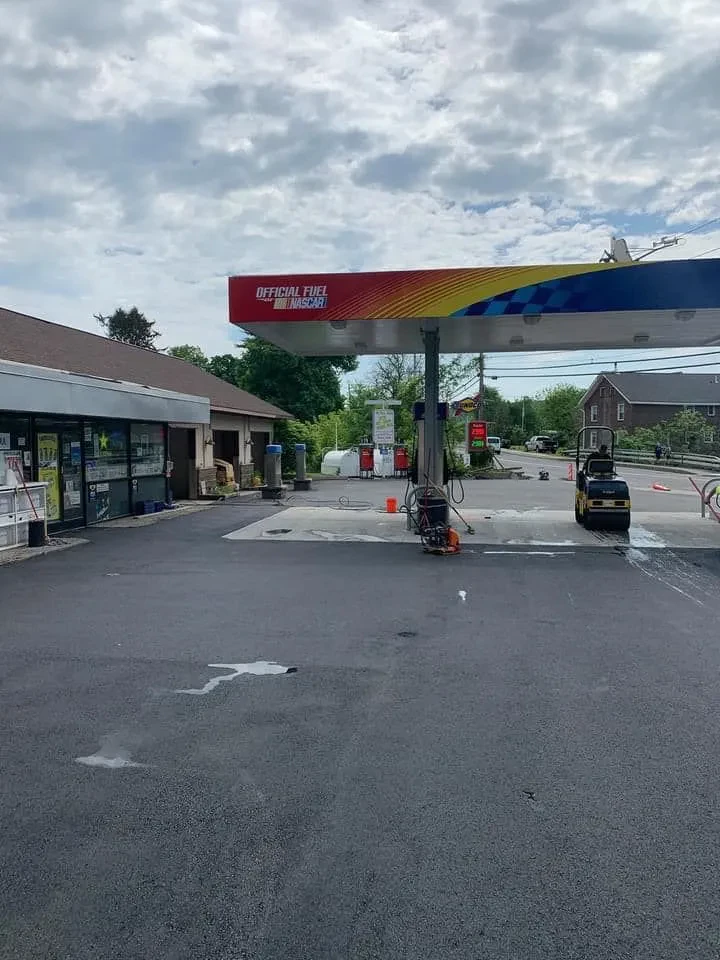
You’re not dealing with cracks and potholes every spring. Your drainage works, so water doesn’t pool and freeze into ice patches that put customers at risk. The surface stays level and safe.
That’s what proper parking lot construction delivers. A lot that handles the weather here—the freeze-thaw cycles, the snow loads, the spring melt. You’re not calling for emergency repairs because water got under the surface and destroyed your base. You’re not repainting lines every year or patching the same spots over and over.
When the base is compacted right and the drainage is designed for this climate, your parking lot does its job for 20 to 30 years. Not 10. You save money, you avoid liability, and your property looks like you care about it.
We’ve worked in Silver Bay and Warren County for over two decades. The owner handles your project from the estimate to the final pass. That means you’re not handed off to a crew that doesn’t know what you were promised.
We know what winter does to pavement around Lake George. We know the soil conditions, the drainage challenges, the freeze-thaw patterns. We’ve seen what happens when contractors skip steps or use the wrong materials for this climate. We don’t do that.
You get straight answers, competitive pricing, and work that’s done right the first time. No gimmicks. No pressure. Just honest communication and results that last.

First, we assess your site. We look at drainage, base condition, and any existing damage. We talk about what you need the lot to handle—traffic volume, seasonal use, budget. Then we give you a clear estimate with no surprises.
Once you’re ready to move forward, we prep the site. That means grading for proper drainage, compacting the base so it won’t shift, and addressing any soil or water issues that would cause problems later. This step matters more than most people realize. A solid base is the difference between a lot that lasts 15 years and one that fails in 5.
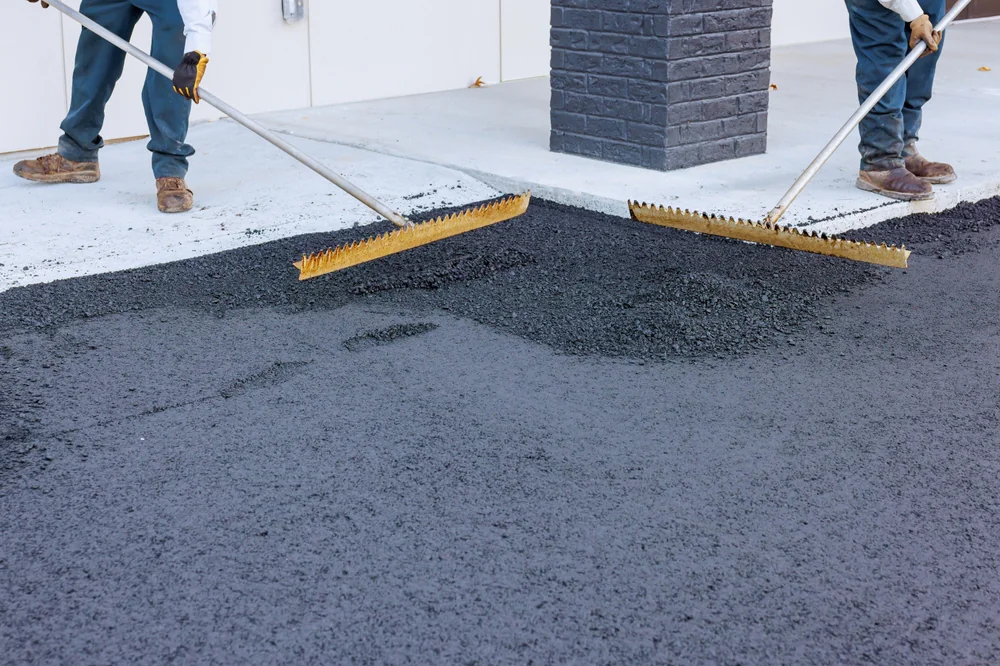
Then we pave. We use the right asphalt thickness for your traffic and climate. We compact it properly. We install drainage where it’s needed. After the asphalt cures, we handle striping, sealcoating, or any other finishing work. You end up with a parking lot that works the way it should.
Ready to get started?
You’re getting a parking lot built for Silver Bay winters. That means proper drainage so water doesn’t sit and freeze. It means a compacted base that won’t heave when the ground freezes. It means asphalt thick enough to handle freeze-thaw cycles without cracking apart.
Around here, parking lots fail because of water. It gets into cracks, freezes, expands, and tears the pavement apart. Or it sits under the surface and weakens the base until the whole thing collapses. Proper drainage and crack sealing prevent that. So does using the right materials and techniques from the start.
We also handle sealcoating, which protects your asphalt from UV damage, water infiltration, and chemicals. Done every 2 to 3 years, it extends your pavement’s life significantly. Striping keeps your lot safe and compliant. Crack sealing stops small problems before they become expensive ones. All of this adds up to lower costs over time and fewer headaches.

With proper installation and maintenance, you’re looking at 20 to 30 years. That requires a solid base, good drainage, and regular upkeep like sealcoating every 2 to 3 years and crack sealing when needed.
Without maintenance, you’ll see failure in 10 to 15 years, sometimes less. The freeze-thaw cycles here are brutal. Water gets into cracks, freezes, expands, and destroys the pavement from the inside out. If your base wasn’t compacted right or your drainage doesn’t work, you’ll have problems even sooner.
The key is catching issues early. A small crack costs almost nothing to seal. A pothole caused by water infiltration costs significantly more. A failed base that requires complete replacement costs the most. Regular inspections and proactive maintenance keep your costs down and your lot functional.
Late spring through early fall. Asphalt needs warm temperatures to cure properly—ideally above 50°F during installation and for several days after. That gives you roughly May through October in this area, depending on the weather.
If you’re planning a project, start the conversation in early spring. Good contractors book up fast, and you want to get on the schedule before the summer rush. Emergency repairs can sometimes be done in winter using cold patch, but that’s a temporary fix. For permanent work, you need decent weather.
Sealcoating has even tighter requirements—air and pavement temps need to be at least 55°F and rising, with no rain for 24 hours. That usually means late spring or early fall. If you’re trying to prepare your lot for winter, get the work done in September or early October before temperatures drop.
Water. Almost always water. It seeps into cracks, gets under the pavement, and freezes. When it freezes, it expands. That expansion breaks apart the asphalt and weakens the base underneath. Traffic pounds on the weakened area, and eventually it collapses into a pothole.
Prevention starts with proper drainage. If water can’t pool on your lot or get trapped under the surface, you avoid most of the problem. Crack sealing is the next line of defense. Seal cracks when they’re small—before water can infiltrate. Sealcoating adds a protective layer that keeps water out and fills hairline cracks before they widen.
If you already have potholes, get them patched immediately. A pothole in winter will get worse fast. Snow plows can hit it and cause more damage. Water will freeze inside it and expand the hole. The longer you wait, the more expensive the repair becomes. In severe cases, you’re looking at removing and replacing entire sections instead of a simple patch.
Depends on the condition of your base. If the base is still solid and your surface damage is mostly cosmetic—fading, minor cracks, worn areas—resurfacing works. It’s faster and costs about a third of full replacement.
But if you’ve got major potholes, drainage failures, or areas where the pavement is heaving or sinking, your base is compromised. Resurfacing over a bad base is like putting new carpet over rotten floorboards. It’ll fail again quickly, and you’ll have wasted money.
We assess the base before recommending a solution. Sometimes we can remove and replace just the damaged sections and resurface the rest. Other times, especially if the lot is 20+ years old and has never been maintained, full replacement makes more sense. You get another 20 to 30 years instead of limping along with repairs. The honest answer depends on what’s happening under the surface, not just what you see on top.
For asphalt, you’re typically looking at $3 to $7 per square foot, depending on site conditions, drainage needs, and asphalt thickness. A standard commercial lot might run $30,000 to $80,000, but every project is different.
Costs go up if you need extensive base work, complicated drainage systems, or if access is difficult. They go down for larger lots because of economies of scale. Resurfacing an existing lot costs less—around $1 to $3 per square foot—if the base is still good.
We give you a clear estimate upfront. No surprises, no hidden fees. We break down what you’re paying for—materials, labor, drainage, striping, whatever the project requires. That way you can make an informed decision based on your budget and your property’s needs. If you want the lot to last, cutting corners on base prep or drainage will cost you more in the long run.
Sealcoating every 2 to 3 years is the big one. It protects against water, UV rays, and chemicals. It also fills small cracks before they become big problems. Done regularly, sealcoating can extend your pavement’s life by years.
Crack sealing should happen as soon as you notice cracks forming. Don’t wait. A small crack sealed today costs almost nothing. That same crack left alone will let water in, and next spring you’ll have a pothole that costs significantly more to fix.
Keep your lot clean. Sweep up debris, especially before winter. Leaves and dirt trap moisture against the pavement, which accelerates deterioration. Check your drainage regularly to make sure water is flowing away from the lot, not pooling on it. Address oil spills quickly—they break down asphalt. These simple steps keep your maintenance costs low and your lot functional for decades.
Other Services we provide in Silver Bay