Asphalt paving company also offering concrete work, excavating, and snow removal services.
Contact Info
-
130 Co Rd 70
Stillwater, NY 12170 - Call: 518-935-3068
- Text: 518-935-3068
- Mon - Sun: 7am - 7pm
Contact Info
Most backyard projects fail before they even start—not because of bad materials, but because of what's happening eight inches below the surface. If you ignore the dirt, the dirt wins.
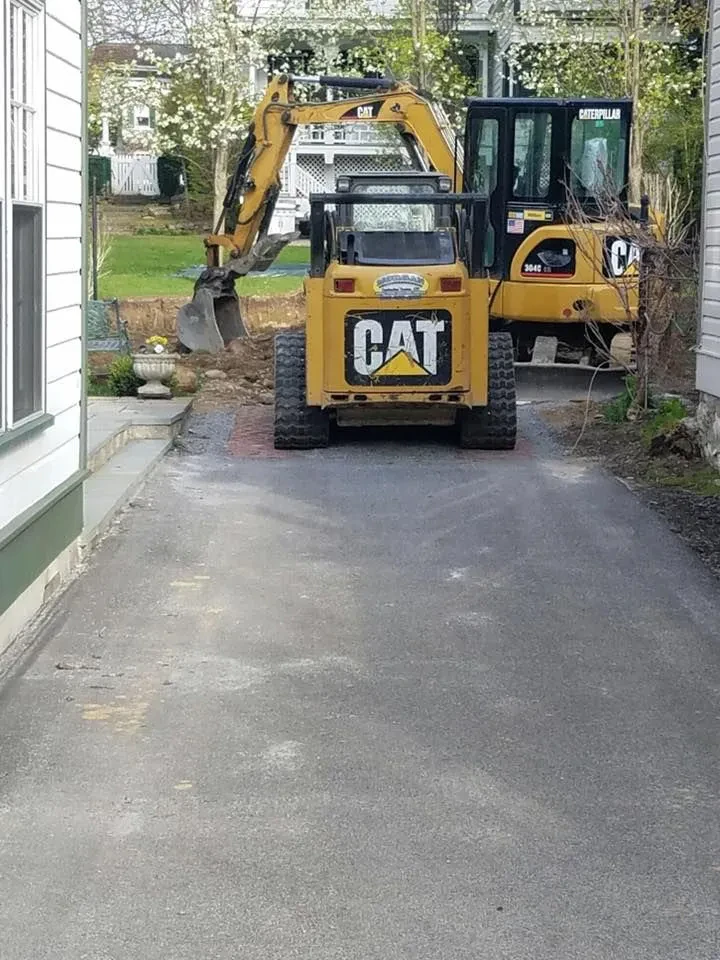
Excavation is the process of removing soil, rock, and the occasional buried “treasure” (usually just old pipes or a very confused garden gnome) to create a stable foundation. For paving, this means digging down to a specific depth, evicting unstable topsoil, and preparing the ground to support the weight of your SUV, the delivery truck, and twenty years of New York blizzards.
Most people think excavation is just digging a hole. It’s not. If it were that simple, you could just rent a backhoe and have a very destructive Saturday. It’s about creating the right conditions for everything that comes after. Without proper excavation, even premium asphalt will crack, sink, or shift. It’s like trying to build a skyscraper on a foundation of marshmallows—it’s not going to end well.
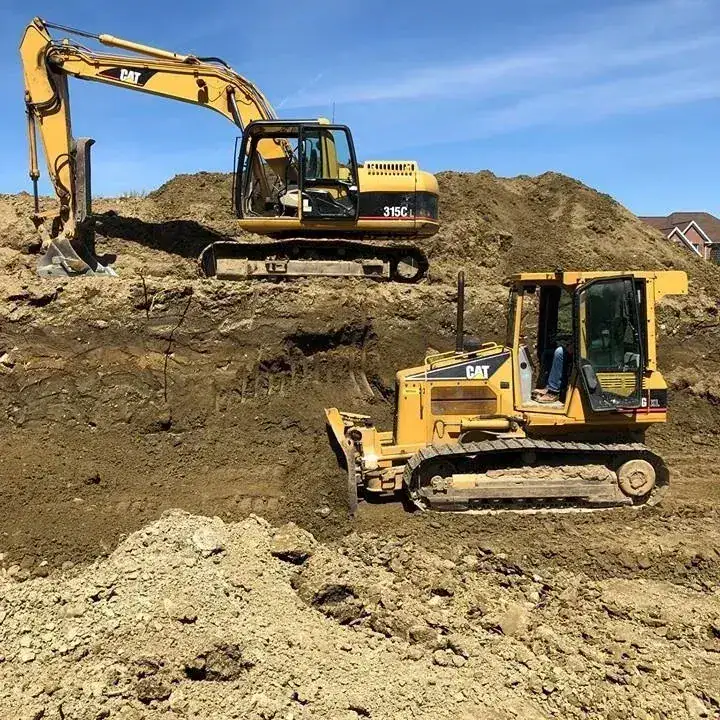
Depth matters. A lot. And the answer isn’t “until I get tired.”
For most residential driveways in Saratoga County, you’re looking at excavating 8 to 12 inches. That depth allows for a thick base of crushed stone—the “skeleton” of your driveway—plus the asphalt on top. Patios can sometimes get away with 7 to 9 inches because they aren’t supporting a 5,000-pound vehicle, but if you have that one uncle who parks his RV on the pavers, you better go deeper.
What happens when contractors cut corners? The base layer becomes too thin. Over time, the ground compresses unevenly, and you end up with “bird baths” (puddles) and cracks. In Upstate NY, our clay soil holds water like a sponge. When that water freezes, it expands and heaves your driveway up like it’s trying to escape.
Proper excavation removes that loose, organic topsoil—which is great for tomatoes but terrible for heavy trucks—and replaces it with compacted aggregate that stays put. If your contractor isn’t checking the soil type, they’re just guessing. And guessing is an expensive hobby in the paving world.
Water is the ultimate villain of every paved surface. And most drainage horror stories start during the excavation phase.
Proper grading means the ground slopes away from buildings. For driveways, we aim for a 1 to 2 percent slope—just enough to move water off the surface without making your basketball hoop feel like it’s on the side of a mountain. Without that slope, water sits. And sitting water is basically a slow-motion wrecking ball for your foundation.
In Saratoga and Warren County, where spring brings “mud season” and heavy rain, drainage isn’t optional. It’s the difference between a driveway that handles weather for decades and one that requires you to own a kayak to get to the mailbox.
Want live answers?
Connect with a Morgan Construction expert for fast, friendly support.
Cutting corners on excavation might save you a few hundred dollars today, but it’ll cost you thousands later. When a driveway fails because of bad prep work, the only real fix is to tear it all out and start over.
You’re essentially paying twice: once for the original job and once for the “I told you so” replacement. Plus, you have the added joy of having your yard look like a construction site for a second time. If a quote seems suspiciously low, check the excavation depth. If they’re only digging down four inches, you’re not getting a deal; you’re getting a temporary driveway.
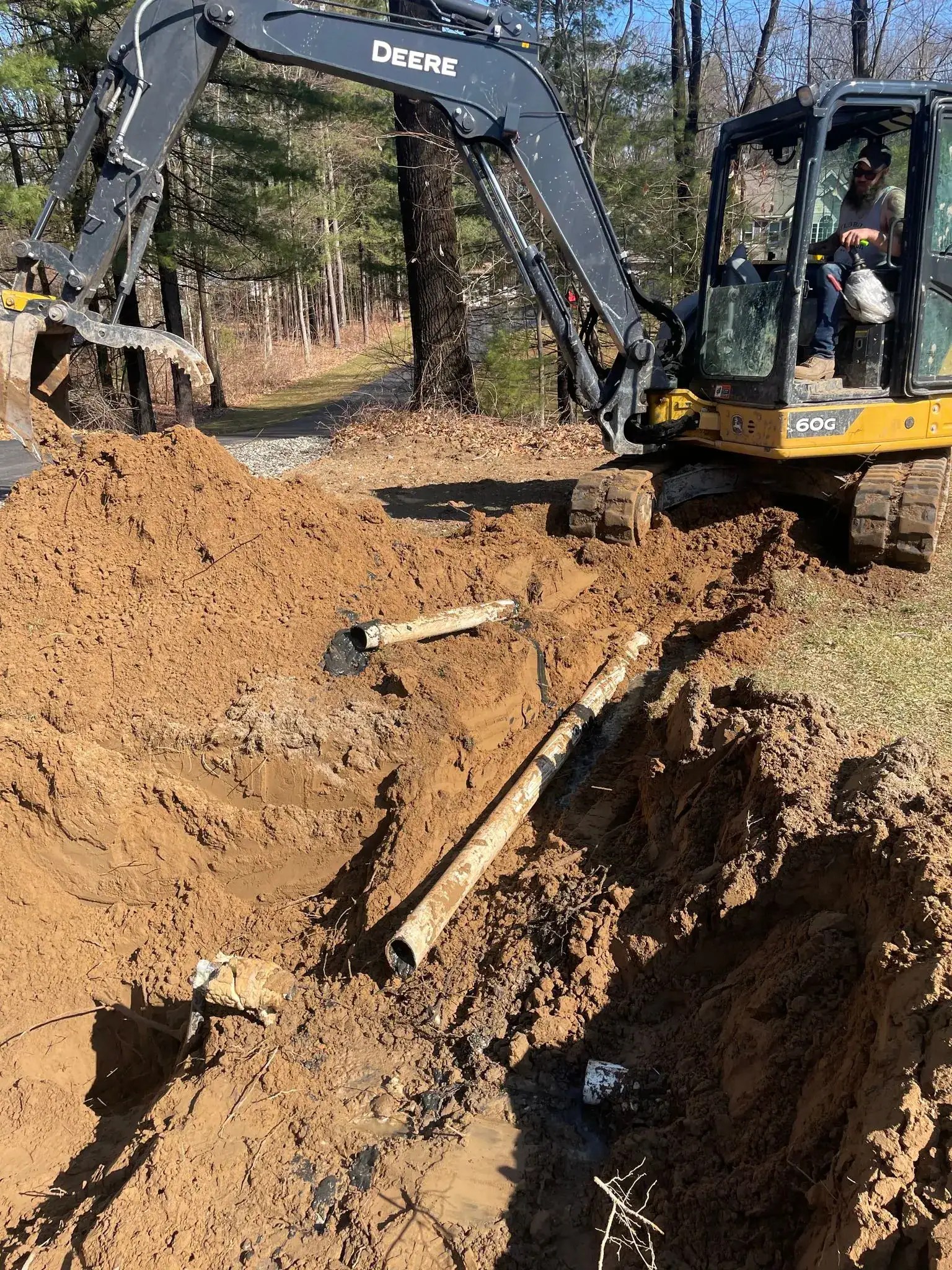
Professional excavation isn’t a “dig and dash” operation. It starts with site evaluation—marking utilities so we don’t accidentally turn off the neighborhood’s Wi-Fi—and establishing the grade.
The Compaction Secret: This is where the magic happens. We spread crushed stone in layers and use heavy rollers or plate compactors to squash it down. If the stone isn’t compacted properly, the first time you drive your car on it, it’s going to sink. We sometimes perform a “proof roll,” which is basically driving a heavy truck over the base to see if any spots go squish. If they do, we fix them before the asphalt even touches the ground.
Not all paving contractors are created equal. Some want to get to the “pretty” part of laying asphalt as fast as possible. The best contractors know that the “ugly” part—the digging and the dirt—is where the real work happens.
Excavation isn’t glamorous. Nobody ever posts a “Before and After” photo of a perfectly compacted sub-base on Instagram. But it’s the most important part of your project.
Get the dirt right, and your driveway will be a silent, reliable part of your home for 25 years. Get it wrong, and it’ll be a constant source of stress.
At Morgan Construction, we’ve spent 25 years getting our hands dirty so our clients don’t have to. We handle every project with hands-on owner involvement, making sure that your foundation is as rock-solid as our reputation.
Summary:
Article details:
Share: