Your driveway takes more abuse than almost any other part of your property. Between freeze-thaw cycles that crack asphalt, heavy vehicles that stress the surface, and the salt and snow that come with every upstate New York winter, it’s no wonder driveways don’t last forever. If you’re seeing cracks spreading, sections sinking, or water pooling where it shouldn’t, you’re probably wondering whether you need a quick fix or a complete overhaul. This guide walks you through the real costs, the material differences that matter in Albany County’s climate, and how to know when repair is enough versus when replacement is the only move that makes sense. Let’s start with the question most homeowners ask first.
Asphalt vs Concrete Driveway
Choosing between asphalt and concrete isn’t just about looks or budget. In Albany County, it’s about how each material handles what our climate throws at it. Asphalt costs less upfront, typically running $5 to $12 per square foot installed compared to concrete’s $6 to $15 per square foot. That gap matters when you’re paving a standard two-car driveway.
But here’s what the price tag doesn’t tell you. Asphalt flexes with temperature changes, which makes it better suited for freeze-thaw cycles. Concrete is rigid and durable, but it can crack when water seeps in and freezes. That’s a real consideration when Albany County sees months of below-freezing temperatures and dramatic swings between winter days.
Asphalt also needs more hands-on maintenance. You’ll seal it every three to five years to protect against oxidation and water damage. Concrete requires less frequent attention, though repairs tend to cost more when damage does occur. If you’re planning to stay in your home for decades, concrete’s 30 to 50-year lifespan might offset its higher initial cost. If you want a lower entry point and don’t mind regular upkeep, asphalt’s 15 to 30-year lifespan still delivers solid value.
Concrete or Asphalt Driveway for Freeze-Thaw Climates
Upstate New York doesn’t give driveways an easy ride. Water gets into cracks, freezes, expands, and forces those cracks wider. Then it thaws and the cycle starts again. This freeze-thaw process is brutal on rigid materials.
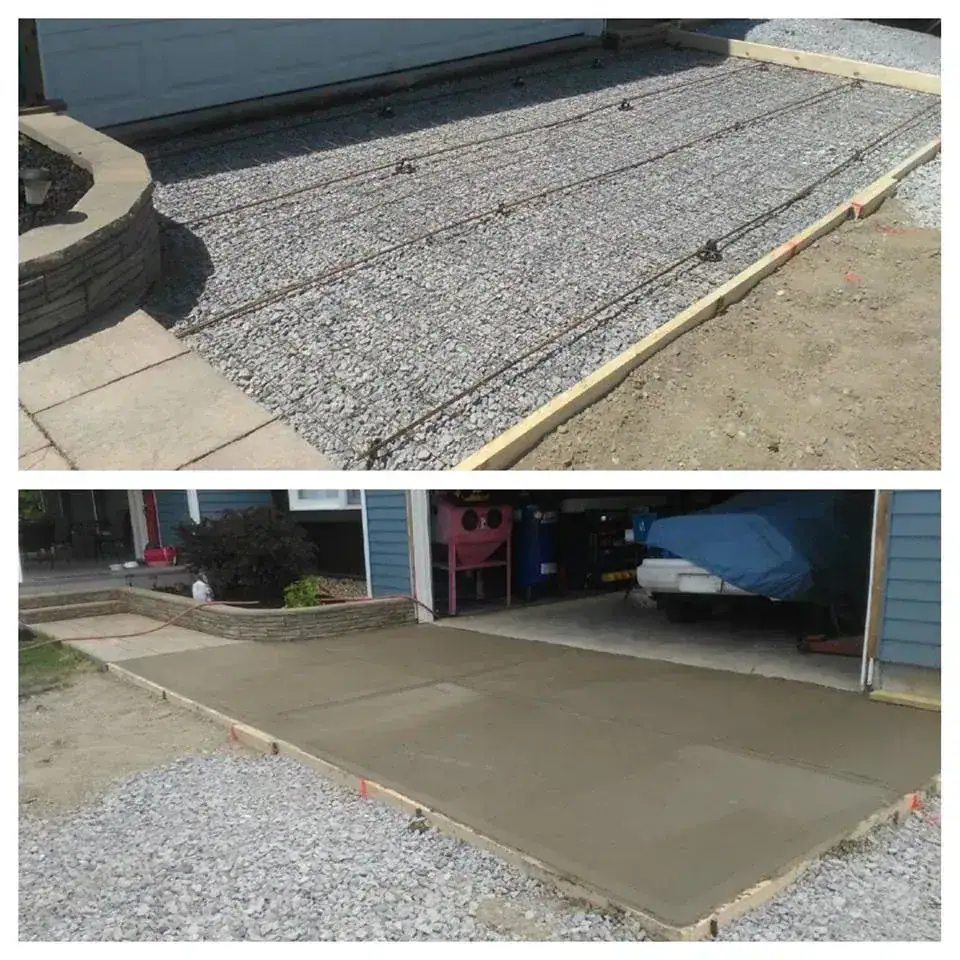
Asphalt’s petroleum-based composition lets it expand and contract without cracking as easily as concrete. That flexibility is why most paving contractors in cold climates lean toward asphalt for residential driveways. It’s not that concrete can’t work here—it absolutely can—but it requires more careful installation. You need proper drainage, the right concrete mix with air entrainment for freeze protection, and control joints placed correctly to manage cracking.
Concrete also struggles with road salt. The chemicals used to melt ice on driveways can cause spalling, where the surface layer flakes away and exposes the aggregate underneath. You’ll see this as rough, pitted patches that get worse each winter. Asphalt isn’t immune to salt damage, but it’s generally more forgiving.
If you’re set on concrete for its longevity or appearance, make sure your contractor understands local conditions. The installation matters more than the material. A well-installed concrete driveway with proper base preparation and drainage will outlast a poorly installed asphalt one. But if installation quality is equal, asphalt typically performs better in Albany County’s climate.
One more consideration: asphalt absorbs heat, which can help melt snow and ice faster in winter. That’s a small but real advantage when you’re clearing your driveway in January. Concrete stays cooler, which is great in hot climates but less helpful when you’re dealing with packed snow.
Stamped Concrete Driveway Costs and Considerations
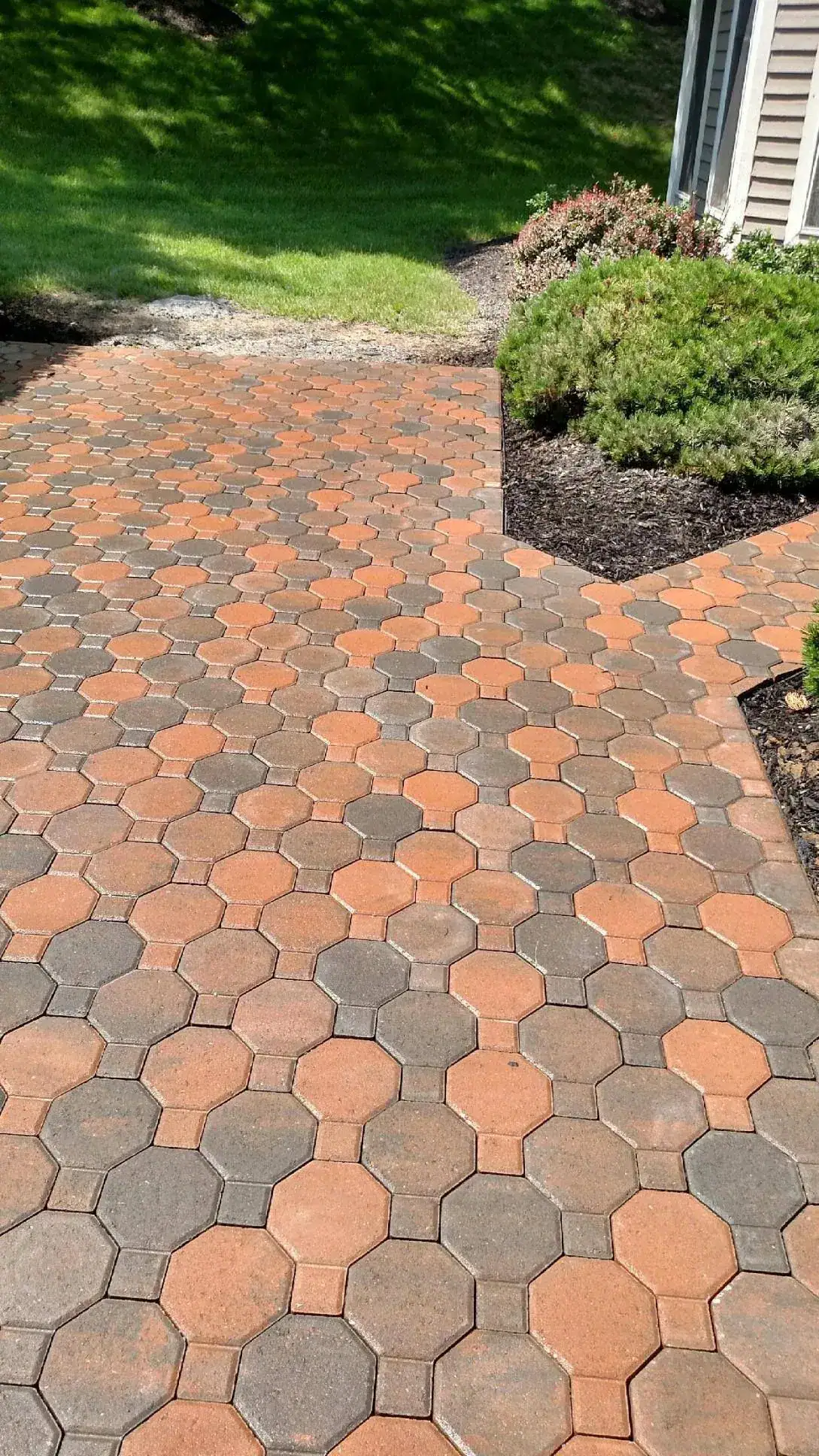
Stamped concrete gives you the look of stone, brick, or pavers without the individual-piece installation. It’s a popular choice for homeowners who want something more distinctive than plain gray concrete. Expect to pay $12 to $18 per square foot installed for a stamped concrete driveway with basic to average coloring and design complexity.
That’s roughly double what you’d pay for standard asphalt and noticeably more than plain concrete. For a typical 600-square-foot two-car driveway, you’re looking at $7,200 to $10,800. The price climbs if you want intricate patterns, multiple colors, or custom borders.
Here’s what you need to know about stamped concrete in our climate. The decorative surface doesn’t change how the concrete handles freeze-thaw cycles. You still need proper base preparation, adequate thickness (usually 4 to 6 inches), and control joints to manage cracking. The stamped pattern can actually make cracks more visible when they do appear, since they’ll cut across the design.
Maintenance matters more with stamped concrete. You’ll want to reseal it every two to three years to protect both the color and the surface. Salt and deicing chemicals can fade the color and damage the finish, so you’ll need to be more careful about what you use in winter. Some homeowners switch to sand or calcium magnesium acetate instead of rock salt to preserve the appearance.
If curb appeal is your priority and you have the budget, stamped concrete delivers. Just go in with realistic expectations about maintenance and know that the decorative finish won’t make the driveway more durable—it just makes it look better. The structural performance still comes down to proper installation, adequate drainage, and a solid base that won’t shift or settle.
Driveway Refinishing Cost
Refinishing—or resurfacing—means adding a new layer over your existing driveway instead of tearing it out and starting over. It’s a middle-ground option that costs less than replacement but delivers more than basic repairs. Asphalt resurfacing typically runs $1 to $3 per square foot, while concrete resurfacing costs $3 to $10 per square foot depending on the finish you choose.
For a 600-square-foot driveway, that translates to $600 to $1,800 for asphalt or $1,800 to $6,000 for concrete. Compare that to $4,200 to $9,000 for new asphalt installation or $4,800 to $12,000 for new concrete, and you can see why resurfacing appeals to budget-conscious homeowners.
But resurfacing only makes sense if your existing driveway has a solid foundation. If the base is failing, if you have widespread cracking affecting more than 30 percent of the surface, or if sections are sinking due to soil movement, resurfacing just puts a temporary band-aid on a structural problem. You’ll be back to square one within a year or two.
Resurfacing a Driveway Cost vs. Replacement
The decision between resurfacing and replacement comes down to what’s happening beneath the surface. Resurfacing works when your driveway’s problems are mostly cosmetic—fading, minor surface cracks, or light wear from years of use. If the foundation is sound and drainage is adequate, a new top layer can buy you another 8 to 15 years of life.
Replacement makes sense when you’re dealing with structural issues. Major cracks wider than half an inch, sections that have heaved or settled significantly, persistent drainage problems, or a driveway that’s already been patched multiple times without lasting results—these are signs that the base has failed. No amount of resurfacing will fix that.
Age matters too. If your driveway is less than 15 years old and damage covers less than 30 percent of the surface, resurfacing is usually the smarter financial move. If it’s 25 years old or more and showing multiple problems simultaneously, replacement is likely more cost-effective in the long run. You’ll spend less on one replacement done right than on repeated resurfacing attempts that don’t address the root cause.
Here’s a practical way to think about it: if the cost of resurfacing approaches 50 percent of what replacement would cost, and your driveway is already showing its age, replacement probably makes more sense. You’re not just paying for a new surface—you’re getting a properly prepared base, correct drainage, and another 20 to 40 years of service life depending on the material.
One more factor: timing and convenience. Resurfacing typically takes one to two days and you can use the driveway within 24 to 48 hours for asphalt or 7 days for concrete. Replacement requires excavation, base preparation, and installation, which can take a week or more. If minimizing disruption is important, resurfacing has an advantage—but only if it’s actually going to solve your problem.
Cost to Resurface Asphalt Driveway in Albany County
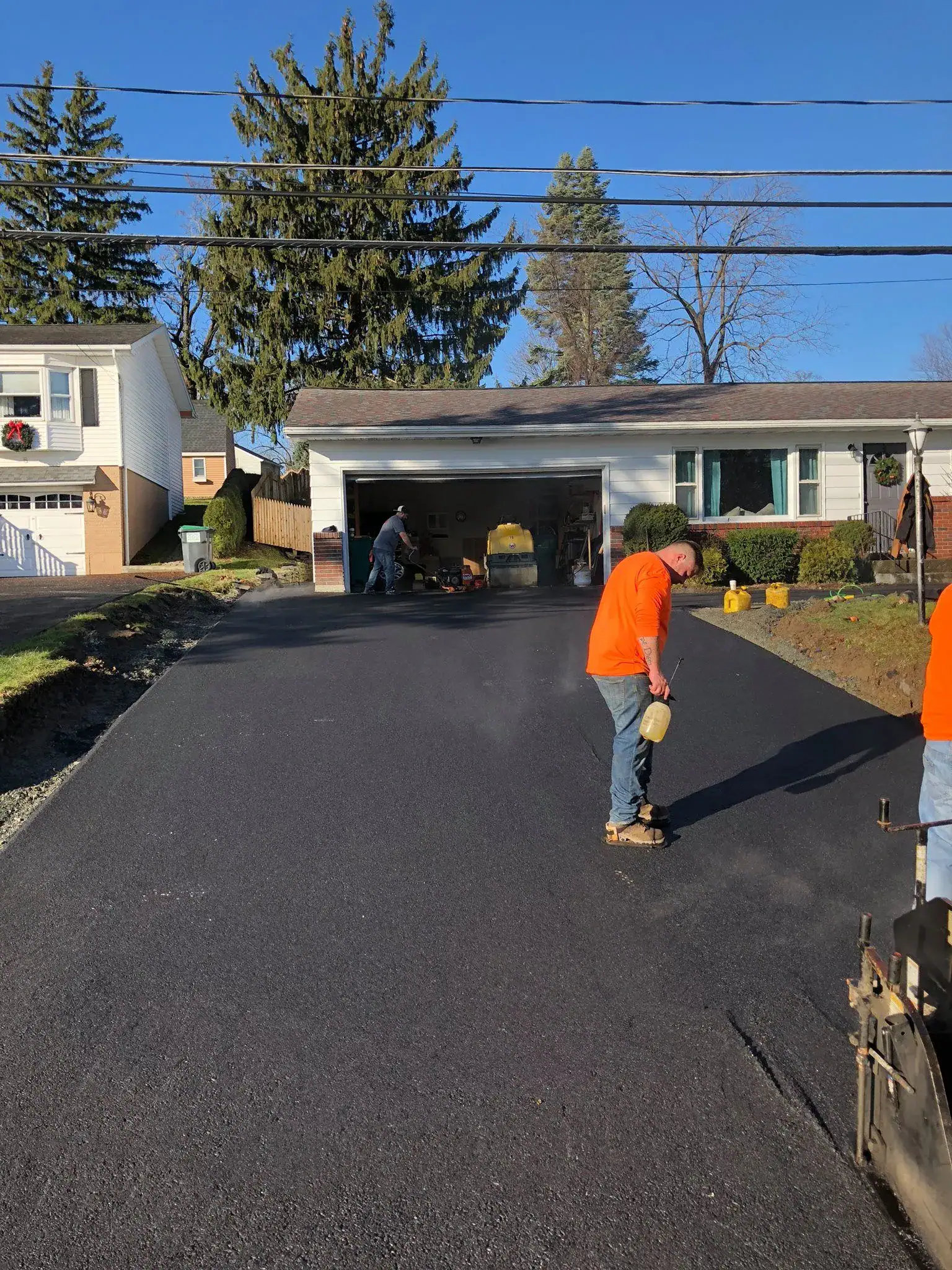
Asphalt resurfacing in the Albany County area typically costs $1 to $3 per square foot, though you might see prices slightly higher depending on site conditions and the contractor you choose. For a standard 600-square-foot driveway, expect to pay $600 to $1,800 for materials and labor.
That price includes removing the top layer of damaged asphalt (usually 1 to 2 inches), preparing the surface, and applying a fresh layer of hot-mix asphalt. It doesn’t include fixing major base problems, adding new drainage, or expanding the driveway’s footprint. Those would be separate line items.
Local conditions affect pricing. If your driveway is on a steep slope, has tight access that limits equipment, or requires significant prep work to address surface irregularities, costs will climb. Spring and fall are the most popular times for asphalt work in upstate New York, so scheduling during peak season might mean higher prices or longer wait times.
One thing to watch for: make sure your contractor is actually resurfacing and not just applying a seal coat. Seal coating costs $0.17 to $0.24 per square foot and only protects the existing surface—it doesn’t add structural thickness or fix anything beyond minor surface wear. Resurfacing adds a new layer of asphalt that restores the driveway’s integrity. They’re different services with different price points.
Also ask about the asphalt mix. Standard hot-mix asphalt works for most residential driveways, but if you have specific needs—like a driveway that handles heavy vehicles or one that needs better flexibility for extreme temperature swings—there are specialty mixes available. They cost more, but they perform better in challenging conditions.
Finally, factor in sealing. After resurfacing, you’ll want to seal the asphalt within 6 to 12 months and then every 3 to 5 years after that. Seal coating costs $80 to $240 for a typical residential driveway and significantly extends the life of the resurfaced asphalt. Skipping this step means you’ll be resurfacing again sooner than necessary.
Making the Right Choice for Your Albany County Driveway
Your driveway is a significant investment, and the right choice depends on your specific situation—the age and condition of your existing driveway, your budget, how long you plan to stay in your home, and what you’re willing to maintain. Asphalt costs less upfront and handles freeze-thaw cycles well, but it needs regular sealing. Concrete costs more initially and lasts longer, but it’s less forgiving in our climate without proper installation.
If you’re dealing with minor surface issues and a solid foundation, resurfacing can extend your driveway’s life at a fraction of replacement cost. If you’re seeing structural problems, widespread damage, or persistent drainage issues, replacement is the move that actually solves the problem instead of postponing it.
The key is getting an honest assessment from someone who knows Albany County conditions and won’t try to sell you more than you need. We’ve been handling driveway projects across the region for over 25 years, personally managing every job from first contact through completion. If you’re ready to talk through your options or get a transparent estimate on your project, reach out to us. No pressure, no gimmicks—just straightforward answers based on what your driveway actually needs.