Asphalt paving company also offering concrete work, excavating, and snow removal services.
Contact Info
-
130 Co Rd 70
Stillwater, NY 12170 - Call: 518-935-3068
- Text: 518-935-3068
- Mon - Sun: 7am - 7pm
Contact Info
Planning a driveway in Saratoga or Warren County? This guide covers what you need to know about base preparation, material costs, and surviving New York's freeze-thaw cycles.
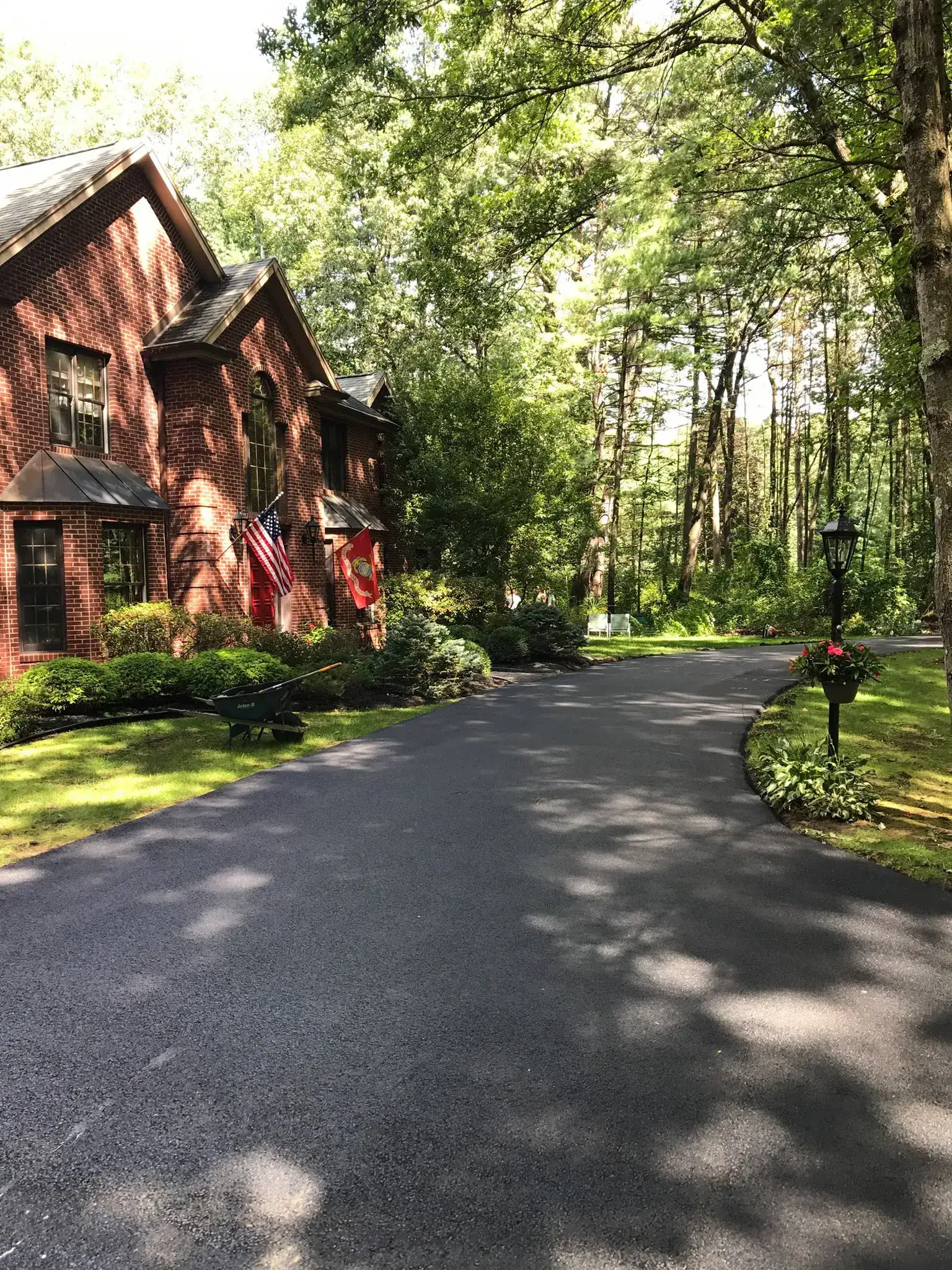
The base is everything. It’s not dramatic, it’s not visible once the asphalt goes down, but it’s the single factor that determines whether your driveway holds up or falls apart.
A properly prepared base combines a well-graded subgrade, a stable subbase, and a robust base course using crushed stone or gravel. For residential driveways in our region, that means 6 to 8 inches of compacted gravel base supporting 2 to 3 inches of compacted asphalt surface. Without that foundation, even premium asphalt will crack, sink, and fail.
The base distributes weight, prevents shifting, and stops water from pooling underneath the surface where freeze-thaw cycles do their worst damage. Skipping proper base prep is the most common cause of early driveway failure, and it’s exactly where contractors cut corners when they’re trying to win on price alone.
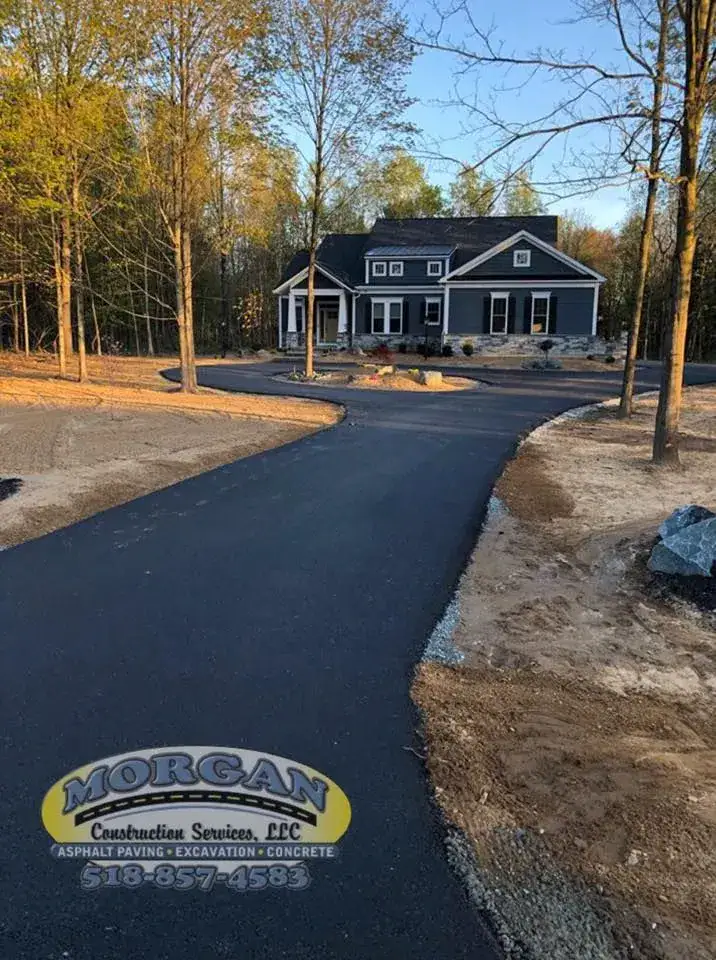
Water is your driveway’s worst enemy, especially in Saratoga County and Warren County where we deal with heavy seasonal rainfall and 30 to 40 freeze-thaw cycles every year. Proper excavation and grading make sure water flows away from your driveway instead of sitting on the surface or seeping into the base.
Excavation involves removing the topsoil and any organic material down to stable subgrade. The depth depends on soil conditions and expected traffic, but for most residential driveways, you’re looking at 8 to 10 inches of excavation to accommodate the base layers. Grading creates a slight slope, typically 1 to 2 percent, that directs water runoff toward the sides and away from structures.
When water pools on your driveway or saturates the base, freeze-thaw cycles turn minor cracks into major problems. Water seeps in, freezes overnight, expands, and bursts the asphalt apart. That’s how hairline cracks become potholes. Proper grading stops this before it starts.
The grading also needs to account for drainage channels, gutters, or natural runoff paths. Standing water doesn’t just damage the surface. It erodes the base material underneath, creating voids that cause sinking and cracking. A well-graded driveway might look flat when you’re standing on it, but it’s engineered to move water efficiently without you even noticing.
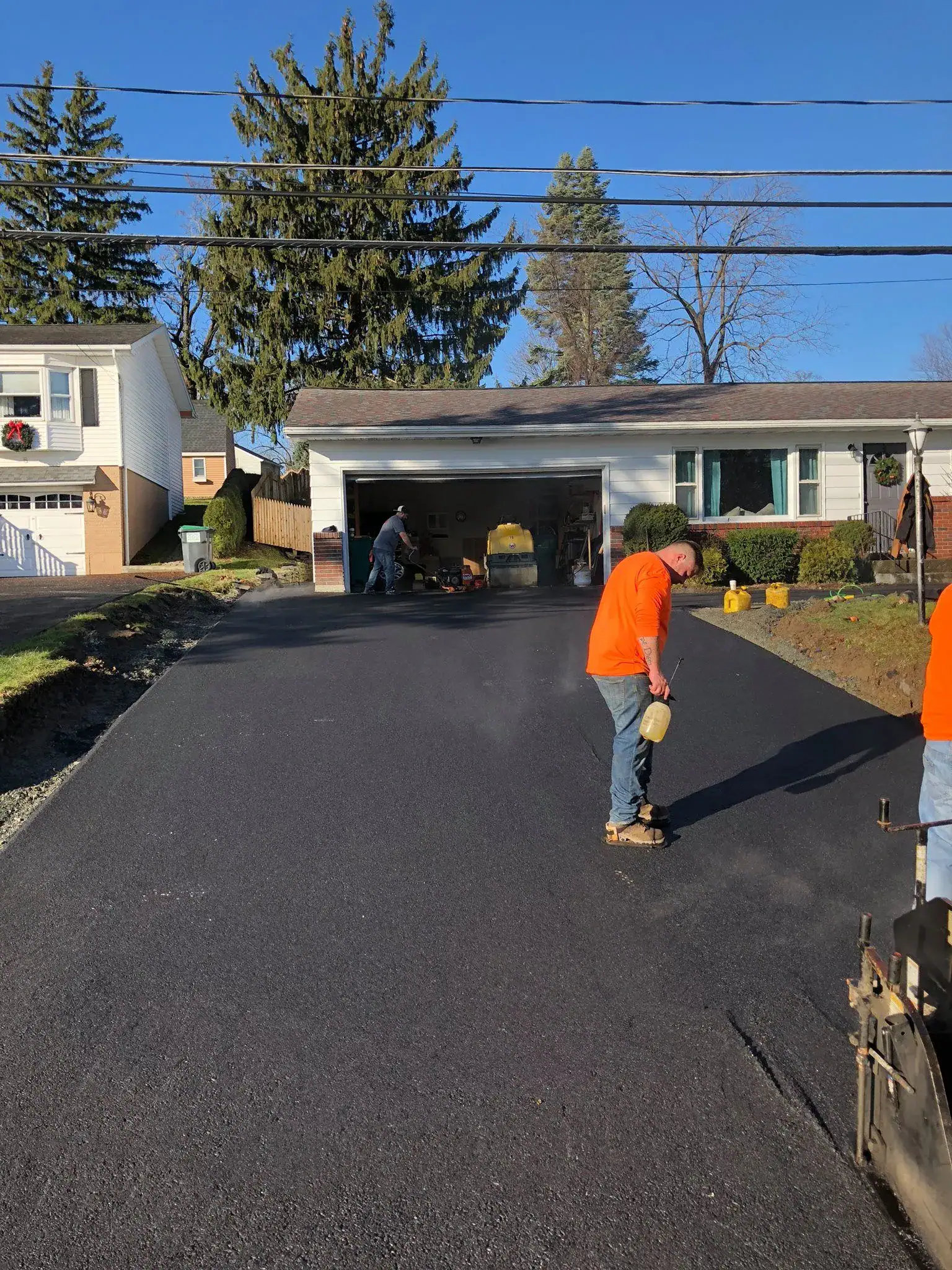
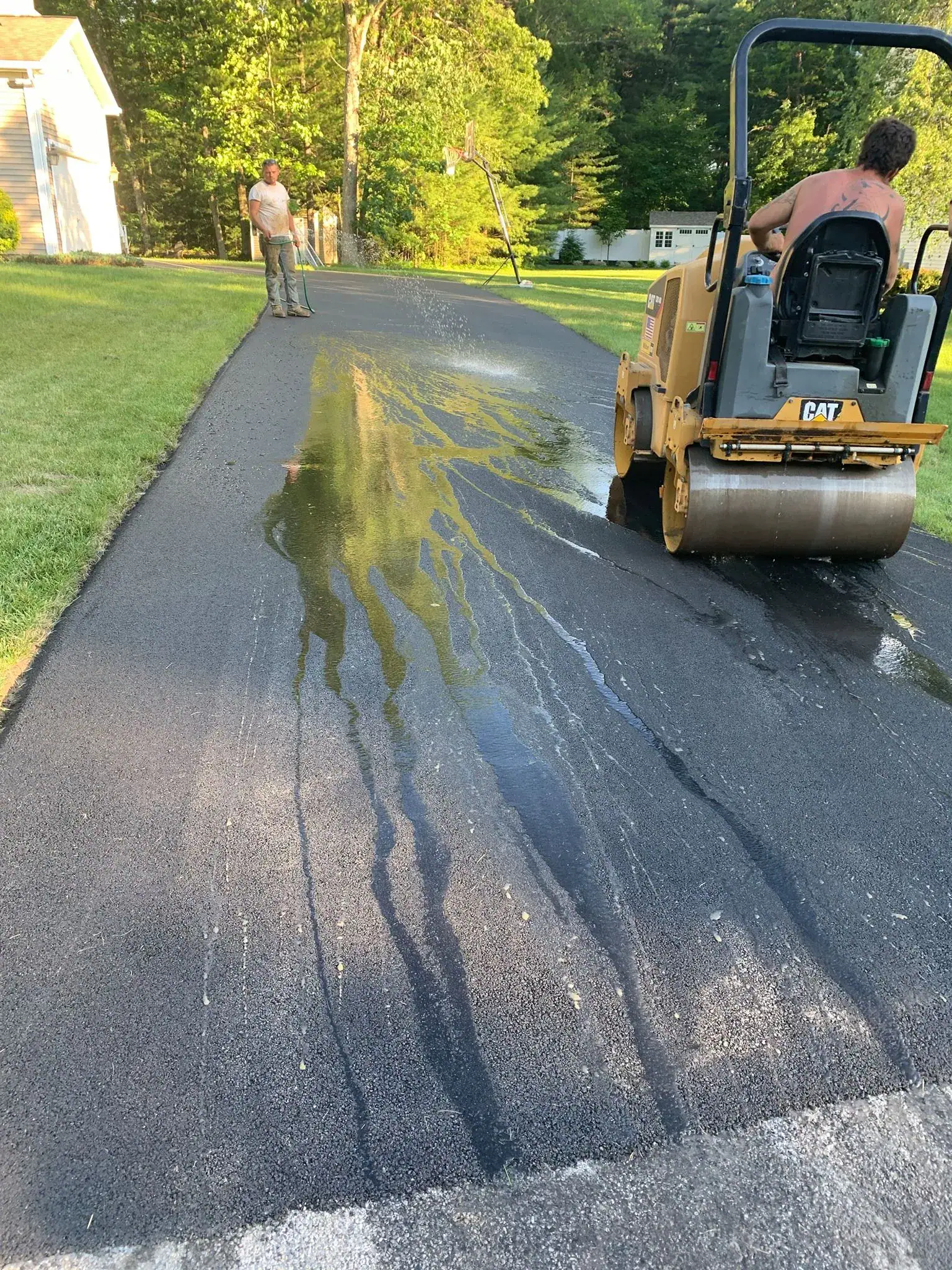
Compaction is the other critical step most people don’t see. Each layer of base material needs to be thoroughly compacted using heavy machinery before the next layer goes down. Loose or poorly compacted base material shifts under weight, and that movement translates directly into surface cracks. The base should ideally sit for about a week after compaction to allow natural settling before asphalt installation begins.
Not all base materials perform the same. Crushed stone and gravel offer the stability and drainage properties that make a driveway last. These materials compact well, provide excellent load distribution, and allow water to drain through instead of pooling at the surface.
The subbase layer, placed directly on top of the subgrade, typically uses granular aggregate like crushed stone or gravel. This layer is laid in sections, with each section compacted to the required density before the next goes down. Thickness usually runs 4 to 6 inches depending on soil conditions and anticipated load.
The base course sits on top of the subbase and serves as the main load-bearing layer directly beneath the asphalt. Crushed stone, often called crusher run or road base, is the preferred material here because of its compaction and drainage characteristics. Like the subbase, it’s constructed in compacted layers, typically 4 to 6 inches thick, but thickness can vary based on local conditions and traffic load.
Recycled concrete aggregate is another option that’s becoming more common. It’s crushed concrete from old structures, and it provides a cost-effective and environmentally friendly alternative that still delivers solid performance. Some contractors blend recycled materials with fresh aggregate to balance performance and sustainability.
Cheap or unsuitable base materials are where budget contractors save money and where your driveway pays the price. Using sand instead of gravel for the base layer, skimping on thickness, or failing to compact properly all lead to premature failure. You won’t see the problem until months or years later when cracks start spreading and sections start sinking.
The base also acts as a frost barrier in cold climates like ours. It helps reduce winter damage from freezing and thawing by providing a stable platform that doesn’t heave when the ground freezes. Without adequate base thickness and proper material selection, frost penetration reaches the subgrade, ice lenses form, and your driveway lifts unevenly. When spring thaw arrives, those areas sink and crack.
Want live answers?
Connect with a Morgan Construction expert for fast, friendly support.
Cost matters, but understanding what drives the price matters more. In 2026, driveway paving cost in New York reflects rising material prices, labor rates, and the logistics of getting the job done right.
A typical two-car asphalt driveway of around 600 square feet ranges from $3,000 to $9,000 depending on thickness, base preparation, and site conditions. Concrete driveways of similar size typically fall between $2,700 and $5,400, though premium installations can run higher. Labor now accounts for 40 to 60 percent of total project cost, and that percentage increases when excavation, drainage work, or difficult site access is involved.
The price you pay isn’t just for asphalt. It’s for excavation, proper base materials, compaction equipment, grading, drainage solutions, and the experience to do it correctly the first time.
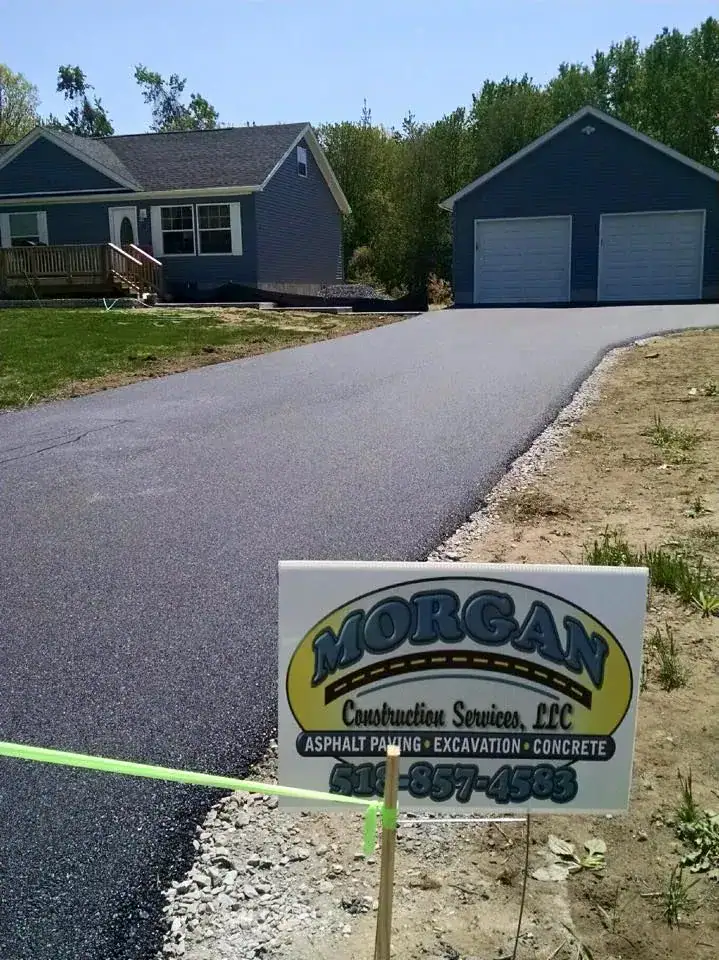
Several factors push costs up, and knowing which ones apply to your project helps you budget accurately. Excavation depth is one. If your soil is poor, rocky, or has hardpan, we need to dig deeper and replace more material with compacted aggregate. That increases both labor and material costs.
Demolition adds to the price if you’re replacing an existing driveway. Removing old asphalt, concrete, or pavers requires heavy machinery, and hauling the material off-site isn’t free. If tree or stump removal is required before work can begin, that’s another line item.
Drainage is often underestimated. New York receives heavy seasonal rainfall, and proper grading, trench drains, or drainage channels are essential to prevent water from pooling and causing foundation damage. These systems increase upfront costs but prevent major repairs later.
Thickness matters too. Most residential driveways need 2 to 3 inches of asphalt for typical vehicle traffic. If you’re expecting heavier vehicles like RVs, delivery trucks, or construction equipment, you’ll need 3 to 4 inches of asphalt over an 8 to 10 inch base. Thicker installations cost more but last longer and handle the load without deformation.
Permits can add $50 to $500 depending on your location and project scope. Skipping permits risks stop-work orders and fines, and cutting corners here almost always backfires. Check with local authorities in Saratoga County or Warren County before work begins.
Asphalt overlays, where a new layer is applied over existing asphalt, cost less than full replacement. Expect $3 to $7 per square foot for an overlay compared to $7 to $13 per square foot for a complete new installation. Overlays work when the existing base is still solid and the surface damage is primarily cosmetic. They won’t save a driveway that’s covered in holes and spiderweb cracks.
The lowest bid isn’t always the best value. Suspiciously low quotes usually mean cheap materials, rushed labor, or poor prep work. Poor installation can shave 5 to 10 years off your pavement’s lifespan, turning what looked like savings into expensive repairs.
New York’s climate is tough on driveways. Saratoga County and Warren County experience approximately 30 to 40 freeze-thaw cycles annually, and each cycle tests your pavement’s ability to handle expansion, contraction, and water infiltration.
Here’s how it works. Water seeps into cracks or porous areas in the asphalt. When temperatures drop overnight, that water freezes and expands. The expansion puts enormous stress on the asphalt structure, widening cracks and breaking apart the surface. When temperatures rise and the ice thaws, the water drains away, leaving larger cracks and voids. The cycle repeats all winter.
Asphalt performs well in freeze-thaw conditions because it flexes instead of cracking like rigid concrete. The material’s petroleum-based composition allows it to contract and expand with temperature changes without developing stress cracks. The dark surface also absorbs sunlight during winter days, naturally melting snow and ice faster than lighter surfaces.
But flexibility only helps if the base underneath is solid. If water penetrates the base and freezes, it creates ice lenses that cause the ground to heave. Your driveway lifts unevenly, bending the asphalt layer and inducing cracks. When spring thaw arrives, the ice melts, the ground settles, and sections of your driveway sink or buckle.
Proper base preparation prevents this. A well-compacted base with adequate thickness acts as a frost barrier, reducing winter damage from freezing and thawing. It provides a stable platform that doesn’t heave when the ground freezes, and it drains water away before it can pool and freeze in place.
Sealcoating adds another layer of protection. A high-quality sealcoat creates a protective membrane across the entire surface, repelling water and preventing it from seeping into cracks. Most experts recommend sealing a new asphalt driveway after one year, then every 2 to 3 years thereafter. This schedule protects the surface from oxidation, water damage, and UV rays.
Maintenance matters too. Spend a few minutes every month inspecting your driveway for cracks or edge issues. Small cracks can be filled with rubberized crack filler before they expand. Larger cracks, alligator patterns, or widespread damage require professional repair. Addressing problems early prevents water infiltration and limits the damage freeze-thaw cycles can cause.
You now understand what separates driveways that last from driveways that fail. Proper base preparation, realistic cost expectations, and attention to drainage and freeze-thaw protection are what matter. The decisions you make now determine whether you’re looking at 20 years of reliable performance or expensive repairs in three.
Choose a contractor based on experience, not price. Look for someone who explains the process, shows you what proper base prep looks like, and doesn’t cut corners to win the bid. Direct communication, transparent pricing, and hands-on management make the difference between a project that meets expectations and one that exceeds them.
If you’re ready to move forward with a driveway that’s built right the first time, we bring over 25 years of owner-operated experience to every project in Saratoga County and Warren County. Reach out for straightforward answers and a realistic assessment of what your project needs.
Summary:
Article details:
Share: