Asphalt paving company also offering concrete work, excavating, and snow removal services.
Contact Info
-
130 Co Rd 70
Stillwater, NY 12170 - Call: 518-935-3068
- Text: 518-935-3068
- Mon - Sun: 7am - 7pm
Contact Info
Spring is the perfect time to repair winter-damaged driveways. Learn why hiring a reliable paving company protects your investment and boosts curb appeal.
New York winters are tough on asphalt. Saratoga County and Warren County see 30 to 40 freeze-thaw cycles every single year. That’s not a typo.
When water seeps into small cracks, it freezes and expands by nearly 10 percent. That expansion pushes your asphalt apart from underneath. Then it thaws, contracts, and the cycle repeats. What starts as a hairline crack in November becomes a pothole by March.
Your driveway isn’t failing because it’s old. It’s failing because water is winning. And if you ignore it through another season, you’re not just looking at resurfacing anymore. You’re looking at excavation, base repair, and a full replacement.
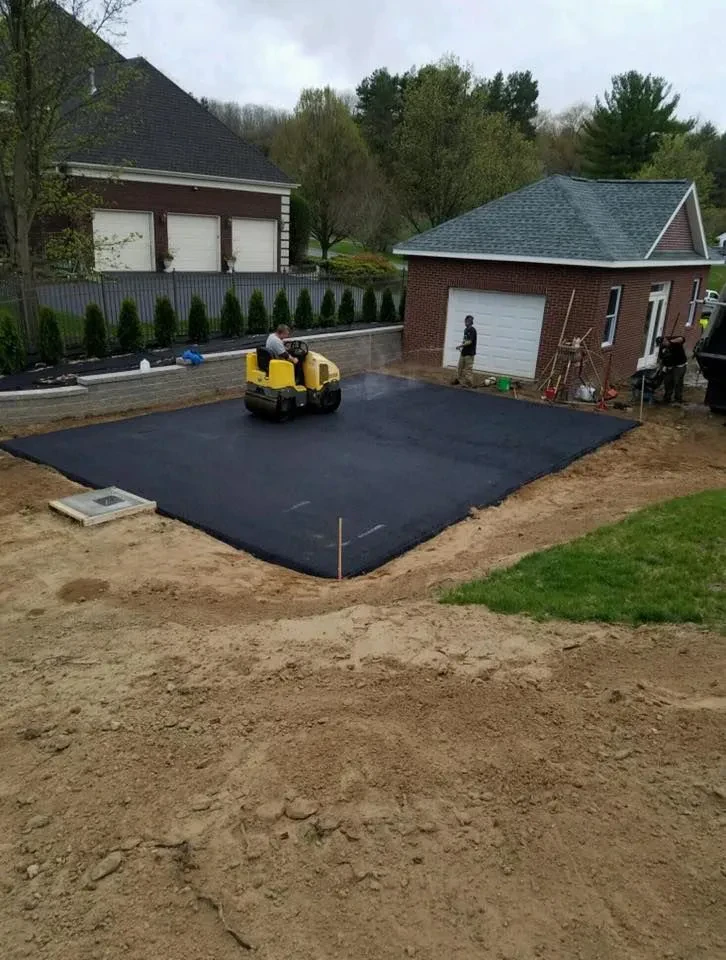
The freeze-thaw cycle is the single biggest threat to residential asphalt paving in our region. It’s not the cold itself that destroys driveways. It’s the constant expansion and contraction.
Here’s what actually happens beneath the surface. Water finds its way into any opening, no matter how small. When temperatures drop below freezing, that water turns to ice and expands with serious force. Asphalt can only stretch so far before it cracks. Then when it warms up, the ice melts, leaving a bigger gap than before.
This process repeats dozens of times each winter. Small cracks become large splits. Surface damage turns into base failure. And once water reaches the foundation layer under your driveway, the entire structure becomes compromised.
You’ll notice the edges crumbling first. That’s because water runs off to the sides and sits there, doing its damage. Low spots start to form where the base has washed away underneath. Eventually, you get that sinking feeling when you drive over certain sections. That’s not just surface wear. That’s structural failure.
Drainage plays a huge role here too. If water pools on your driveway instead of running off properly, you’re giving freeze-thaw cycles more ammunition. A driveway that doesn’t slope correctly will always fail faster than one with proper grading. That’s why professional installation matters from day one.
The damage compounds quickly. Once cracks form, they invite more water. More water means more freezing. More freezing means bigger cracks. It’s a cycle that accelerates every season you wait. Spring repairs cost a fraction of what you’ll pay if you let this continue through another winter.
Walk your driveway right now and look for these warning signs. If you see any of them, spring is the time to act.
Cracks wider than a quarter-inch need immediate attention. Small cracks you can seal yourself, but once they widen, water has already reached the base layer. You’ll also notice spiderweb patterns, sometimes called alligator cracking. That’s a sign the foundation underneath has failed.
Potholes are obvious, but what about depressions? Those low spots where water collects after rain are just potholes waiting to happen. They mean the base has already started to fail. You might not see a hole yet, but the damage is done underneath.
Check your edges. If the sides of your driveway are crumbling or breaking away, water is undermining the base. This kind of damage spreads inward over time. What starts at the edge eventually affects the entire width of your driveway.
Drainage issues show up as standing water that doesn’t drain within a few hours of rain. If you have puddles that stick around, your driveway isn’t graded properly. That standing water is actively destroying your asphalt every time temperatures drop.
Fading and surface wear are normal, but when you can see aggregate—the stones in the asphalt mix—clearly exposed, your surface layer is too thin. That’s when water penetration accelerates. You might also notice areas that feel soft or spongy when you walk on them. That’s base failure, and it requires more than just a patch.
If your driveway is more than 15 years old and showing any of these signs, resurfacing might not be enough. We can assess whether you need repairs, resurfacing, or full replacement. That assessment alone is worth the call, because guessing wrong costs you money.
Want live answers?
Connect with a Morgan Construction expert for fast, friendly support.
Timing matters more than most homeowners realize. You can’t just pave whenever it’s convenient. Asphalt installation requires specific temperature conditions to cure properly.
Spring offers that perfect window. Temperatures are moderate, usually between 50 and 70 degrees. The ground has thawed completely. There’s no risk of frost heaving the base layer. And you’re getting the work done before summer heat makes fresh asphalt too soft or before fall brings unpredictable weather.
Winter is obviously out. Summer heat can be tricky because fresh asphalt stays soft longer, making it vulnerable to tire marks and impressions. Fall works, but you’re racing against dropping temperatures. Spring gives you the best conditions and the most flexibility in scheduling.
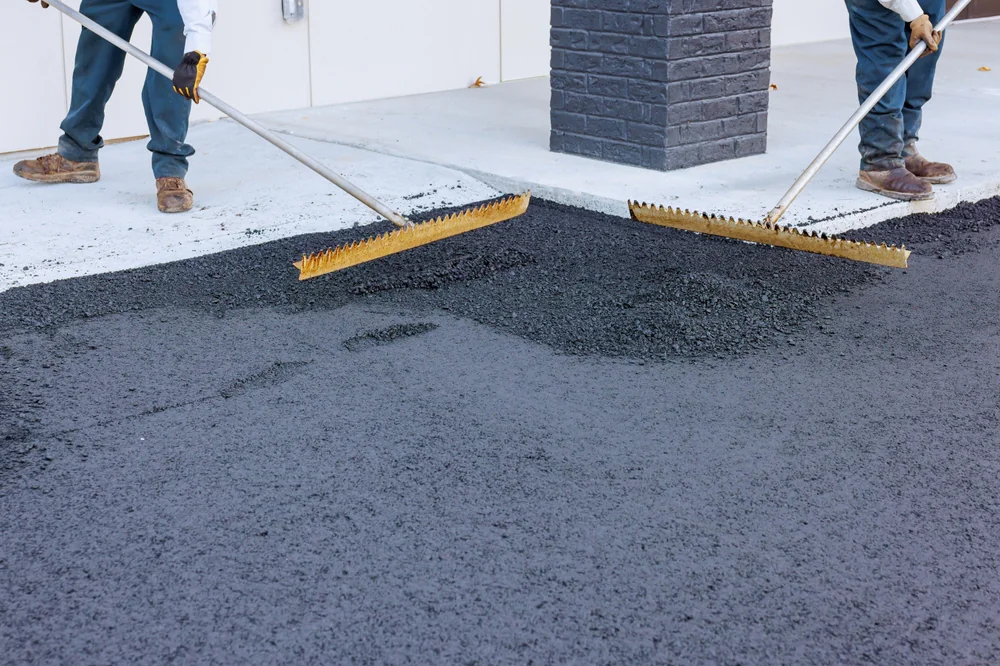
A new driveway isn’t just maintenance. It’s an investment that pays back when you sell. Real estate data shows that driveway paving adds between $5,000 and $7,000 to your home’s value. That’s a 50 to 75 percent return on investment.
Curb appeal drives first impressions. When buyers pull up to your house, they see the driveway before they see anything else. A smooth, clean asphalt surface signals that you’ve taken care of the property. Cracks and potholes signal deferred maintenance and negotiation opportunities for buyers.
The return on investment for exterior improvements outperforms interior renovations. Recent data shows exterior upgrades like driveways deliver better ROI than kitchen remodels. That’s because buyers can see the value immediately, and they know a failing driveway is an expense they’ll face soon after purchase.
Asphalt driveways specifically can boost your home value by 5 to 10 percent according to real estate professionals. That’s not just about looks. It’s about functionality, safety, and the peace of mind that comes with knowing the driveway won’t need replacement for another 15 to 20 years.
If you’re planning to sell within the next few years, spring driveway paving should be at the top of your prep list. If you’re staying put, you’re still adding value while enjoying a safer, better-looking property. Either way, it’s one of the smarter home improvement investments you can make.
Driveway resurfacing cost is significantly less than full replacement. If your base is still solid, you’re looking at $1 to $3 per square foot for resurfacing versus $5 to $12 per square foot for new installation. For an average driveway, that’s the difference between $1,200 and $6,000. A professional assessment tells you which option makes sense for your situation.
Not all paving contractors deliver the same results. The difference between a driveway that lasts 15 years and one that fails in five often comes down to who you hire.
Experience in your specific region matters. Saratoga County and Warren County have unique soil conditions, climate challenges, and building requirements. A contractor who understands local freeze-thaw cycles, proper base preparation for our soil types, and drainage solutions for upstate New York will deliver better results than someone working from a generic playbook.
Look for owner-operated companies where you’ll have direct access to the person responsible for your project. When the owner is involved from estimate to completion, accountability stays high. You’re not dealing with sales reps who disappear after you sign or crew leaders who’ve never met the person who quoted your job.
Transparent pricing matters more than the lowest bid. If a quote seems too good to be true, it probably is. Reliable contractors provide detailed estimates that break down materials, labor, and timeline. We explain what we’re doing and why. We don’t surprise you with change orders or hidden fees halfway through the job.
Ask about the process. How do we prepare the base? What thickness of asphalt do we install? How do we handle drainage? What kind of compaction equipment do we use? A contractor who can answer these questions in plain language is someone who knows their craft. Someone who gets defensive or vague is someone you should avoid.
References and local reputation tell you everything. Ask for examples of work we’ve done in your area. Drive by and look at driveways we paved five or ten years ago. Talk to neighbors who’ve used us. Word-of-mouth reputation in a small community like ours is hard to fake.
Insurance and documentation aren’t exciting, but they’re essential. Make sure any contractor you hire carries proper insurance and can provide detailed contracts and warranties. You want everything in writing before work starts. That protects both of you and ensures everyone understands the scope, timeline, and expectations.
Your driveway has survived another brutal New York winter. Now it’s time to address the damage before it gets worse and costs more to fix.
Spring offers ideal conditions for asphalt work. Temperatures are right, contractors have availability, and you’ll have a smooth, safe surface for the rest of the year. Whether you need repairs, resurfacing, or a complete new installation, working with a reliable paving company ensures the job is done right the first time.
The investment pays back in home value, curb appeal, and peace of mind. You’ll drive on a surface that’s safe, functional, and built to last through many more freeze-thaw cycles. If you’re ready to tackle your driveway project this spring, reach out to us for an assessment and transparent estimate.
Summary:
Article details:
Share: