Asphalt paving company also offering concrete work, excavating, and snow removal services.
Contact Info
-
130 Co Rd 70
Stillwater, NY 12170 - Call: 518-935-3068
- Text: 518-935-3068
- Mon - Sun: 7am - 7pm
Contact Info
Choosing the right paving contractor means finding someone who shows up, does the work right, and sticks around when you need them—not just during the sale.
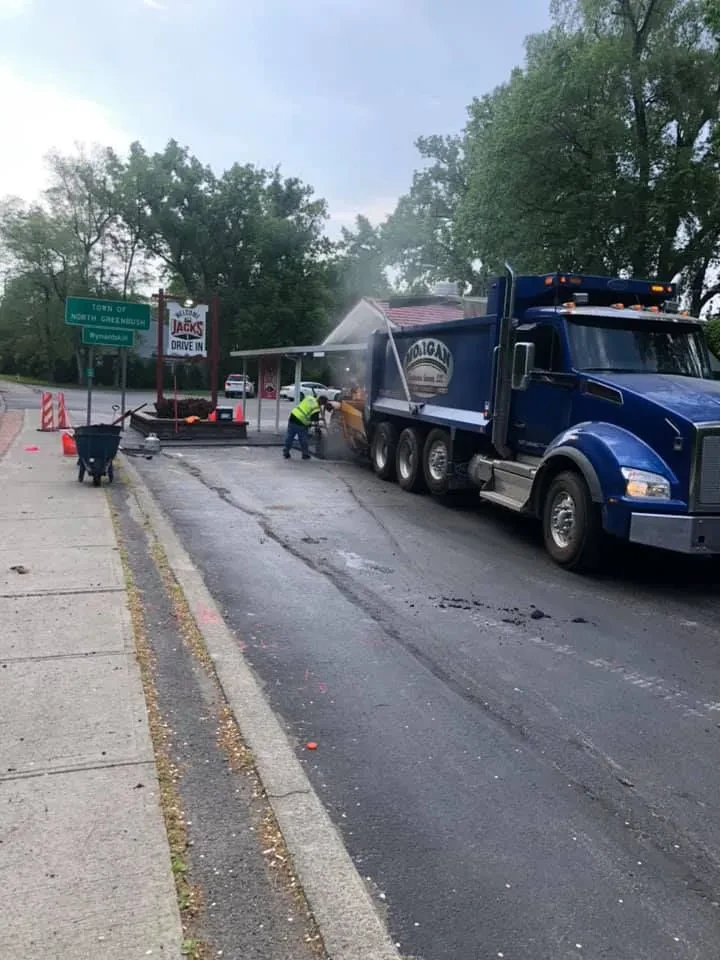
Not all paving contractors operate the same way. Some show up with a quick quote and a handshake, then you never hear from them again until the crew arrives. Others bury costs in vague line items or use subpar materials to pad their margins.
A quality paving contractor does a few things consistently. We show up when we say we will. We explain what’s included in the estimate and why. We use quality asphalt mix designed for the freeze-thaw cycles that hit this region every year. And we stick around after the job’s done, because we’re building a reputation, not just collecting a check.
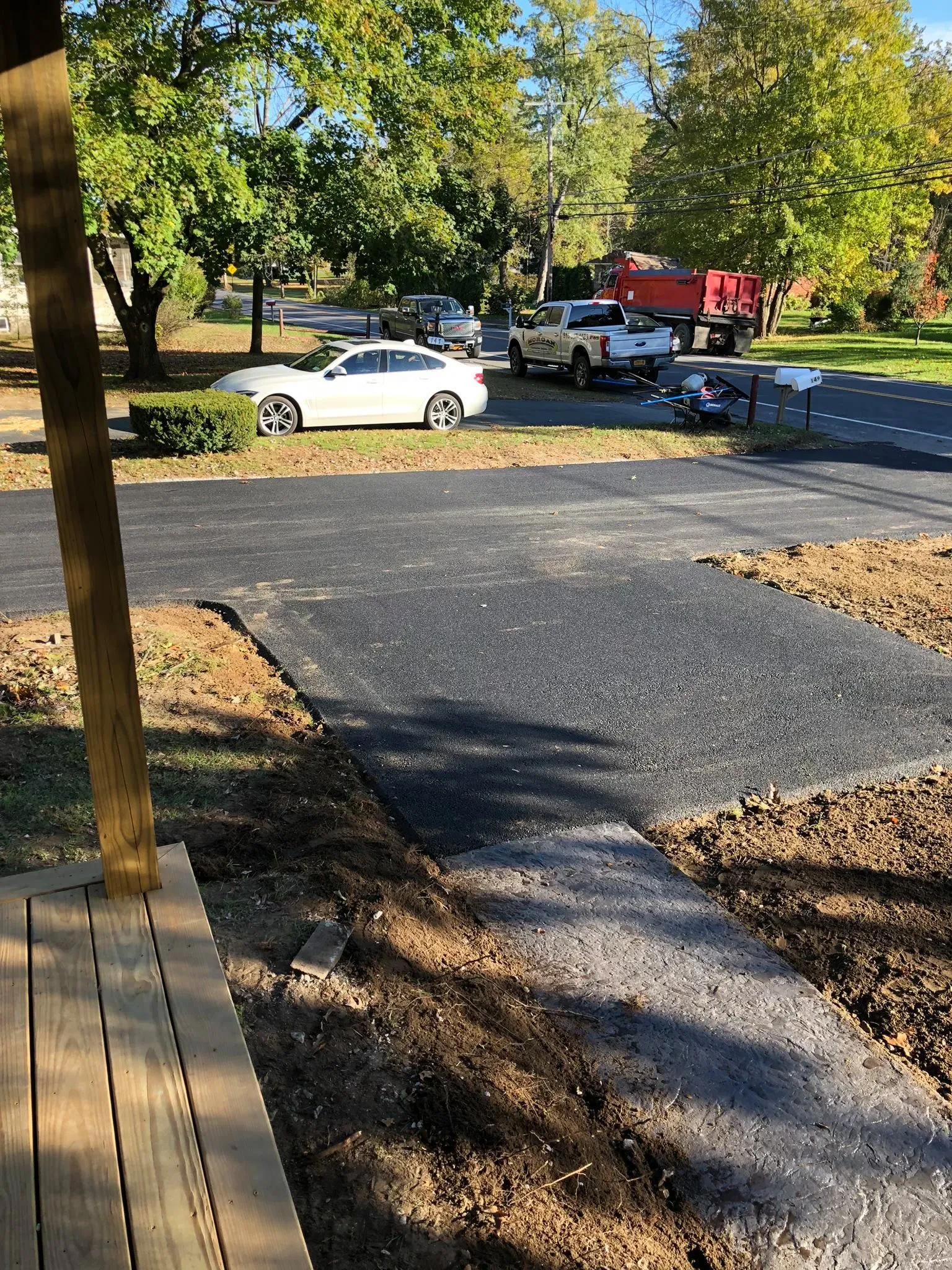
Here’s what most people don’t realize until it’s too late—the asphalt you see on top is only half the story. What’s underneath determines whether your driveway lasts 30 years or starts cracking in five.
Proper base preparation means excavating to the right depth, grading for drainage, and compacting aggregate stone in layers. If the base isn’t stable, the asphalt on top will shift, crack, and settle no matter how thick it is. In New York, where freeze-thaw cycles expand and contract the ground, a poorly prepared base accelerates failure.
Licensed contractors with local experience understand soil conditions in Saratoga County, NY and Warren County, NY. We know where drainage problems show up. We account for frost heave. We don’t skip steps to save an hour of labor, because we know you’ll be calling someone else to fix it in two years if we do.
Ask any contractor how they prepare the base. If the answer is vague or rushed, that’s your signal. A good contractor walks you through excavation depth, aggregate type, compaction process, and drainage slope. We explain it because we do it right, and we’re not worried about you asking questions.
You’re not paying for asphalt. You’re paying for a foundation that won’t let you down when the weather turns or the snowplow makes its tenth pass. That’s the difference between a driveway that holds up and one that becomes a recurring expense.
There’s a reason people ask if the owner will be on-site. When the person running the business is also the person managing your project, accountability isn’t a question—it’s built in.
Owner-operated paving contractors don’t hand your job off to a foreman they hired last month. We don’t disappear after the estimate. We’re there when the crew shows up, when decisions need to be made, and when something unexpected comes up mid-project. You get direct communication, not a game of telephone through three layers of management.
That hands-on approach shows up in the details. The grading is checked. The compaction is verified. The edges are finished properly. Small things that get overlooked on high-volume jobs don’t slip through, because our reputation is on the line with every project.
It also means you get straight answers. If there’s a drainage issue that needs addressing, you hear about it upfront, not after the asphalt is laid. If the timeline shifts because of weather, you’re not left guessing. The person you talked to during the estimate is the same person you can reach if something needs attention a year later.
For residential paving and commercial paving alike, that continuity matters. You’re not starting from scratch every time you need to reach someone. You’re working with someone who knows your property, remembers the decisions that were made, and stands behind the work long after the invoice is paid.
Owner-operated doesn’t just mean small. It means invested. When the business is built on long-term relationships instead of one-time transactions, the quality of work reflects that. You’re not another address on a schedule. You’re a project we’re putting our name on.
Want live answers?
Connect with a Morgan Construction expert for fast, friendly support.
Choosing a paving contractor shouldn’t feel like rolling the dice, but it does when you’re comparing estimates that don’t match and promises that sound too good to be true. The key is knowing what to look for before you sign anything.
Start with experience that’s local, not just long. A contractor who’s worked in Saratoga County, NY and Warren County, NY for decades understands the soil, the weather, and the challenges that come with both. We’ve seen what fails and what lasts. That knowledge doesn’t come from a training manual.
Look for transparency in pricing. A detailed estimate breaks down materials, labor, site prep, and any additional work like drainage or grading. If the quote is a single number with no explanation, you’re guessing what’s included. Honest pricing doesn’t mean cheap—it means clear.
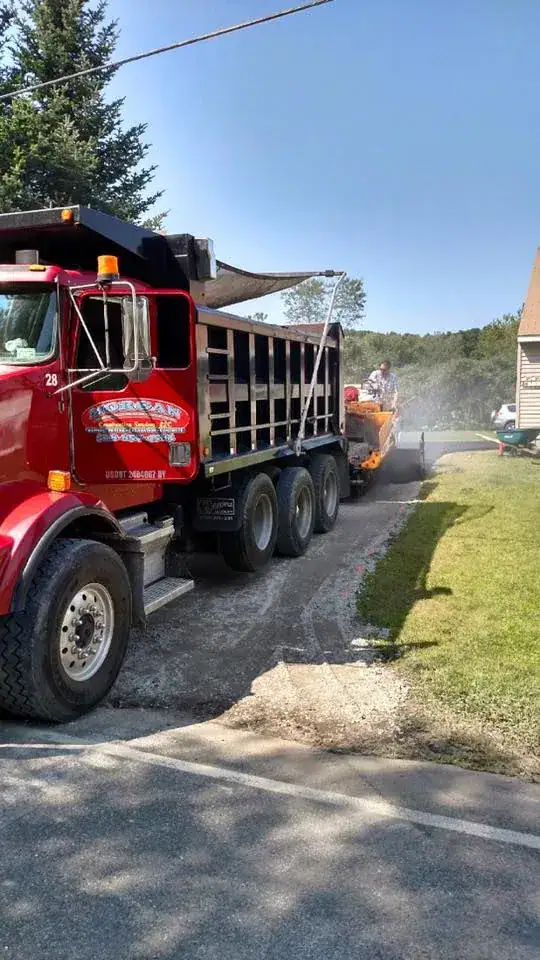
The questions you ask before hiring a paving contractor tell you more than the answers—they show you whether the contractor is willing to be transparent or if they’re hoping you won’t dig deeper.
Start with licensing and insurance. A licensed contractor operates within state regulations and has met the requirements to do the work legally. Insurance protects you if something goes wrong on your property. Ask to see proof of both, and don’t take “we’re covered” as an answer. Verify it.
Ask how they handle base preparation and drainage. This is where corners get cut. A contractor who explains excavation depth, compaction process, and grading for water runoff is showing you they understand the work. A contractor who glosses over it or says “we’ll take care of it” is waving a red flag.
Find out what type of asphalt mix they use. Quality asphalt mix designed for heavy-duty paving in cold climates performs better than recycled or low-grade alternatives. Ask about thickness, too. Residential driveways typically need 3-4 inches of compacted asphalt over a proper base. Commercial parking lots often require more depending on traffic load.
Get a timeline. Not just a start date—ask how long the project will take and what could delay it. Weather affects paving schedules, especially in New York. A contractor who builds buffer time into their estimate is being realistic, not slow.
Ask about the warranty. Most reputable paving companies offer a 1-2 year warranty on labor. That tells you they’re confident the work will hold up. If there’s no warranty, or if it’s suspiciously vague, ask why.
Finally, ask for references. Not just names—actual projects you can see or clients you can contact. A contractor with a solid reputation doesn’t hesitate to share past work. If they dodge the question or say their work speaks for itself without showing you any of it, keep looking.
These questions aren’t about being difficult. They’re about making sure you’re hiring someone who does the work right, communicates clearly, and stands behind what they build. The contractors worth hiring welcome the questions. The ones who don’t aren’t the ones you want on your property.
Asphalt doesn’t last forever, but it should last long enough to make the investment worth it. With proper installation and maintenance, you’re looking at 20-30 years for a residential driveway or commercial parking lot. The question is whether you get that lifespan or half of it.
Several factors determine how long your asphalt holds up. The base is first. If it’s not compacted correctly or if drainage isn’t addressed, the asphalt will crack and settle prematurely. New York’s freeze-thaw cycles amplify every weakness in the foundation, so proper site preparation isn’t optional—it’s essential.
The quality of the asphalt mix matters. High-grade asphalt with the right binder content withstands temperature swings and heavy use better than cheaper alternatives. Thickness plays a role too. Skimping on depth to save money upfront means you’ll be resurfacing or replacing sooner than you should.
Traffic load affects lifespan. A residential driveway handling passenger vehicles will outlast a commercial lot with delivery trucks if both are built to the same spec. That’s why proper assessment during the estimate phase matters. The contractor needs to know what the surface will endure and build accordingly.
Maintenance extends life. Sealcoating every 2-3 years protects against UV damage, water infiltration, and chemical spills. Filling cracks as they appear prevents water from reaching the base and causing bigger problems. Ignoring small issues turns them into expensive repairs.
Climate is the wildcard. Saratoga County, NY and Warren County, NY see harsh winters. Snow, ice, freeze-thaw cycles, and plowing all take a toll. Asphalt installed by local construction experts who understand these conditions is designed to handle them. Contractors from outside the region might not account for the same variables, and it shows in how the pavement performs over time.
You can’t control the weather, but you can control who installs your asphalt and how you maintain it. Done right, you’re looking at decades of reliable use. Done wrong, you’re looking at cracks, potholes, and a second round of spending within a few years. The difference is in the details, and those details start with choosing the right paving contractor from the beginning.
Choosing a paving contractor comes down to trust. You need someone who knows the local soil, understands how New York weather affects asphalt, and doesn’t cut corners when you’re not looking. You need transparent pricing, clear communication, and work that lasts longer than the warranty period.
Morgan’s Construction has spent over 25 years building that kind of reputation in Saratoga County, NY and Warren County, NY. Owner-operated from estimate to completion, we handle paving, asphalt, excavation, and foundation work with the same straightforward approach—no gimmicks, no runarounds, just quality results backed by local expertise.
If your driveway, parking lot, or site needs work, you deserve a contractor who treats it like it matters. Reach out to Morgan’s Construction and get the honest assessment and competitive pricing you’ve been looking for.
Summary:

Article details:
Share: