Asphalt paving company also offering concrete work, excavating, and snow removal services.
Contact Info
-
130 Co Rd 70
Stillwater, NY 12170 - Call: 518-935-3068
- Text: 518-935-3068
- Mon - Sun: 7am - 7pm
Contact Info
Hear From Our Clients
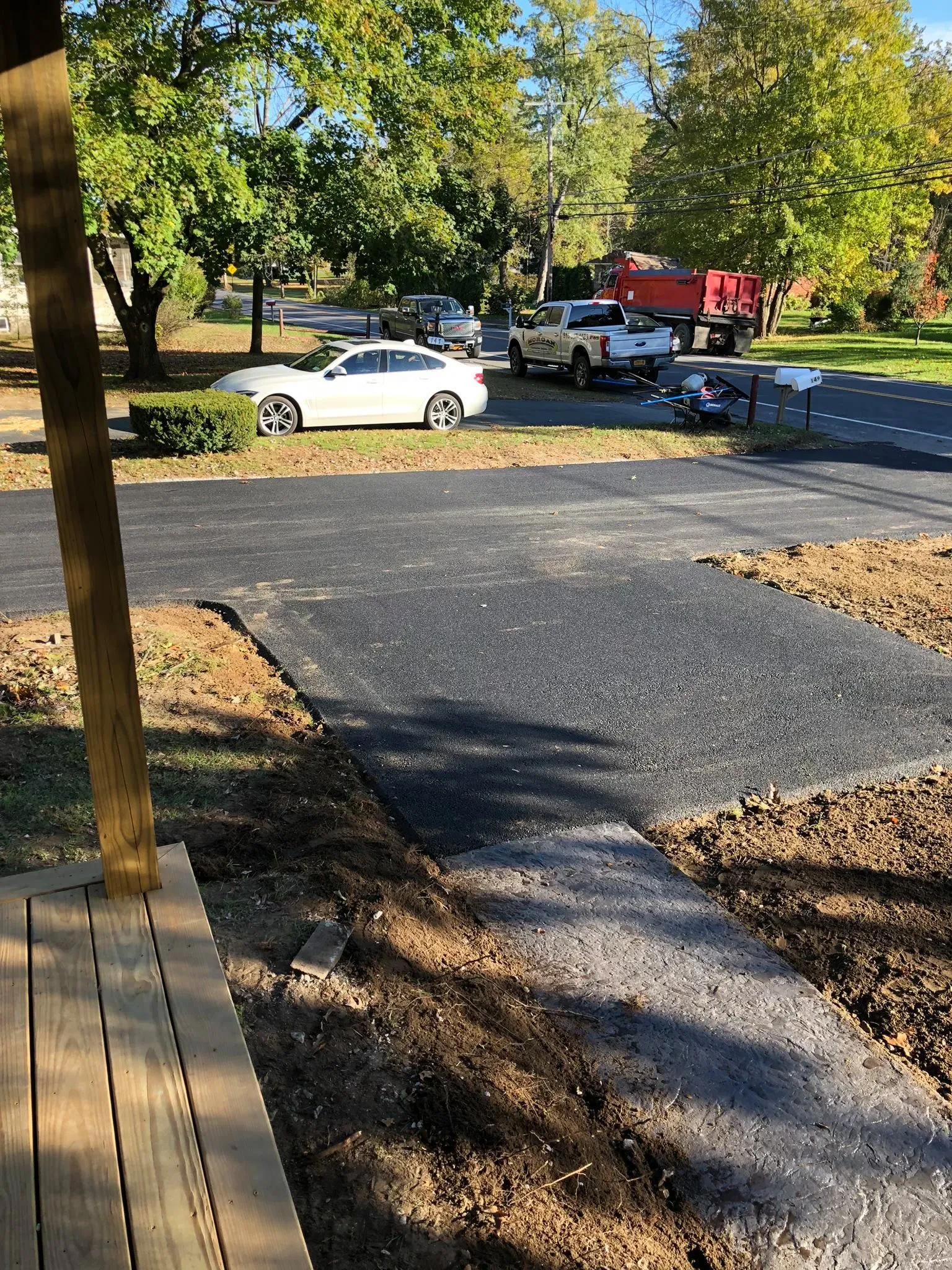
A quality paving job means you’re not dealing with potholes next spring or standing water after every storm. It means your driveway holds up through freeze-thaw cycles instead of cracking apart by year two.
When the base is prepared correctly and drainage is handled right from the start, your asphalt does what it’s supposed to do. It supports vehicle traffic. It sheds water. It lasts.
You’re not calling for repairs every season because someone cut corners during installation. We handle driveway paving and parking lot paving with the same approach: proper prep work, quality materials, and attention to the details that determine whether your pavement lasts five years or twenty. That’s the difference between a surface and an investment.
We’ve been serving East Line, NY and the surrounding region for over 25 years. The owner answers the phone, walks the property, and stays involved from estimate to completion. No sales team. No handoffs. Just direct communication with someone who knows the work and stands behind it.
This area’s freeze-thaw cycles and seasonal weather demand paving contractors who understand local conditions. We know how East Line properties respond to winter, how drainage needs to be handled, and what base preparation actually takes to prevent premature failure.
We operate year-round—asphalt paving and excavation during warmer months, foundation work and land clearing when temperatures drop. That flexibility means you’re working with a stable operation, not a seasonal crew that disappears when the weather changes.
First, the site gets assessed. We evaluate your existing surface, drainage patterns, and base conditions. You’ll know what needs to be addressed before work begins, not after problems show up.
Next comes preparation. Old asphalt gets removed if necessary. The base is graded and compacted to proper specifications. Drainage is established so water moves away from the pavement instead of pooling on it. This stage determines how long your paving lasts, so it’s not rushed.
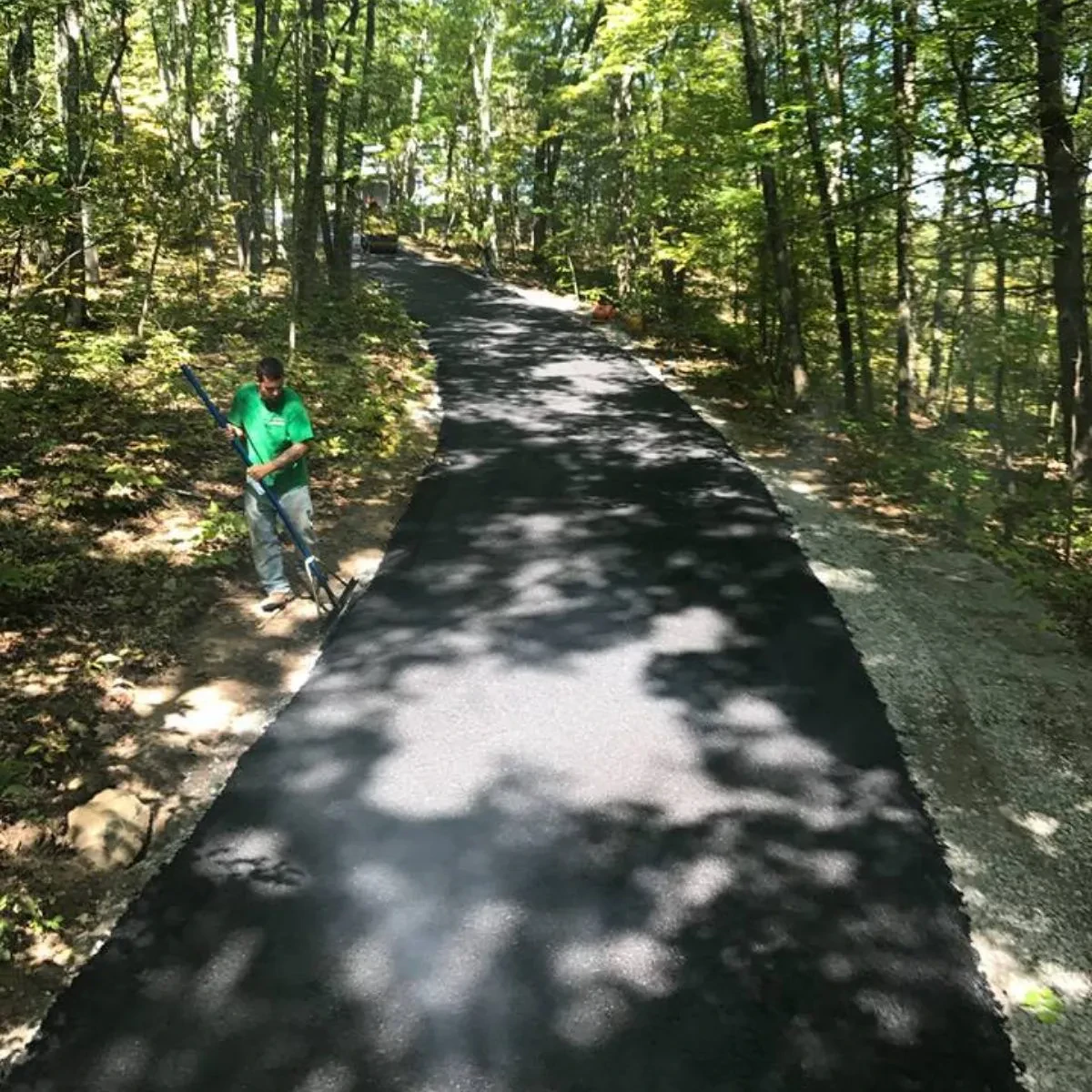
Then the asphalt goes down. Quality hot-mix asphalt is installed at the correct thickness for your application—whether that’s a residential driveway or a commercial parking lot. It’s compacted properly while still hot to create a dense, durable surface.
Finally, edges are finished, transitions are smoothed, and the site is cleaned. You’re left with a functional surface that’s ready for use and built to handle East Line’s weather. If you need line striping for a parking lot or specific grading for drainage, that’s handled as part of the scope—not as an afterthought.
Ready to get started?
Residential driveway paving includes full base evaluation, proper grading for drainage, asphalt installation at appropriate thickness, and edge finishing. You’ll know the timeline, the materials being used, and what to expect during curing.
Commercial paving and parking lot work includes the same foundation principles, plus considerations for heavier traffic loads, ADA compliance if needed, and line striping for parking spaces and traffic flow. We handle the permitting and coordination required for commercial projects in East Line, NY.
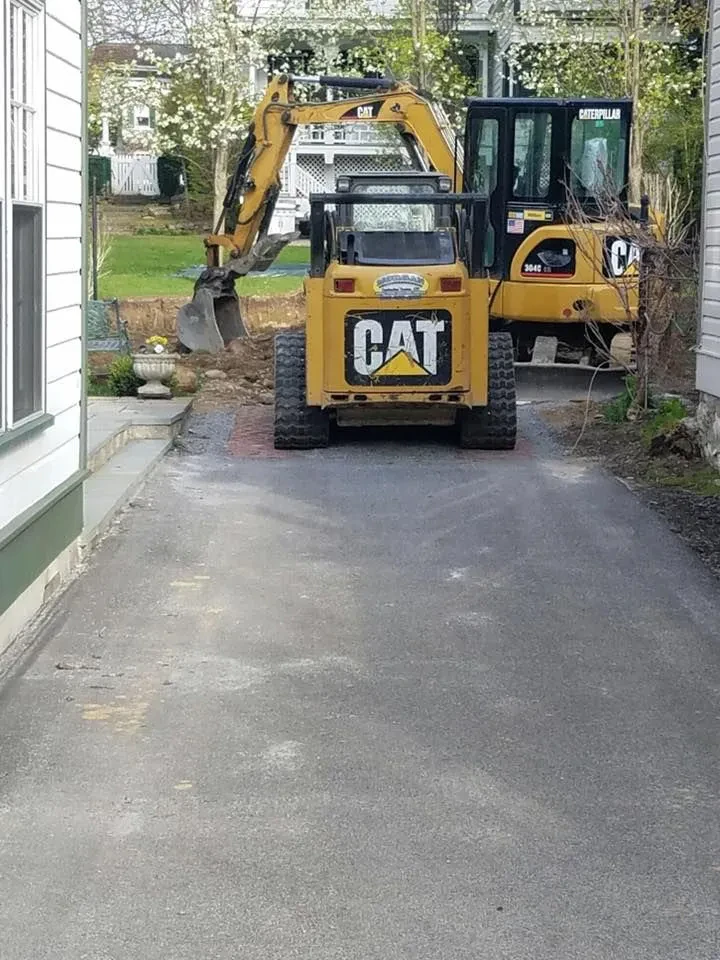
Excavation services support both paving and foundation work. Whether you’re preparing a site for new construction, addressing drainage issues, or clearing land for development, the equipment and experience are in place to handle it efficiently.
Emergency response is available when urgent issues arise—a collapsed section of pavement, sudden drainage failure, or damage that creates safety hazards. You’re not waiting days for a callback when something needs immediate attention.
Honest pricing means you receive a clear estimate that outlines the scope, materials, and timeline. No vague numbers that balloon later. No pressure tactics. Just straightforward information so you can make an informed decision about your property.
Properly installed asphalt paving in East Line typically lasts 15 to 20 years with appropriate maintenance. That lifespan depends heavily on base preparation, drainage, and how well the installation handles freeze-thaw cycles common to upstate New York.
If the base isn’t compacted correctly or drainage isn’t addressed, you’ll see premature cracking and pothole formation within a few years. Water is the enemy—it seeps into cracks, freezes, expands, and breaks apart the asphalt from below.
Regular maintenance extends pavement life. Sealcoating every few years protects the surface from oxidation and water penetration. Crack sealing prevents small issues from becoming major repairs. Addressing drainage problems early stops water damage before it undermines the base. We provide realistic timelines based on your specific site conditions, not generic estimates that ignore local weather realities.
An asphalt overlay means installing a new layer of asphalt over your existing pavement. It’s less expensive and works when the current base is still solid but the surface is worn. Full-depth paving means removing the old asphalt, addressing the base, and installing new pavement from the ground up.
Overlay makes sense if your pavement has minor surface wear but no structural issues—think fading and light cracking, not potholes or sinking sections. The existing pavement needs to be stable enough to support the new layer, and drainage must already be functioning correctly.
Full-depth paving is necessary when the base has failed, drainage is problematic, or the existing asphalt has significant structural damage. Putting new asphalt over a failing base just delays the inevitable and wastes money. We evaluate your specific situation and recommend the approach that actually solves the problem, not the one that’s easiest to sell. You’ll know which option makes sense for your property and why.
Surface-level issues like minor cracking, fading, or small potholes usually indicate repair is sufficient. Structural problems like widespread alligator cracking, sinking sections, or standing water after rain typically mean the base has failed and replacement is needed.
Check for patterns. A few isolated cracks can be sealed. Cracks spreading across large areas suggest the base is shifting or water has compromised the foundation. Potholes that keep returning after patching indicate deeper structural issues that patching won’t fix.
Drainage is a major indicator. If water pools consistently in the same spots, the base likely wasn’t graded correctly during installation. That’s not something sealcoating or patching addresses—it requires regrading and often full replacement of affected sections. We provide honest assessments of parking lot conditions in East Line, NY. You’ll get a clear explanation of what’s failing, why it’s happening, and what it actually takes to fix it properly instead of temporarily.
Driveway paving costs in East Line typically range from $3 to $7 per square foot for standard residential installations, depending on site conditions, base preparation requirements, and driveway size. That’s a general range—your actual cost depends on what your specific property needs.
Factors that affect price include whether old pavement needs removal, how much base work is required, drainage considerations, and accessibility for equipment. A straightforward replacement on stable ground costs less than a new installation requiring extensive excavation and grading.
Be cautious of quotes significantly below market rate. Low bids often mean thin asphalt, inadequate base preparation, or shortcuts that lead to premature failure. You’re not saving money if you’re repaving again in five years. We provide transparent estimates that break down what you’re paying for—materials, labor, base work, drainage—so you understand where your money goes and what you’re actually getting for it.
Asphalt paving requires temperatures above 50°F for proper installation and compaction. Cold weather prevents asphalt from bonding correctly and reaching necessary density, which leads to premature failure. That’s why paving season in East Line typically runs from late spring through fall.
Winter paving is technically possible with specialized equipment and heated asphalt, but it’s not ideal and costs significantly more. The asphalt cools too quickly in cold air, making proper compaction difficult. Most reputable contractors won’t recommend winter paving unless it’s an emergency repair situation.
We schedule paving work during appropriate weather windows to ensure quality results. During winter months, the focus shifts to excavation, foundation work, and land clearing—services that aren’t temperature-dependent. If you need urgent pavement repair in winter, temporary patching can address safety issues until proper paving conditions return. You’ll get honest guidance about timing rather than a sales pitch that ignores weather realities.
You can typically drive on new asphalt within 24 to 48 hours after installation, but full curing takes several months. Light vehicle traffic is fine after the initial set period. Heavy loads, sharp turns, and parking in the same spot should be avoided for at least a week.
Asphalt continues to harden as it cures. During the first few months, it’s more susceptible to scuffing from sharp turns and indentations from kickstands or heavy equipment. Avoid parking in the exact same spot repeatedly during this period, especially in hot weather when asphalt is softer.
Edge support matters. The edges of new asphalt are the most vulnerable areas. Avoid driving directly on edges until they’ve had time to fully set and compact. If edges aren’t properly supported, they’ll crumble over time. We provide specific guidance based on your installation—driveway thickness, weather conditions, and expected traffic—so you know exactly when it’s safe to use your new pavement without risking damage.
Other Services we provide in East Line