Asphalt paving company also offering concrete work, excavating, and snow removal services.
Contact Info
-
130 Co Rd 70
Stillwater, NY 12170 - Call: 518-935-3068
- Text: 518-935-3068
- Mon - Sun: 7am - 7pm
Contact Info
Hear From Our Clients
You know the drill. Winter hits, your driveway cracks, spring comes, you patch it. Repeat every year. That cycle ends when the base work is done right from the start.
Proper excavation, compacted stone, and drainage that actually moves water away from your property—that’s what determines whether your asphalt paving lasts five years or twenty. Most failures happen because contractors skip the foundation work to save time. You end up paying twice.
When it’s done correctly, you’re looking at smooth pavement that handles freeze-thaw cycles without turning into a pothole minefield. Your vehicles aren’t dodging craters. Water isn’t pooling against your foundation. And you’re not scheduling repairs every spring like clockwork.
We’ve been handling paving, asphalt, excavation, and foundation work across Gurn Spring and the surrounding region for over 25 years. You’re not dealing with a sales team that vanishes after signing. The owner is involved from your first call through final cleanup.
That matters when questions come up mid-project or you need straight answers about what your property actually needs. No gimmicks, no pressure tactics—just honest assessment of whether you need full replacement or if repairs will hold up.
We run year-round. Paving and asphalt work when weather allows, foundation and excavation services when it doesn’t. That means your project doesn’t sit in limbo for six months waiting for the schedule to open up.
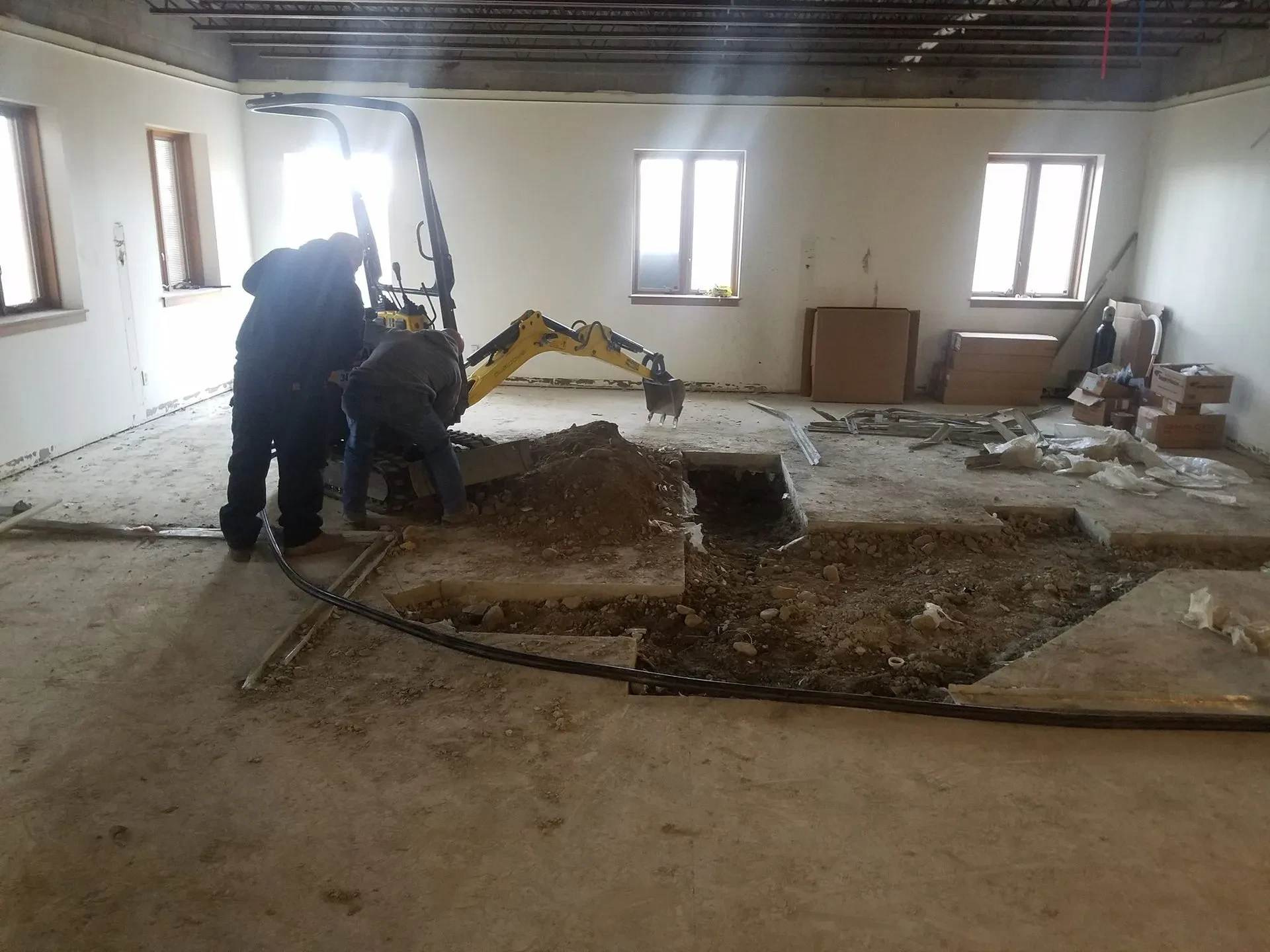
First, the existing surface comes out if it’s failed. Demolition and removal create a clean foundation to build on. If you’re overlaying and the current base is solid, that step gets skipped.
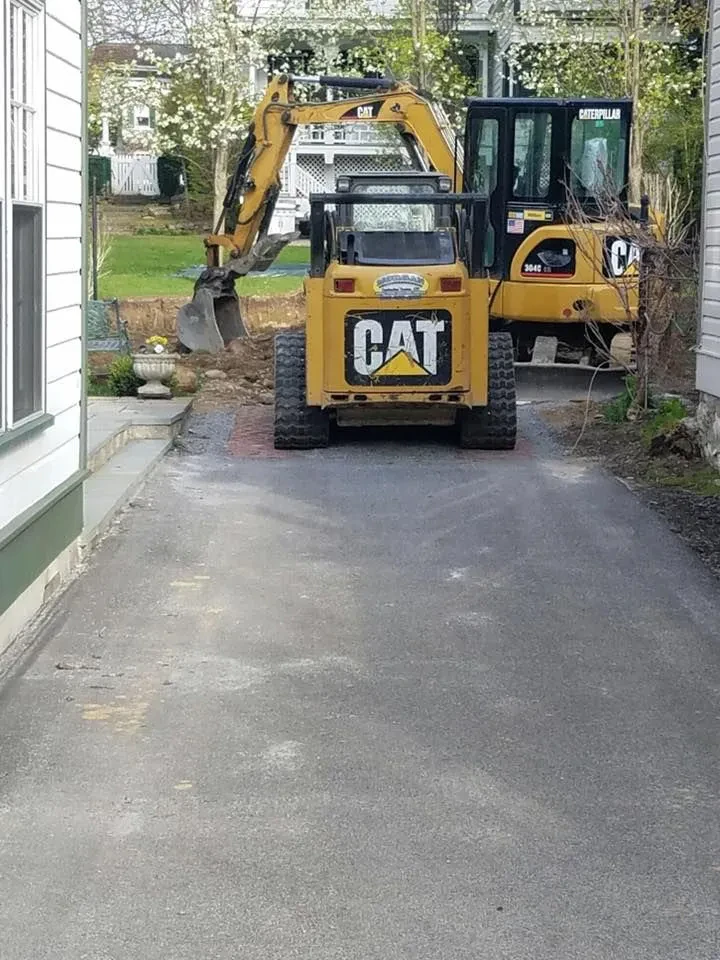
Next comes the part most contractors rush through but shouldn’t—base preparation. The ground gets excavated to proper depth, graded for drainage, and filled with compacted aggregate stone. This layer is what keeps your asphalt from cracking and settling. Skimp here, and you’ll be repaving in three years.
Then the site gets graded so water flows away from buildings and doesn’t pool on the surface. Drainage issues cause more asphalt failures in Gurn Spring than almost anything else. Freeze-thaw cycles wreck pavement when water has nowhere to go.
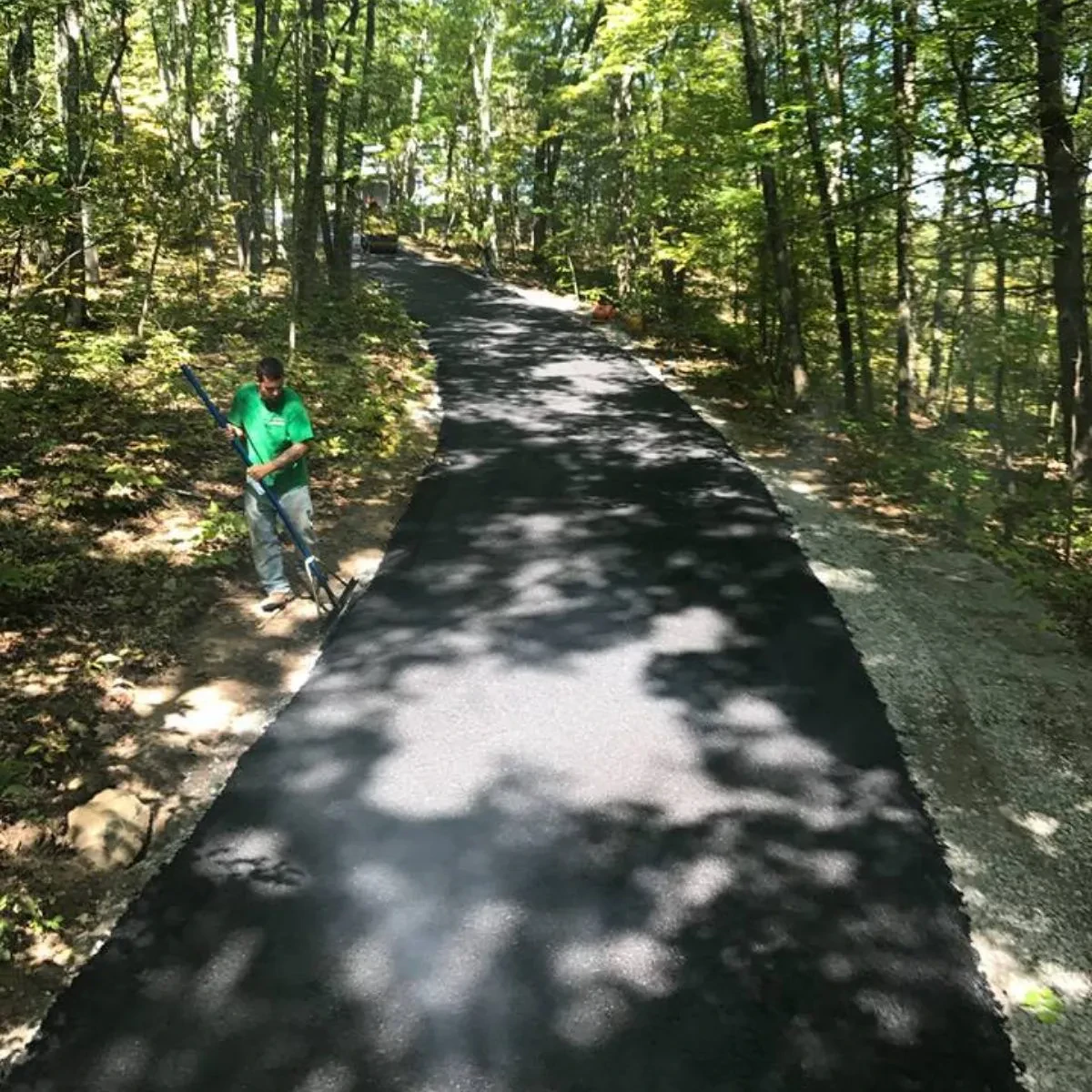
The asphalt goes down hot and gets compacted immediately with heavy rollers while the material is still workable. Proper compaction prevents air pockets and ensures the surface can handle vehicle weight without deforming. You’ll get specific guidance on when you can walk on it and when vehicles can use it safely—usually 24 to 48 hours for light traffic, longer for heavy vehicles.
Ready to get started?
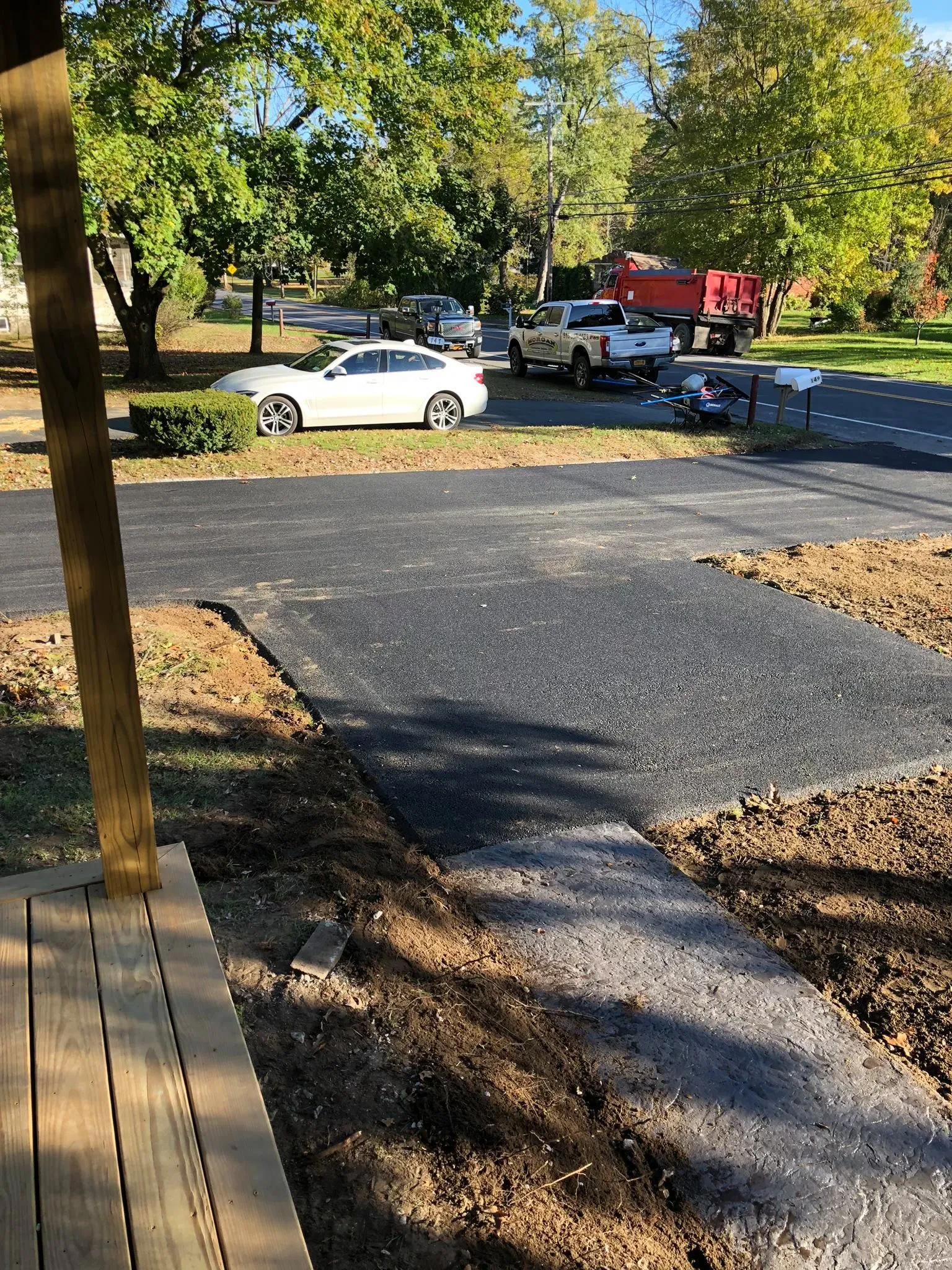
Driveway paving for homeowners means creating a surface that handles daily vehicle traffic, looks clean, and doesn’t become a maintenance nightmare. That includes proper base prep, correct asphalt thickness for residential use, and grading that prevents water from running toward your foundation or garage.
Commercial paving work—parking lots, access roads, loading areas—requires heavier base preparation and thicker asphalt to handle constant traffic and heavy vehicles. Businesses can’t afford prolonged shutdowns, so we coordinate scheduling to minimize disruption. Striping, ADA compliance, and drainage all factor into commercial projects.
Gurn Spring’s climate is tough on pavement. Freeze-thaw cycles expand cracks, poor drainage accelerates deterioration, and New York winters test every installation. We use materials and techniques that account for temperature swings and moisture challenges. That’s not optional—it’s the difference between asphalt that holds up and asphalt that fails in two seasons.
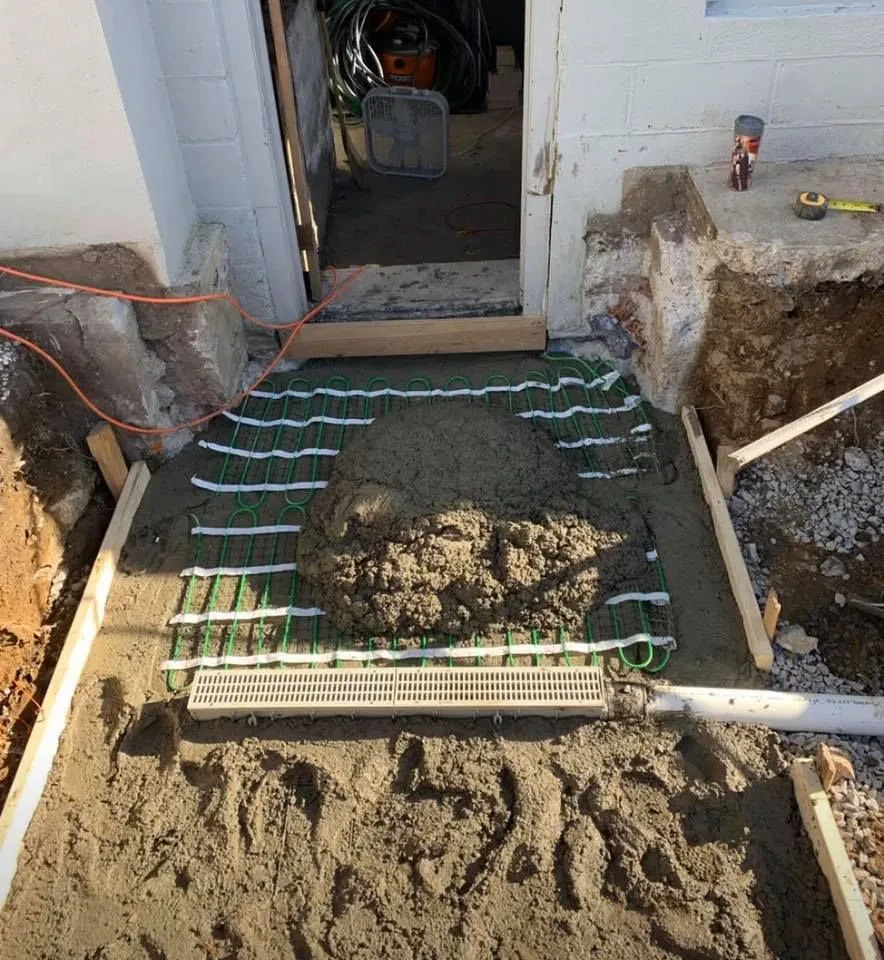
Excavation and foundation services round out what we offer. Sometimes paving projects reveal drainage issues or base failures that need excavation work to fix properly. Having one contractor handle both saves time and prevents finger-pointing between trades when problems surface.
Residential driveway paving in the Gurn Spring area typically runs $5 to $9 per square foot, depending on thickness, current conditions, and how much prep work your property needs. A standard two-car driveway usually falls somewhere between $5,000 and $8,800 for complete replacement.
That range exists because every property is different. If your current driveway is gravel and the base is unstable, you’re looking at more excavation and stone work before asphalt goes down. If you’re replacing old asphalt and the base is still solid, costs drop because less prep is required.
Factors that push pricing up include poor drainage that needs correction, difficult access for equipment, significant grading requirements, or soil conditions that need extra base depth. Factors that bring costs down include simpler site conditions, good existing base, and straightforward layouts without curves or obstacles. You’ll get a detailed written estimate that breaks down exactly what you’re paying for—no vague “we’ll figure it out as we go” pricing.
Late spring through early fall is ideal for asphalt installation in Gurn Spring. The material needs temperatures consistently above 50 degrees and dry conditions to cure properly. Summer offers the most reliable weather, but spring and fall work fine when conditions cooperate.
Asphalt is a hot-mix product that has to be laid and compacted while it’s still warm and workable. Cold temperatures cause the mix to cool too quickly, preventing proper compaction. Rain interferes with curing and can compromise the bond between layers.
Winter paving is possible for emergency repairs using specialized materials and techniques, but it’s not ideal for planned projects. If you’re dealing with safety hazards or drainage problems that can’t wait, we can handle repairs year-round. For new installations or full replacements, though, you’ll get better results waiting for warmer weather. Booking during winter often means better scheduling and pricing for spring installation since we aren’t slammed yet.
Properly installed asphalt in Gurn Spring typically lasts 15 to 20 years with basic maintenance like sealcoating every three to five years and prompt crack repairs. Poorly installed asphalt can fail in under five years, usually because the base work was inadequate.
The lifespan depends almost entirely on what’s underneath the surface. If the sub-base wasn’t excavated to proper depth, compacted correctly, and graded for drainage, the asphalt on top will crack and settle prematurely no matter how good the surface layer is. New York’s freeze-thaw cycles are brutal on pavement—water gets into small cracks, freezes and expands, then creates bigger cracks. Poor drainage accelerates this process.
Regular maintenance extends life significantly. Sealcoating protects against UV damage, water infiltration, and oil stains. Filling cracks early prevents them from spreading. Addressing drainage issues before they cause major damage saves money long-term. But even perfect maintenance won’t save asphalt that was installed over an inadequate base. The foundation determines everything.
Repairs make sense when you have isolated cracks or small damaged areas but the base underneath is still solid and stable. If the foundation is good, patching problem spots and sealcoating the rest can extend your driveway’s life for years at a fraction of replacement cost.
Full replacement is needed when the base has failed, you’re seeing widespread cracking across the entire surface, or the pavement has multiple layers of old patches that are themselves failing. Signs the base has failed include large areas that have settled or heaved, extensive alligator cracking (interconnected cracks forming a pattern), or sections where the asphalt has completely broken apart.
An honest assessment involves looking at what’s causing the damage, not just treating symptoms. If water drainage is the root problem, patching cracks won’t fix anything—the damage will just reappear. If the base was never properly compacted, repairs are throwing money away. We’ll explain what’s actually wrong with your pavement and whether fixing it makes financial sense or if you’re better off starting fresh.
You can typically walk on new asphalt within a few hours, but light vehicle traffic should wait 24 to 48 hours. Heavy vehicles or equipment need about a week before the surface can handle the weight without damage.
The asphalt is still curing during this period even though it looks and feels solid. Driving on it too soon can cause scuffing, depressions, or marks that become permanent. Turning your steering wheel while stationary (especially on hot days) can twist the surface. Parking in the same spot repeatedly during the first week can create indentations.
Full curing takes about 30 days. During this time, you can use the driveway normally but should avoid extremely heavy loads or aggressive use. We’ll give you specific guidance based on the thickness of your installation, current weather conditions, and the asphalt mix used. Following those instructions protects your investment and ensures the surface develops its full strength and durability.
Freeze-thaw cycles cause the majority of asphalt damage in Gurn Spring and throughout New York. Water seeps into small cracks or porous areas, freezes when temperatures drop, expands, and creates bigger cracks. When it thaws, more water gets in. The cycle repeats all winter and spring, progressively destroying the pavement.
Poor drainage makes this exponentially worse. When water pools on the surface or doesn’t drain away from the pavement, it has constant opportunity to penetrate and cause damage. Proper grading and drainage during installation prevent most of these issues, but many contractors skip this step to save time.
Other factors include UV exposure breaking down the asphalt binder over time, heavy vehicle traffic exceeding what the pavement was designed for, oil and chemical spills degrading the surface, and inadequate base preparation allowing the pavement to shift and crack under load. Most of these are preventable with proper installation and basic maintenance. The ones that aren’t preventable—like UV exposure and normal wear—can be managed with periodic sealcoating and timely repairs.
Other Services we provide in Gurn Spring