Asphalt paving company also offering concrete work, excavating, and snow removal services.
Contact Info
-
130 Co Rd 70
Stillwater, NY 12170 - Call: 518-935-3068
- Text: 518-935-3068
- Mon - Sun: 7am - 7pm
Contact Info
Hear From Our Clients
You stop worrying about water pooling near your foundation every spring. You stop second-guessing whether that crack is going to turn into a canyon by next winter. And you stop wondering if you should’ve hired someone else.
A properly installed asphalt driveway or parking lot in West Glens Falls handles our freeze-thaw cycles without falling apart in three years. It sheds water where it’s supposed to go. It looks clean, holds up under traffic, and doesn’t need a redo before you’ve even paid off the first one.
That’s what you’re actually paying for—not just hot asphalt and a roller, but the experience to know how thick your base needs to be for local soil conditions, where to grade for drainage, and how to prep the site so it doesn’t settle or crack prematurely. When it’s done right, you forget about it. That’s the point.
We’ve been serving West Glens Falls and Warren County for over 25 years. This is an owner-operated asphalt company, which means when you call, you’re talking to Mike Morgan—not a call center, not a salesperson who’s never held a shovel, and not someone reading from a script.
Mike’s on every job from the estimate to the final cleanup. That’s not a selling point, it’s just how we run. You get straight answers about what your project actually needs, what it’ll cost, and how long it’ll take. No gimmicks, no bait-and-switch pricing, no disappearing after the deposit clears.
We handle asphalt paving, excavation, and foundation work for residential and commercial clients across the area. In winter, when paving season wraps up, our focus shifts to foundation work and land clearing. Year-round availability means you’re not stuck waiting six months for a callback.
First, we assess the site. That means looking at drainage, checking soil conditions, and figuring out if your base needs to be eight inches or twelve. Around West Glens Falls, clay-heavy soil is common, which means you need a thicker stone base with proper compaction—or you’ll be calling someone back in two years to fix settling and cracks.
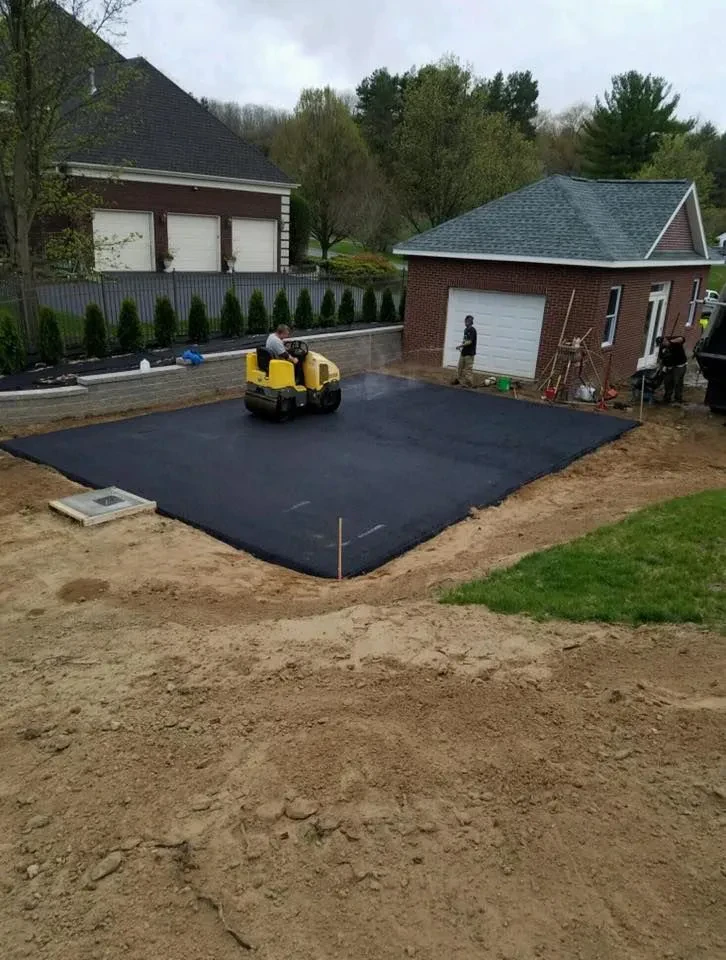
Next comes excavation if you’re replacing an old driveway or starting from scratch. We remove the old asphalt or damaged base, correct the grading, and put down a new compacted stone base. This step matters more than most people realize. Shortcuts here mean problems later.
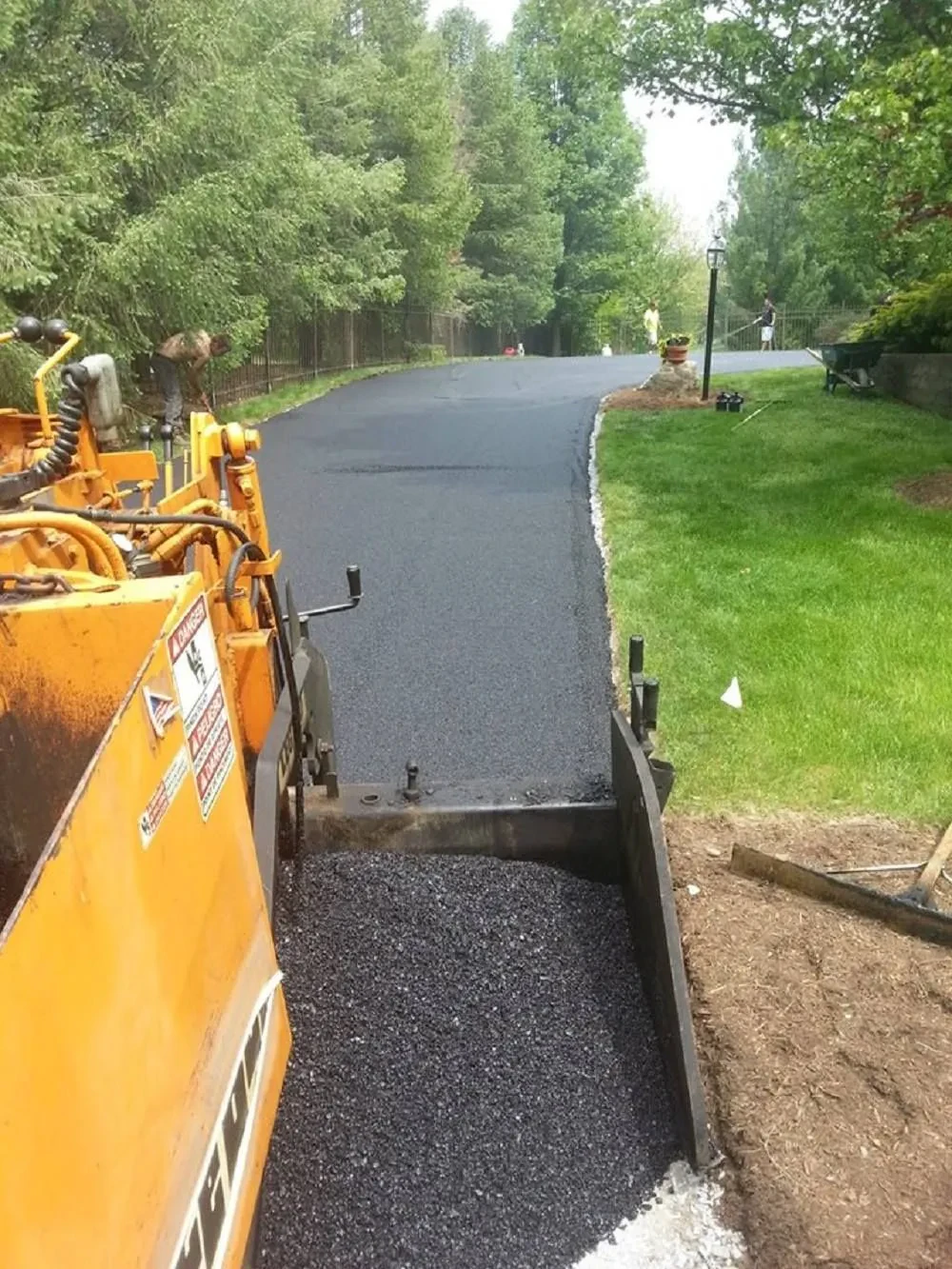
Then we install the asphalt. The mix needs to be hot, the thickness needs to match your traffic load, and the compaction needs to be thorough. For a standard residential driveway, that’s typically three to four inches of asphalt over a solid base. For commercial parking lots with heavier traffic, it’s more.
Finally, we clean the edges, check grading one more time, and tell you exactly when you can drive on it. Most driveways need 24 to 48 hours before light traffic, longer in hot weather. You’re not left guessing.

Ready to get started?
We handle asphalt driveways, commercial parking lots, and residential paving projects throughout West Glens Falls and Warren County. Our service includes site evaluation, excavation when needed, proper base preparation, asphalt installation, and grading for drainage. You also get direct communication with the owner, which means no miscommunication between the person who sold you the job and the crew who shows up.
West Glens Falls sits in an area where winter does real damage to asphalt if it’s not installed correctly. Water is the enemy. When it gets into cracks, freezes, and expands, it breaks apart even thick asphalt. That’s why drainage isn’t optional here—it’s the difference between a driveway that lasts 20 years and one that needs major repairs in five.
Local soil conditions also matter. If your property has clay-heavy soil, you need road fabric and a thicker stone base to prevent shifting and settling. If your driveway has a steep grade, water management becomes even more critical. These aren’t upsells—they’re realities of building something that lasts in this climate.
We also offer emergency response for urgent paving or excavation needs. Whether it’s a commercial property with a parking lot issue or a residential driveway that’s become a safety hazard, we respond quickly. That kind of availability matters when you can’t afford to wait weeks for a callback.
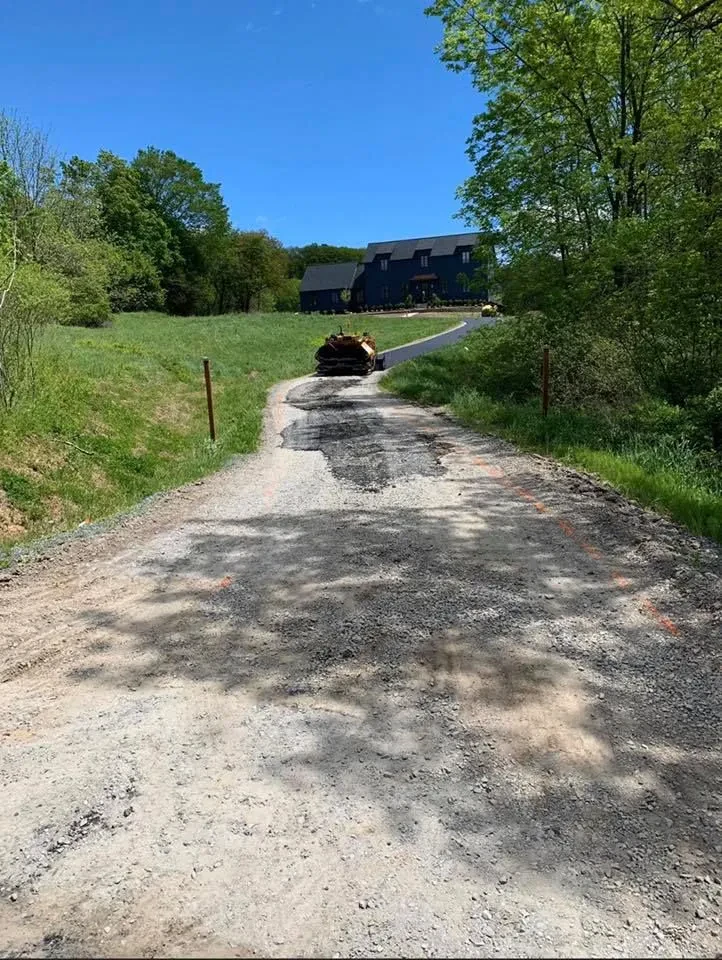
A properly installed asphalt driveway in West Glens Falls should last 20 to 25 years with regular maintenance. That means sealcoating every two to three years and fixing small cracks before they turn into bigger problems.
The lifespan depends heavily on three things: base preparation, drainage, and maintenance. If your base isn’t thick enough or properly compacted, you’ll see settling and cracking within a few years. If water doesn’t drain away from the surface, freeze-thaw cycles will destroy the asphalt faster than normal wear and tear.
Upstate New York winters are tough on asphalt. When water seeps into small cracks, freezes, and expands, it creates bigger cracks and eventually potholes. That’s why catching damage early and keeping up with sealcoating makes such a difference in how long your driveway lasts. Ignore maintenance, and you’re looking at major repairs or replacement in 10 to 15 years instead of 25.
The difference usually shows up in three areas: base preparation, asphalt thickness, and compaction quality. Cheap jobs skip steps. Expensive jobs do it right.
A cheap asphalt contractor might lay three inches of asphalt over a thin or poorly compacted base, skip proper grading for drainage, and rush the compaction process. It looks fine for the first year or two. Then you start seeing cracks, settling, and water pooling. By year five, you’re either paying for major repairs or ripping it out and starting over.
A quality asphalt installation includes proper excavation, a thick compacted stone base (often 8 to 12 inches depending on soil conditions), correct grading to move water away from your foundation, and the right thickness of asphalt for your traffic load. We take time to compact everything properly and don’t cut corners. It costs more upfront, but you’re not paying twice. Around West Glens Falls, where clay soil and harsh winters are common, proper base work isn’t optional—it’s the only way to avoid problems.
Sometimes, but not always. It depends on the condition of your existing driveway and the base underneath.
If your current asphalt is in decent shape—meaning no major cracks, potholes, or settling—an overlay can work. That’s when a new layer of asphalt gets paved directly over the old surface. It’s less expensive because there’s no demolition or base work required. But if your driveway is already cracked, uneven, or showing signs of base failure, an overlay just covers up problems temporarily. Within a year or two, those same cracks will telegraph through the new asphalt.
The base is what matters most. If water has been getting under your old asphalt and damaging the stone base, no amount of new asphalt on top will fix that. You’ll need full removal, base repair, and new asphalt installation. We’ll tell you when an overlay makes sense and when it doesn’t. If someone’s pushing an overlay on a driveway that’s clearly failing, they’re either inexperienced or hoping you don’t call back when it fails again.
For a standard residential driveway, expect to pay between $7 and $13 per square foot for complete installation, including excavation, base work, and asphalt. That breaks down to roughly $2 to $6 per square foot for materials and $5 to $7 per square foot for labor.
A typical two-car driveway that’s 20 feet by 40 feet (800 square feet) usually runs between $5,600 and $10,400 depending on site conditions, base thickness, and asphalt depth. If your property has challenging soil, requires significant grading, or needs extra drainage work, costs go up.
Overlays cost less—usually $3 to $7 per square foot—because there’s no demolition or base work. But again, overlays only make sense if your existing driveway and base are in good condition. Commercial parking lots cost more due to heavier traffic requirements, thicker asphalt, and larger square footage. The best way to get an accurate number is to have us come out, look at your property, and give you a detailed written estimate. Be wary of quotes that seem way lower than everyone else’s—they’re usually cutting corners somewhere.
Because water destroys asphalt, especially in climates like ours where freeze-thaw cycles happen constantly from late fall through early spring.
When water sits on your asphalt or seeps into cracks, it works its way down to the base. In winter, that water freezes and expands, pushing the asphalt up and creating more cracks. When it thaws, the asphalt settles back down, but the damage is done. Repeat that cycle a few dozen times per winter, and you end up with spiderweb cracks, potholes, and sections of driveway that look like they’ve been through a war.
Proper drainage means grading your driveway so water flows away from your house and off the pavement entirely. It might mean adding drainage solutions if your property naturally collects water. Around West Glens Falls, where clay soil is common, water doesn’t absorb into the ground as easily, so it needs somewhere to go. If your contractor isn’t talking about drainage during the estimate, that’s a red flag. Water management is the single biggest factor in whether your asphalt lasts 10 years or 25.
Look for someone who’s been doing this locally for years, shows up when they say they will, and gives you a detailed written estimate that breaks down exactly what you’re paying for.
Experience in the area matters because local soil conditions, climate, and building requirements vary. A contractor who’s been working in West Glens Falls and Warren County for 20+ years knows how to handle clay soil, steep grades, and harsh winters. They also know local permit requirements and have relationships with suppliers.
Owner involvement is another big factor. If you’re working with a large company where the person who sold you the job never sets foot on your property, communication breaks down fast. When the owner is on-site managing the work, problems get solved immediately instead of turning into disputes later.
Finally, pay attention to how they communicate. Do they return calls? Do they explain what needs to be done and why, or do they just throw out a number? Do they pressure you to sign immediately, or do they give you time to think and compare estimates? Honest contractors don’t need to rush you—they know their work speaks for itself. If something feels off during the estimate process, trust that instinct.
Other Services we provide in West Glens Falls