Asphalt paving company also offering concrete work, excavating, and snow removal services.
Contact Info
-
130 Co Rd 70
Stillwater, NY 12170 - Call: 518-935-3068
- Text: 518-935-3068
- Mon - Sun: 7am - 7pm
Contact Info
Hear From Our Clients

You’re not looking for the cheapest option. You’re looking for a driveway that won’t crack apart in three years or turn into a puddle collector every time it rains.
That means proper base prep. Correct drainage planning. The right asphalt thickness for your property and how you’ll use it. No shortcuts, no upselling, no disappearing act after the check clears.
When it’s done, you get a smooth surface that handles upstate New York winters without crumbling. Water flows where it should. Your foundation stays dry. And you’re not calling someone back next season to patch what shouldn’t have failed in the first place.
We’ve been handling paving, asphalt, excavation, and foundation work across Saratoga County and the surrounding region for over 25 years. The owner isn’t in an office somewhere—he’s on your property, walking the job, answering your questions, and making sure the work gets done right.
That’s how it’s been from the start. No sales reps. No runaround. Just direct communication with the person who’s actually accountable for your project.
Coons sits in the Town of Halfmoon, and this area sees its share of freeze-thaw cycles, heavy snow melt, and soil conditions that demand proper preparation. After two and a half decades working in this region, we know what holds up and what doesn’t.

First, the owner comes out to look at your property. Not an estimator—the owner. You’ll talk through what you need, what your property requires, and what makes sense for your budget. No pressure, no gimmicks.
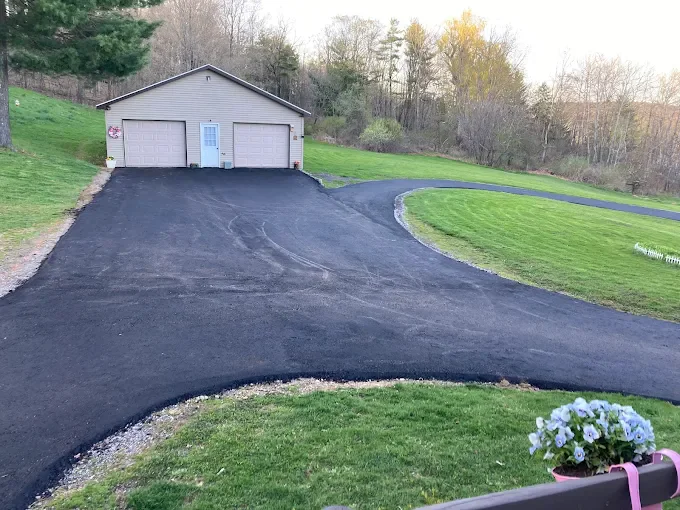
If there’s an old driveway, it gets removed properly. The base gets excavated and graded so water drains away from your house, not toward it. Then comes a solid layer of compacted aggregate—the foundation that keeps everything stable. Skimp here and you’ll pay for it later.
The asphalt goes down at the right thickness. For most residential driveways in this area, that’s at least two to three inches. Heavier use or commercial properties get more. It’s compacted, smoothed, and finished so it ties in cleanly with your garage, sidewalks, or the road.
After it cures, you’ll get guidance on when to seal it and how to keep it in good shape. Then you’re done. The driveway works, the water drains, and you’ve got a surface built to handle what this climate throws at it.
Ready to get started?
Every driveway project starts with proper site evaluation. That means checking drainage, looking at soil conditions, and figuring out what prep work is actually needed. In Saratoga County, soil composition and seasonal ground movement matter. The base has to be done right or nothing above it will hold.
You get excavation if needed, grading for proper water flow, and a compacted aggregate base that won’t shift or settle. The asphalt layer goes down at the correct thickness—not the bare minimum, but what your property actually requires. Edges get hand-tamped and finished so there’s a clean transition to existing surfaces.
Drainage planning is part of the conversation from the beginning. Standing water is one of the fastest ways to wreck a driveway and damage your foundation. If your property has drainage challenges, they get addressed during installation, not after the fact.
We also handle driveway restoration for surfaces that aren’t too far gone, as well as full replacements when that’s the smarter move. During winter months when paving slows down, the focus shifts to foundation work, excavation, and land clearing—so we stay active year-round and available when you need help.
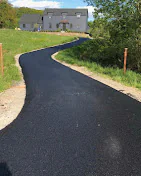
A properly installed asphalt driveway in this area should last 15 to 25 years, sometimes longer with good maintenance. The key word is “properly.” If the base isn’t prepared correctly, if the asphalt is too thin, or if drainage wasn’t planned for, you’ll see problems much sooner.
Upstate New York winters are tough on asphalt. Freeze-thaw cycles cause water to seep into small cracks, freeze, expand, and make those cracks worse. Over time, that leads to potholes and surface breakdown. That’s why the installation matters so much. A solid base, correct thickness, and proper drainage give the asphalt a fighting chance against the weather.
Sealcoating every two to three years adds protection and extends the life of the surface. It’s not optional if you want to get the most out of your investment. Beyond that, fixing small cracks early prevents them from turning into expensive repairs later.
Most early cracking comes down to poor installation. If the base wasn’t compacted properly, the ground will shift and the asphalt above it will crack. If the asphalt layer is too thin—less than two inches for a residential driveway—it won’t hold up to vehicle weight and temperature changes.
Drainage problems cause cracking too. Water that pools on the surface or seeps underneath weakens the base and creates soft spots. When the ground freezes in winter, that trapped water expands and pushes the asphalt up. When it thaws, the asphalt settles unevenly. That cycle repeats until cracks appear.
Sometimes it’s the subgrade—the soil underneath everything. Certain soil types don’t provide stable support, especially when they get wet. If that wasn’t addressed during excavation and base prep, the driveway won’t hold up no matter how good the asphalt is. A quality contractor evaluates all of this before the work starts, not after you’re dealing with cracks.
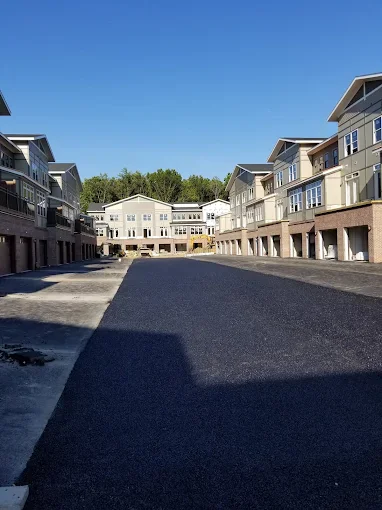
For most residential driveways, you want at least two to three inches of compacted asphalt. That’s the industry standard and it’s based on typical vehicle weight and usage. If you’ve got heavier vehicles—trucks, RVs, equipment—or expect frequent traffic, three inches or more makes sense.
Anything less than two inches is asking for trouble. Thin asphalt can’t handle the stress, and it’ll show wear much faster. You’ll see cracking, surface breakdown, and soft spots within a few years instead of getting the 15 to 20 years you should expect.
Thickness isn’t the only factor, though. The base underneath matters just as much. A thick asphalt layer on a poorly prepared base will still fail. The aggregate base needs to be properly graded and compacted to provide stable support. When both the base and the asphalt are done right, you get a driveway that holds up to this region’s weather and daily use without falling apart prematurely.
Water is the enemy. If it pools on your driveway or seeps into the base, it weakens everything. In winter, that water freezes and expands, cracking the asphalt from below. In spring, the ground turns soft and unstable, causing the surface to sink or shift.
Poor drainage doesn’t just damage the driveway—it threatens your foundation. Water that doesn’t drain away from your house can end up in your basement or crawl space. It can flood your garage. It can erode the soil around your foundation and cause serious structural problems that cost a lot more to fix than a driveway.
That’s why proper grading and drainage planning happen before the asphalt goes down. The driveway needs to slope away from the house. Low spots get addressed. If your property has drainage challenges, solutions like catch basins or drainage pipes get built in during installation. Skipping this step to save a few dollars up front leads to expensive headaches later.
It depends on the condition of what’s already there. An overlay—adding new asphalt over the existing surface—works if the current driveway is structurally sound with only minor surface wear. No major cracks, no drainage issues, no soft spots or sinking areas. If that’s the case, an overlay can extend the life of your driveway and costs less than a full replacement.
But if there are significant cracks, potholes, drainage problems, or base failure, an overlay just covers up the issues temporarily. Those problems will come back through the new asphalt, often within a year or two. You’ll have spent money without actually fixing anything.
A full replacement means removing the old asphalt, evaluating and repairing the base, addressing drainage, and installing fresh asphalt on a solid foundation. It costs more up front, but it solves the underlying problems and gives you a driveway that’ll last another 15 to 25 years. We’ll walk your property and give you an honest assessment of which option makes sense—not which one makes us the most money.
Start with experience in this specific region. Upstate New York weather and soil conditions are different from other areas, and a contractor who understands local challenges will do better work. Ask how long they’ve been operating locally and whether they handle both the prep work and the paving themselves, or if they subcontract parts of the job.
Look for direct communication with the owner or project manager, not just a sales team. You want to talk to someone who’ll actually be accountable for the work. Ask about their process—how they handle base preparation, drainage, asphalt thickness, and compaction. If they gloss over those details or can’t give you clear answers, that’s a red flag.
Get a written estimate that breaks down what’s included: excavation, base material, asphalt thickness, grading, and any drainage work. Vague quotes that just list a total price make it hard to know what you’re actually getting. And pay attention to how they communicate. If they’re pushing hard for a quick decision, using high-pressure tactics, or making promises that sound too good to be true, trust your gut and keep looking.
Other Services we provide in Coons