Asphalt paving company also offering concrete work, excavating, and snow removal services.
Contact Info
-
130 Co Rd 70
Stillwater, NY 12170 - Call: 518-935-3068
- Text: 518-935-3068
- Mon - Sun: 7am - 7pm
Contact Info
Hear From Our Clients

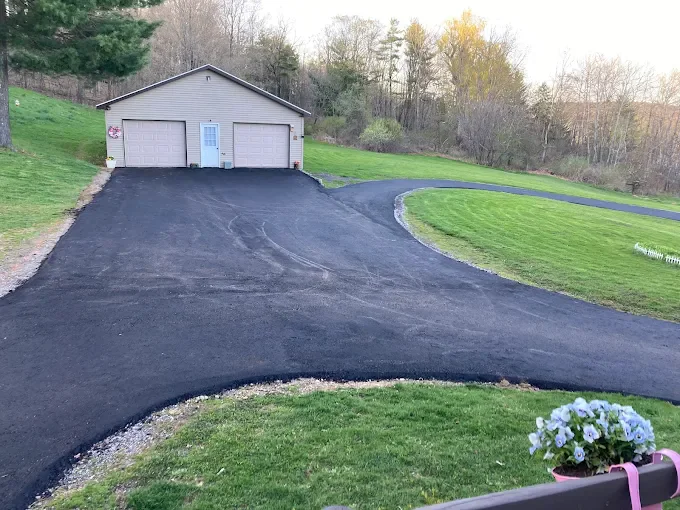
You pull into a smooth, level driveway that drains properly. No puddles collecting near your foundation. No cracks spiderwebbing across the surface after the first winter.
The difference shows up in year three, year five, year ten—when your neighbors are patching potholes and you’re not. When spring melt doesn’t turn your driveway into a crumbling mess.
That’s what proper base preparation gets you. That’s what happens when someone who’s been doing this for 25+ years handles the excavation, addresses the drainage, and doesn’t cut corners on materials or thickness. You’re not just getting fresh asphalt. You’re getting a driveway engineered to handle what South Corinth winters throw at it.
We’ve been handling driveway paving, asphalt installation, and excavation across South Corinth and Saratoga County for more than 25 years. This is owner-operated work—the person you talk to on day one is the same person managing your job on-site.
That matters here. South Corinth’s older homes (many built before 1940) come with drainage quirks and soil conditions that require local knowledge. The freeze-thaw cycles are brutal. Shortcuts show up fast.
Our business was built on repeat clients and referrals, not one-off sales. You get honest pricing, direct communication, and someone who’s still going to be here when you need support down the road.

First, an on-site assessment. We evaluate your current driveway, drainage, soil conditions, and any site-specific concerns. You get a clear estimate—no surprises, no upselling.
If you’re replacing an existing driveway, the old asphalt gets removed completely. Then comes the critical part most contractors rush: base preparation. The ground is graded properly, drainage issues are addressed, and a compacted gravel base goes down. This is what prevents your driveway from failing in two years.
Once the base is solid, 2-3 inches of quality asphalt gets laid and compacted at the right temperature. Timing matters—this work only happens when conditions are right (above 50°F) so the asphalt cures properly. After 48 hours, you’re good to drive on it. We walk the finished job with you to make sure everything meets expectations.
Ready to get started?
Every driveway paving project includes complete excavation and removal of old materials if needed, proper grading and base preparation with compacted gravel, and a minimum 2-3 inch asphalt layer installed and compacted to spec.
Drainage solutions are built in—not added as an afterthought. In South Corinth, where many homes were built before modern drainage codes, this prevents water from pooling against your foundation or washing out your base. The work is scheduled during optimal weather conditions to ensure proper curing.
You also get direct access to the owner throughout the project. Questions get answered. Concerns get addressed. If something unexpected comes up during excavation—which happens with older properties—you’re told immediately, not after the fact.
We also handle related sitework: excavation, foundation services, and land clearing. That means if your driveway project uncovers drainage or grading issues, the same crew can handle it. No waiting on another contractor. No coordination headaches.
With proper installation and maintenance, you’re looking at 20-30 years. But that number depends entirely on how it’s built.
The base is everything. If the contractor skips proper excavation, uses inadequate gravel, or doesn’t address drainage, you’ll see cracks and settling within 2-3 years—no matter how good the asphalt is. South Corinth’s freeze-thaw cycles are unforgiving. Water gets into weak spots, freezes, expands, and destroys the pavement.
A properly built driveway starts with 4-8 inches of compacted gravel base, depending on your soil. Drainage is engineered to move water away from the surface and foundation. The asphalt itself is 2-3 inches thick minimum—not the 1.5 inches some contractors use to save money. Then it’s sealed every 3-5 years to protect against moisture and UV damage. Do it right from the start, and you’re set for decades.
If your current driveway has a solid base and only surface-level damage, an overlay can work. You’ll save 20-30% compared to full replacement. But if there’s any settling, major cracking, or drainage issues, an overlay is just putting new asphalt on top of a failing foundation.
Here’s the test: if you have potholes, areas where the driveway has sunk, or water pooling after rain, the base is compromised. Overlaying won’t fix that—it’ll just hide the problem for a year or two before it shows up again.
Most driveways in South Corinth are 20+ years old. At that age, the base has usually degraded enough that full replacement makes more sense. You’re not just getting a few more years—you’re resetting the clock for another 20-30. An honest contractor will tell you which option actually makes sense for your situation, not just which one is easier to sell.
Late spring through early fall—basically, when temperatures stay consistently above 50°F. Asphalt needs to be laid at 250-300°F and compacted while it’s still hot. If the air temperature is too cold, it cools too fast and won’t compact properly.
That leads to weak pavement, poor bonding, and early failure. You’ll end up with cracks, potholes, and water infiltration within the first year.
In South Corinth, that means the paving season runs roughly May through October, depending on the weather. Some contractors will try to squeeze jobs in during cold snaps because they’re desperate for work. Don’t let them. If it’s below 50°F, reschedule. A driveway installed in proper conditions will outlast one paved in November by 10+ years. It’s worth waiting for the right weather.
Ask about the base. If they gloss over it or say “we’ll just pave over what’s there,” walk away. The base is 80% of the job. Skipping proper excavation and grading is the most common shortcut, and you won’t realize it until the driveway starts failing 1-2 years later.
Ask how thick the asphalt will be. Residential driveways need a minimum of 2-3 inches after compaction. Some contractors will quote 2 inches but only lay 1.5 to save on materials. Ask to see the delivery receipts so you know how many tons were delivered versus how many the job actually required.
Check if they’re licensed and insured—and ask to see the documents, not just take their word for it. Ask when they plan to do the work. If they’re willing to pave in 40°F weather, that’s a red flag. Quality contractors won’t compromise the job just to stay busy. Finally, if the price is dramatically lower than other quotes, there’s a reason. They’re either skipping steps, using subpar materials, or won’t be around to fix problems later.
Water and freeze-thaw cycles. That’s it. Everything else is just a variation of those two problems.
Water gets into cracks or under the pavement, then freezes when temperatures drop. Ice expands with tremendous force, breaking apart asphalt and washing out the base. When it melts, you’re left with voids under the surface. The pavement sinks or cracks under vehicle weight. Then more water gets in, and the cycle repeats.
Poor drainage makes this worse. If water pools on your driveway or runs toward your foundation, it’s constantly working to undermine the base. Older homes in South Corinth—especially those built before 1940—often have drainage issues because they were built before modern codes.
The other culprit is poor base preparation. If the contractor doesn’t excavate deep enough, doesn’t use enough compacted gravel, or doesn’t address soft spots in the soil, the driveway will settle unevenly. That creates low spots where water collects, and the failure accelerates. Fix the drainage and build a proper base, and your driveway will handle South Corinth winters without issue.
For a standard residential driveway, expect $5-$12 per square foot installed, depending on the scope of work. A typical 600-square-foot driveway runs $3,000-$7,200. That includes removal of the old driveway, proper base preparation, and 2-3 inches of asphalt.
If you only need an overlay (paving over an existing driveway in good condition), you’ll pay less—usually $2-$4 per square foot less than full replacement. But that only works if your current base is solid.
Prices vary based on site conditions. If you have drainage issues, poor soil, or need significant excavation, costs go up. If access is tight or the site requires extra prep work, that factors in too. Any contractor who gives you a price without seeing the site is guessing—and that guess usually doesn’t include the things that actually cost money.
Get at least three quotes, and make sure each one specifies what’s included: removal, base depth, asphalt thickness, and drainage work. The lowest bid usually means someone’s cutting corners. The highest bid doesn’t guarantee quality. Look for the contractor who explains what they’re doing and why, not just the one with the best price.
Other Services we provide in South Corinth