Asphalt paving company also offering concrete work, excavating, and snow removal services.
Contact Info
-
130 Co Rd 70
Stillwater, NY 12170 - Call: 518-935-3068
- Text: 518-935-3068
- Mon - Sun: 7am - 7pm
Contact Info
Hear From Our Clients

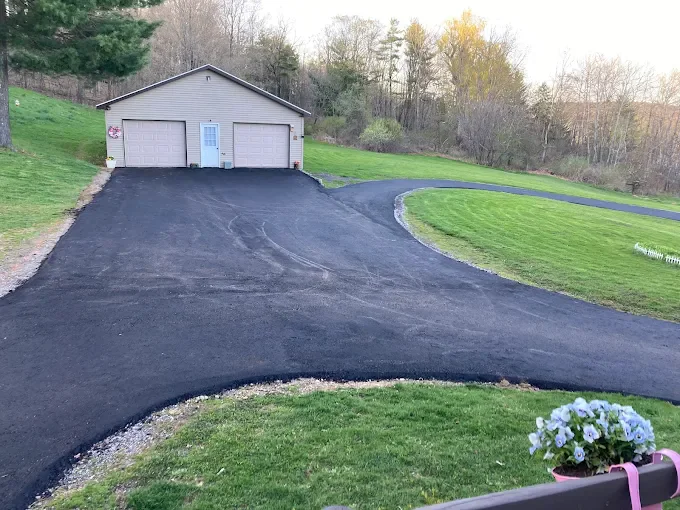
You pull into a smooth, level surface that doesn’t crack apart after one winter. Water drains where it should instead of pooling near your foundation or freezing into skating rinks.
Your driveway actually looks good. No patched-together sections that scream “cheap fix.” Just clean lines, proper grading, and asphalt thick enough to handle what you throw at it—literally.
And when spring rolls around, you’re not staring at new potholes wondering how long until the whole thing needs replacing. Because when the base is prepped correctly and the asphalt goes down at the right thickness, you’re looking at decades of use, not years. That’s what proper driveway paving delivers.
We’ve been handling paving, asphalt, excavation, and foundation work in Stony Creek and across the region for over 25 years. The owner isn’t just a name on paperwork—he’s involved from your first call through the final walkthrough.
That means you get straight answers about what your driveway needs, what it’ll cost, and how long it’ll take. No runaround, no bait-and-switch pricing, no crew showing up without a clue what they’re doing. Around here, winters are harsh and driveways take a beating. We know exactly how to build for this climate because we’ve been doing it in this region for a quarter century.

First, the existing surface comes out if it needs to. That means proper removal and grading, not just slapping new asphalt over a failing base.
Next comes base preparation—the foundation that determines whether your driveway lasts five years or twenty-five. The base gets graded for proper drainage, compacted correctly, and built to handle the weight and weather it’ll face. If water doesn’t drain away from your foundation, that gets fixed now, not after you’ve got a new driveway and a flooded basement.
Then the asphalt goes down at the right thickness. Not the bare minimum. Not whatever’s left in the truck. The actual thickness your driveway needs to last—typically 2.5 to 4 inches depending on use. It gets compacted while it’s still hot, creating a dense, durable surface that won’t fall apart when temperatures swing from summer heat to winter freeze.
You’ll know when you can use it. Asphalt needs time to cure before you drive on it—usually a couple days. You get clear instructions, not guesswork.
Ready to get started?
You get a driveway paving contractor who understands Stony Creek’s climate. Freeze-thaw cycles destroy poorly installed driveways fast around here. We build for that reality—proper base prep, correct asphalt thickness, and drainage that actually works.
The owner handles your project directly. You’re not passed off to whoever answers the phone that day. From estimate to completion, you’re dealing with someone who’s accountable and has 25 years of experience backing up what they tell you.
Emergency response is available when you need it. A collapsed section or major damage doesn’t wait for convenient business hours. We offer emergency service because sometimes problems can’t wait.
Year-round capability means we don’t disappear in winter. When paving season ends, the focus shifts to foundation work, excavation, and land clearing. That kind of operational depth doesn’t come from fly-by-night operators. Competitive pricing without the games. You get an honest quote based on what your project actually requires. No lowball estimate that magically inflates once work starts.
With proper installation and maintenance, you’re looking at 15 to 25 years, sometimes longer. The key factors are base preparation, asphalt thickness, and drainage.
Around Stony Creek, the freeze-thaw cycle is brutal. Water gets into cracks, freezes, expands, and tears asphalt apart. A properly built driveway with a solid base and correct thickness handles that stress. One built on the cheap starts failing within a few years.
Maintenance matters too. Sealcoating every three to five years protects the surface and extends lifespan significantly. Small cracks filled early don’t become big problems later. But even with perfect maintenance, a poorly installed driveway won’t last. Start with quality work, maintain it properly, and you’ll get decades of use.
For most residential driveways in this area, 2.5 to 4 inches of compacted asphalt over a proper base is standard. The exact thickness depends on soil conditions, expected traffic, and whether heavy vehicles will use it regularly.
A driveway that only sees passenger cars can often work fine at 2.5 inches if the base is solid. If you’ve got trucks, RVs, or equipment using it, go thicker. Poor soil or drainage issues also require more substantial construction.
The base underneath matters just as much as the asphalt thickness. Skimping on base preparation to save money is a mistake that costs more later. A thin layer of asphalt over a properly prepared base will outlast thick asphalt over dirt any day. Both need to be done right.
It depends on how extensive the damage is and what’s causing it. Small surface cracks from normal wear can be filled and sealed. Widespread cracking, potholes, or sections that have sunk usually mean the base has failed—and patching won’t fix that.
If you’re seeing alligator cracking (that web-like pattern), multiple potholes, or areas where water pools constantly, the problem is underneath. Repairs might buy you a year or two, but you’ll keep throwing money at a failing foundation. Replacement costs more upfront but actually solves the problem.
For minor damage—a few linear cracks, small surface issues, no major drainage problems—repairs make sense. An experienced contractor can assess what’s happening below the surface and tell you honestly whether patching will hold or if you’re wasting money. Don’t trust anyone who immediately pushes the most expensive option without explaining why.
Typically 48 to 72 hours, but it depends on weather conditions and asphalt temperature. Your contractor should give you specific instructions based on the conditions during your installation.
Asphalt needs time to cool and cure. Driving on it too soon can leave ruts, depressions, and damage that won’t fix itself. Hot weather means longer wait times because the asphalt stays softer longer. Cooler temperatures let it harden faster.
Even after you start using it, avoid sharp turns with the wheels stationary (power steering scuffs) for the first few weeks. The surface is still curing and vulnerable to that kind of stress. Heavy vehicles should wait longer than passenger cars. Follow the guidelines your contractor gives you—they’re based on the specific conditions of your installation, not generic advice.
Because not everyone is quoting the same work. Some contractors cut corners on base preparation, asphalt thickness, or material quality to offer lower prices. Others include proper drainage, adequate thickness, and quality materials—which costs more but actually lasts.
A quote that’s significantly lower than others is usually low for a reason. Maybe they’re planning 2 inches of asphalt instead of 3. Maybe they’re skipping base preparation. Maybe they’re using lower-grade material with more recycled content. You won’t know until problems show up a year later.
Get multiple quotes, but compare what’s actually included. Ask about base preparation, asphalt thickness, material grade, and drainage solutions. A detailed written estimate that breaks down the work tells you more than a number scribbled on a business card. The cheapest bid often becomes the most expensive mistake.
Sealcoating every three to five years is the big one. It protects against water infiltration, UV damage, and chemical wear from de-icing salt. Small cracks should be filled promptly before they expand through freeze-thaw cycles.
Keep the surface clean. Oil, gas, and chemicals break down asphalt over time. Sweep off debris, especially before winter. Don’t let water pool—if you notice drainage problems developing, address them before they cause structural damage.
Avoid power steering scuffs by not turning the wheel while stationary, especially in hot weather when asphalt is softer. Heavy vehicles should be parked in the same spot sparingly to prevent rutting. In winter, use sand instead of metal shovels or aggressive de-icing chemicals when possible. Proper maintenance isn’t complicated, but it makes the difference between a driveway lasting 10 years versus 25.
Other Services we provide in Stony Creek