Asphalt paving company also offering concrete work, excavating, and snow removal services.
Contact Info
-
130 Co Rd 70
Stillwater, NY 12170 - Call: 518-935-3068
- Text: 518-935-3068
- Mon - Sun: 7am - 7pm
Contact Info
Hear From Our Clients

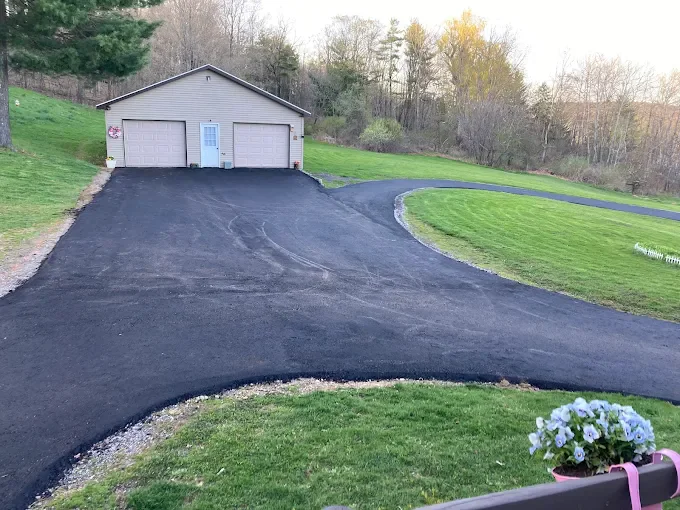
Your driveway takes a beating. Snow, ice, road salt, temperature swings—it all adds up fast in Tucker Heights. What you need is a surface that doesn’t crack apart after one winter, doesn’t puddle water against your foundation, and doesn’t turn into a pothole minefield by spring.
That’s what proper driveway paving delivers. A correctly graded base. Materials chosen for New York’s climate. Compaction done at the right temperature. Drainage that sends water away from your home, not toward it.
When it’s done right, you’re looking at 20 to 30 years of reliable use. No constant patching. No surprise failures. Just a smooth, durable surface that does its job season after season.
We’ve been handling paving, asphalt, excavation, and foundation work across Tucker Heights and the surrounding region for over 25 years. This is an owner-operated business, which means when you call, you’re talking to the person who’ll actually be managing your project—not a sales rep reading from a script.
The owner is involved from your first conversation through the final roller pass. That’s how you get straight answers about your property’s drainage issues, honest pricing without surprise fees, and solutions that actually make sense for your situation. No pressure tactics. No leftover asphalt scams. Just experienced, local work done right.
Tucker Heights properties come with their own challenges—older grading, tree roots, soil conditions that shift. We know how to handle them because we’ve been doing it here for decades, building a reputation on referrals and repeat clients, not flashy advertising.

First, the existing surface gets removed if it’s beyond repair—old asphalt, crumbling concrete, whatever’s there. If your current driveway is solid enough, an overlay might work instead. That decision gets made after an honest assessment of your base, not based on what’s easiest to sell you.
Next comes the foundation work. The subgrade gets graded and compacted properly. This is where most cheap jobs fail—they skip steps here, and you pay for it later. Aggregate stone goes down to create a stable base that won’t shift or settle. Drainage gets addressed now, before anything gets paved over. If water’s been pooling near your foundation or creating ice patches, this is when that problem gets solved.
Then the asphalt goes down. It’s heated, laid, graded smooth, and compacted with heavy equipment while it’s still at the right temperature. Edges get finished. Transitions to your garage, walkway, or street get smoothed out so there’s no lip or uneven surface.
After that, it cures. You can walk on it in a couple days. Drive on it carefully within a week. Full cure takes about a month. Then it’s ready for whatever Tucker Heights weather brings.
Ready to get started?
Driveway paving in Tucker Heights isn’t just about laying asphalt. It’s about understanding how New York’s freeze-thaw cycles work, how water moves across your specific property, and what your soil conditions require for a stable base.
We handle the full scope—demolition and removal of old surfaces, proper excavation and grading, aggregate base installation, compaction, asphalt application, and finishing work. The process accounts for Tucker Heights drainage patterns, which matter more than most homeowners realize. Poor drainage is the number one cause of premature driveway failure here. Water finds cracks, freezes, expands, and destroys your asphalt from the inside out.
Proper grading slopes the surface so water runs toward the street or designated drainage areas—not toward your foundation. That quarter-inch per foot slope might not look like much, but it’s the difference between a dry basement and a wet one. Between a driveway that lasts 25 years and one that fails in five.
Material selection matters too. New York’s temperature extremes require asphalt mixes that can flex without cracking in winter and hold firm without softening in summer heat. The timing of installation matters—paving in temperatures below 50°F or during wet conditions leads to compaction problems and early failure. That’s why we know when to schedule work and when to wait, even if it means pushing your project back a week.
With proper installation and regular maintenance, you’re looking at 15 to 25 years, sometimes longer. The key factors are base preparation, drainage management, and how well you maintain the surface over time.
New York’s freeze-thaw cycles are tough on asphalt. Water gets into small cracks, freezes, expands, and makes those cracks bigger. That’s why sealcoating every 2 to 3 years matters—it keeps water out. Filling cracks when they’re still small prevents them from turning into potholes.
If your driveway was installed with shortcuts—thin base, poor compaction, bad drainage—you might see problems within a few years. But a properly installed driveway with a solid aggregate base, correct grading, and quality materials will handle decades of Tucker Heights winters without major issues.
Late spring through early fall, when temperatures consistently stay between 65 and 75 degrees. Asphalt needs warmth to compact properly and cure correctly.
If you try to pave when it’s too cold, the asphalt cools too fast and won’t compact to the right density. That leads to a weaker surface that deteriorates quickly. If it’s too hot, the material can become overly soft during compaction, creating its own problems.
Weather also needs to be dry. Rain during or right after installation introduces moisture into the base layers, which can cause settling and drainage issues down the road. We know how to read the forecast and schedule work during optimal windows—even if that means waiting a bit longer. Rushing a paving job in poor conditions always costs more in the long run.
Sometimes, but only if the existing surface and base are in good condition. An overlay can save money, but it’s not the right choice for every situation.
If your current driveway has major cracks, potholes, drainage problems, or base failure, paving over it just hides the problem temporarily. Those issues will come back through the new layer within a year or two. You’ll have spent money on a solution that doesn’t actually solve anything.
We assess your existing driveway honestly. We look at the base stability, check for significant settling or heaving, evaluate drainage, and determine whether the old surface can support new asphalt. If more than 30% of your driveway needs repairs, or if there are structural issues with the base, full removal and replacement is usually the smarter investment. It costs more upfront but gives you a driveway that actually lasts.
Because water is asphalt’s biggest enemy, especially in New York. Poor drainage leads to standing water, which seeps into cracks, freezes, expands, and destroys your driveway from within.
When your driveway doesn’t slope correctly, water pools on the surface or along the edges. In winter, that water freezes and creates ice patches—safety hazard for you, stress on the asphalt. When it thaws, the freeze-thaw cycle weakens the pavement structure. Do that enough times and you get potholes, cracking, and surface deterioration.
Worse, if your driveway slopes toward your house instead of away from it, you’re directing water straight at your foundation. That can lead to basement flooding, foundation cracks, and structural problems that cost thousands to fix. Proper grading during installation—sloping about a quarter inch per foot toward drainage areas—prevents all of that. It’s not optional. It’s essential.
For a typical residential driveway in Tucker Heights, you’re generally looking at $5 to $9 per square foot for quality asphalt paving, including demolition of the old surface. A standard 600-square-foot driveway usually runs between $2,100 and $3,400, depending on site conditions and project scope.
That price includes removal of your existing driveway, proper base preparation with aggregate stone, grading for drainage, asphalt installation, and compaction. If your property has drainage issues that need to be addressed, significant grading challenges, or requires extra excavation, costs go up.
What you’re paying for isn’t just materials and labor—it’s expertise. Knowing how to prepare a base that won’t settle. Understanding how to grade for Tucker Heights soil conditions. Using materials that hold up to New York winters. Doing the compaction at the right temperature so the asphalt reaches proper density. Cheap bids usually mean shortcuts somewhere, and those shortcuts show up fast in this climate.
You can walk on it after about 24 to 48 hours. Light vehicle traffic is usually safe after 5 to 7 days, but you need to be careful. Full curing takes about 30 days.
During that first month, avoid turning your steering wheel while the car is stopped—that can scuff the surface. Don’t park in the same spot every day, especially if it’s hot out. The asphalt is still hardening, and concentrated weight in one area can leave impressions.
After the full cure period, your driveway is ready to handle normal use—parking, turning, snow plowing, whatever you need. We recommend waiting 6 to 9 months before applying sealcoating, which gives the asphalt time to fully cure and allows oils to evaporate from the surface. Following that timeline helps your driveway reach its full lifespan potential.
Other Services we provide in Tucker Heights