Asphalt paving company also offering concrete work, excavating, and snow removal services.
Contact Info
-
130 Co Rd 70
Stillwater, NY 12170 - Call: 518-935-3068
- Text: 518-935-3068
- Mon - Sun: 7am - 7pm
Contact Info

Hear From Our Clients
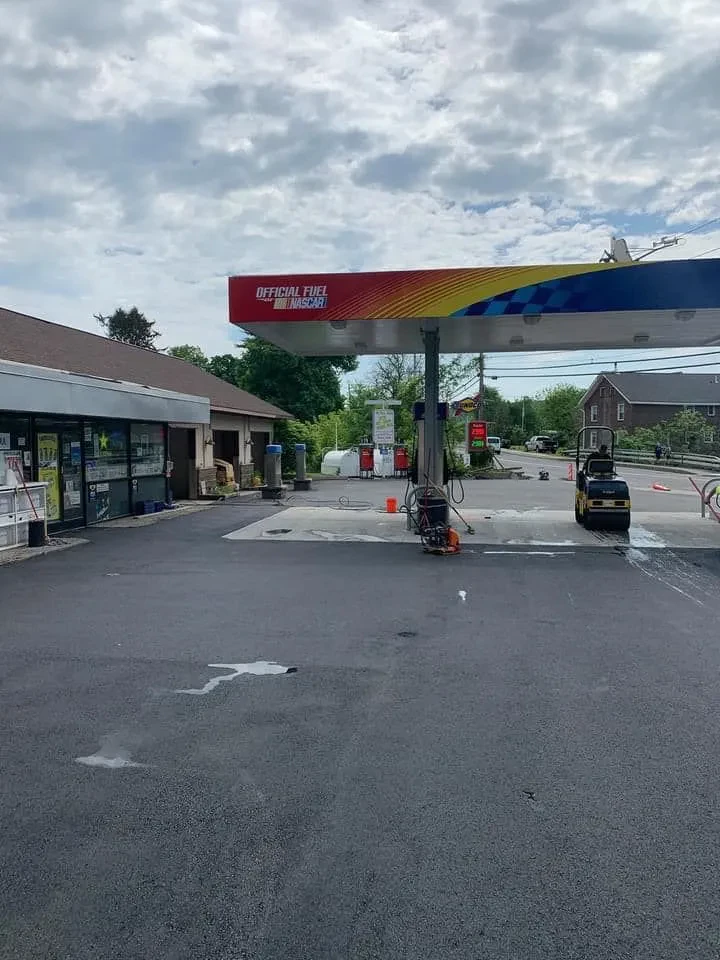
A parking lot that’s paved correctly doesn’t just look better. It drains properly, so water doesn’t pool and crack the surface six months later. It holds up under traffic without sinking or crumbling. And it doesn’t turn into a liability nightmare every time it rains or freezes.
You avoid the cycle of patching potholes every spring because the base was done right from the start. Proper grading means water flows where it should. The right asphalt thickness means the surface can handle the load without breaking down. And when you work with someone who knows what they’re doing, you’re not paying twice to fix what should’ve been done correctly the first time.
This is what separates a parking lot that lasts 20 to 30 years from one that starts failing in five. The difference isn’t luck—it’s preparation, materials, and experience.
We’ve been serving Clarkville and the surrounding region for over 25 years. Owner-operated from day one. That means when you call, you’re talking to someone who actually runs the business, manages the crews, and cares about the outcome because their name is on it.
There’s no call center, no project manager who disappears after the estimate, no subcontractors you’ve never met showing up with different equipment. You get direct access to the owner, straightforward answers, and someone who’ll be around long after the job is done. That’s how trust gets built in a community—by showing up, doing what you said you’d do, and being there when it matters.
This isn’t a side gig or a seasonal operation. We work year-round, handling paving and asphalt in the warmer months and shifting to excavation and foundation work when temperatures drop. If you need emergency repairs, we respond. If you have questions three months later, we answer.

First, the site gets evaluated. That means checking drainage, looking at what’s underneath, and figuring out what prep work is actually needed. If there’s old asphalt that’s failed, it gets removed. If the ground needs grading, that happens before any paving starts.
Next comes the base. This is the part most people don’t see, but it’s the most important. A proper base means 8 to 12 inches of compacted gravel, graded so water drains away from the surface. Skip this step or do it poorly, and your parking lot will sink, crack, and fail no matter how nice the top layer looks.
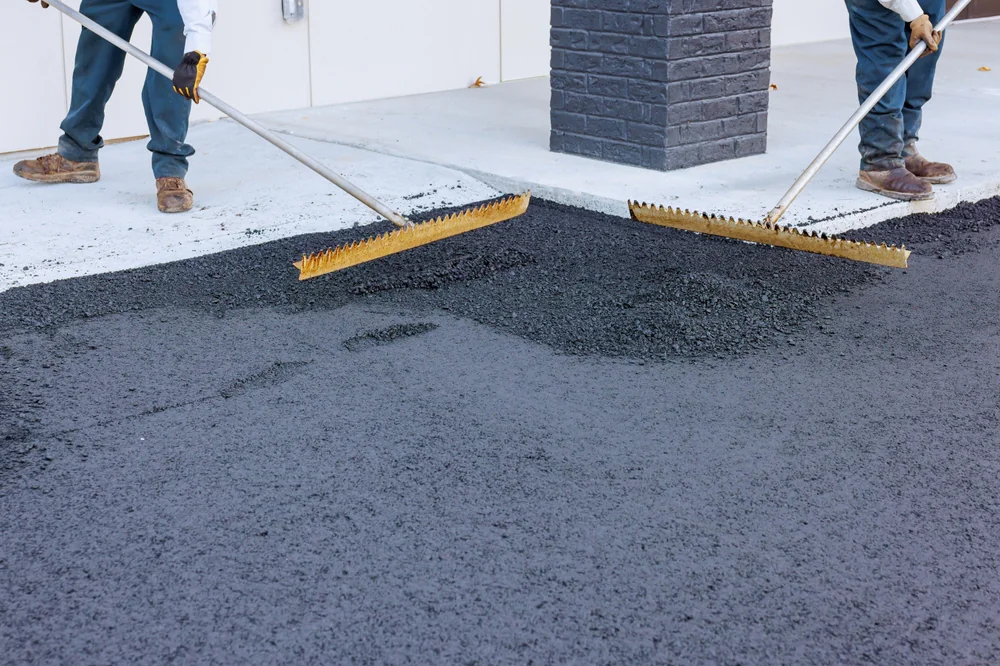
Once the base is solid, hot mix asphalt gets applied in layers. A binder course goes down first for strength, then a smooth topcoat for the driving surface. Everything gets compacted while it’s still hot to create a dense, durable pavement. After it cures, line striping and any ADA-compliant markings get added.
The timeline depends on the size of the lot and site conditions, but most projects wrap up in a few days to a couple of weeks. Weather can affect the schedule—asphalt needs to be laid when temperatures are above 50 degrees—so timing matters.
Ready to get started?
Parking lot paving in Clarkville, NY isn’t just about laying asphalt. It’s about understanding the local climate and what that does to pavement. Freeze-thaw cycles are brutal here. Water gets into cracks, freezes, expands, and breaks the asphalt apart. That’s why proper drainage and sealcoating matter so much in this area.
When you’re getting a parking lot paved, you should expect site preparation, base work, asphalt installation, and finishing services like striping. If the existing lot has drainage problems, those need to be fixed before new asphalt goes down. If the base has failed, resurfacing won’t solve the problem—you’ll need full reconstruction.
For lots that are still structurally sound but showing surface wear, resurfacing can be a cost-effective option. That means milling off the top layer and applying fresh asphalt over a stable base. It extends the life of the lot by 8 to 15 years and costs significantly less than tearing everything out and starting over.
Maintenance is part of the equation too. Sealcoating every 2 to 4 years protects the surface from UV damage, water infiltration, and oil spills. Crack sealing prevents small issues from turning into potholes. Property owners who stay on top of maintenance get 30 years out of their parking lots. Those who don’t are looking at major repairs or replacement in half that time.

Parking lot paving typically runs between $2 and $7 per square foot, depending on the size of the lot, site preparation needs, and whether you’re doing new construction or resurfacing. A 10,000 square foot lot might cost anywhere from $20,000 to $70,000. That range exists because every project is different.
If the site needs extensive grading, drainage work, or removal of old pavement, costs go up. If you’re resurfacing over a solid base, costs come down—usually $1 to $3 per square foot. Additional features like curbing, ADA-compliant striping, and sealcoating add to the total but are necessary for a complete, code-compliant job.
The key is getting an accurate estimate based on your specific site. A contractor who gives you a number over the phone without looking at the property is guessing. You want someone who’ll visit the site, assess what’s actually needed, and give you a detailed breakdown of costs for materials, labor, and any extras.
With proper installation and regular maintenance, an asphalt parking lot in Clarkville, NY should last 20 to 30 years. The climate here is tough on pavement—freeze-thaw cycles, heavy snow, and temperature swings all take a toll. That’s why the quality of the initial installation and ongoing upkeep make such a big difference.
A lot that’s paved correctly, with proper base preparation and drainage, starts with a strong foundation. One that’s maintained with regular sealcoating every 2 to 4 years and crack sealing as needed can hit that 30-year mark. A lot that’s poorly installed or neglected might start failing in 10 to 15 years, sometimes sooner.
The base is everything. If water can’t drain properly, it sits on the surface, seeps into cracks, freezes, and breaks the asphalt apart. That’s the most common cause of premature failure in this area. Choosing a contractor who understands local conditions and doesn’t cut corners on prep work is the best way to protect your investment.
Resurfacing means applying a new layer of asphalt over the existing pavement. It works when the base is still solid but the surface is worn, cracked, or faded. The old top layer gets milled off, any necessary repairs are made, and fresh asphalt is laid down. It’s faster and less expensive than full replacement, and it can extend the lot’s life by 8 to 15 years.
Replacing means tearing out everything—old asphalt and the base layer—and rebuilding from the ground up. You do this when the foundation has failed, when you see alligator cracking (a sign of base failure), or when the lot is 20 to 30 years old and has widespread damage. Replacement costs more and takes longer, but it gives you a brand-new parking lot with a fresh 20- to 30-year lifespan.
The decision comes down to the condition of the base. If it’s stable, resurfacing makes sense. If it’s compromised, resurfacing is just putting a Band-Aid on a structural problem. A good contractor will assess the base and tell you honestly which option is right for your situation.
Yes, sealcoating is essential if you want your parking lot to last. It’s a protective layer that shields the asphalt from UV rays, water, oil spills, and other elements that break down the surface. In Clarkville’s climate, where freeze-thaw cycles are a constant threat, sealcoating is especially important because it prevents water from penetrating the asphalt.
You should sealcoat every 2 to 4 years, depending on traffic levels and weather exposure. A lot that sees heavy use might need it every 2 years. A lighter-use lot can go 3 to 4 years between applications. The investment is small compared to the cost of major repairs or early replacement—sealcoating typically costs $0.14 to $0.30 per square foot.
New asphalt shouldn’t be sealed right away. It needs at least 6 months to cure before the first sealcoat application. After that, staying on a regular schedule can double the lifespan of your parking lot. It’s one of the most cost-effective maintenance steps you can take.
Start with licensing and insurance. Any contractor you hire should be licensed to operate in New York and carry both liability and workers’ compensation insurance. If they can’t provide proof, move on. This protects you if something goes wrong during the project.
Look for experience, especially with projects similar to yours. A contractor who’s been in business for years and can show you completed work in your area is a safer bet than someone who just started or operates outside the region. Ask for references and actually call them. Find out if the contractor showed up on time, stayed within budget, and delivered quality work.
Pay attention to how they communicate. Do they give you straight answers, or do they dodge questions? Do they provide a detailed written estimate, or just a vague number? A good contractor will walk the site with you, explain what needs to be done, and give you a breakdown of costs. They’ll tell you what to expect at each stage and won’t pressure you into a decision. Trust your gut—if something feels off, it probably is.
Potholes form when water gets into cracks in the asphalt, then freezes and expands. That expansion breaks the asphalt apart. When the ice melts, it leaves a void. Traffic then compresses the weakened area, and the surface collapses into a pothole. In Clarkville’s climate, this cycle happens repeatedly throughout the winter and early spring.
The best prevention is stopping water from getting into the pavement in the first place. That means sealing cracks as soon as they appear, maintaining a regular sealcoating schedule, and ensuring proper drainage so water doesn’t pool on the surface. If your lot has low spots where water collects, those need to be addressed during installation or resurfacing.
Once a pothole forms, it needs to be repaired quickly. Leaving it alone allows more water in, which makes the problem worse. A proper repair involves cleaning out the hole, applying a binder, filling it with hot asphalt, and compacting it level with the surrounding surface. Temporary cold-patch fixes don’t last—they’re just a stopgap until a permanent repair can be made.
Other Services we provide in Clarkville