Asphalt paving company also offering concrete work, excavating, and snow removal services.
Contact Info
-
130 Co Rd 70
Stillwater, NY 12170 - Call: 518-935-3068
- Text: 518-935-3068
- Mon - Sun: 7am - 7pm
Contact Info

Hear From Our Clients
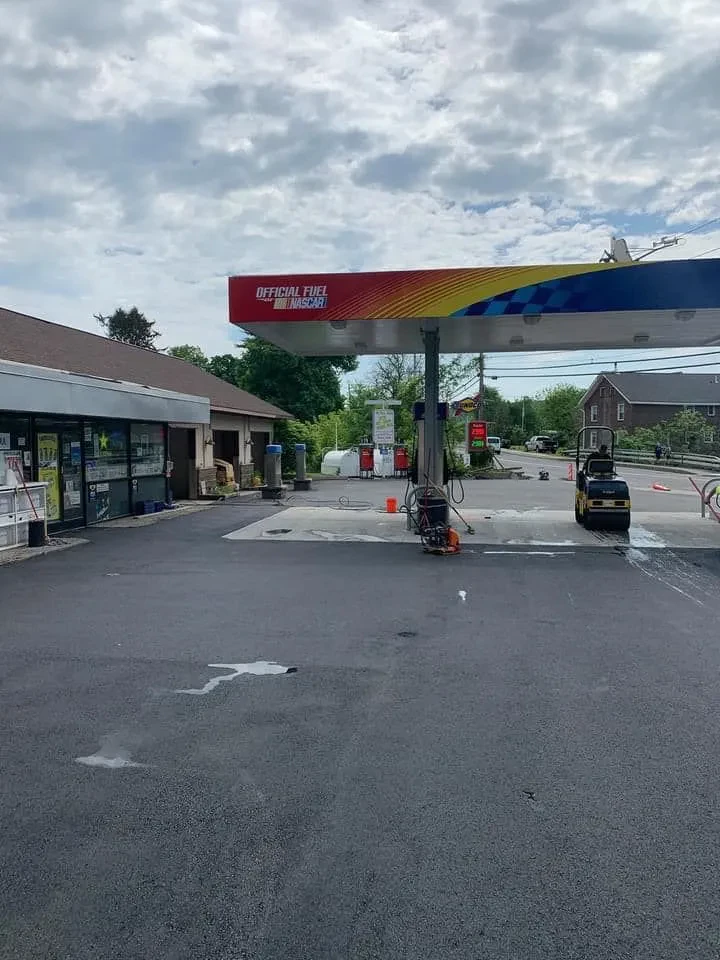
A smooth, properly graded parking lot means your customers aren’t dodging potholes or complaining about cracked pavement. It means water drains where it should instead of pooling up and causing freeze-thaw damage every winter. You get clear striping that actually stays visible, ADA-compliant spaces that keep you code-ready, and a surface built to handle Clifton Park’s weather without falling apart in three years.
When your parking lot looks clean and professional, people notice before they even walk through your door. That first impression matters whether you’re running a retail center off Route 146, an office complex near Exit 9, or an industrial facility that sees heavy truck traffic daily.
The difference between a parking lot that lasts 10 years and one that lasts 25 comes down to proper site prep, quality materials, and a paving contractor who knows what they’re doing. You’re not just paying for asphalt—you’re investing in fewer repairs, less liability exposure, and one less thing to worry about as a property owner.
We’ve been handling paving, asphalt, excavation, and foundation work in Clifton Park and the surrounding Capital Region for over 25 years. This isn’t a business built on slick sales pitches or subcontracted crews you’ve never met. When you call, you talk directly to the owner—and that same person is managing your project from start to finish.
That matters because you’re not dealing with a different person every time you have a question. You get straight answers, honest pricing, and someone who’s accountable for the work. We operate year-round, focusing on parking lot paving and asphalt services during warmer months, then shifting to foundations and land clearing when winter hits.
Clifton Park’s growth along I-87 means more businesses, more traffic, and more demand for parking infrastructure that actually holds up. We understand the local climate challenges—freeze-thaw cycles, drainage issues, soil conditions—and we build parking lots designed to handle them without constant patching and repair.

First, the site gets evaluated. That means looking at existing conditions, checking drainage, understanding traffic patterns, and identifying any grading issues that could cause problems down the road. If you’re replacing an old lot, the damaged asphalt gets removed. If it’s new construction, the area is excavated and prepped to the right depth.
Next comes grading and base preparation. This step is critical because a parking lot is only as good as what’s underneath it. The base layer gets compacted properly to prevent settling, shifting, or premature cracking. Drainage systems are installed or adjusted to make sure water moves away from the pavement instead of sitting on top of it or seeping underneath.
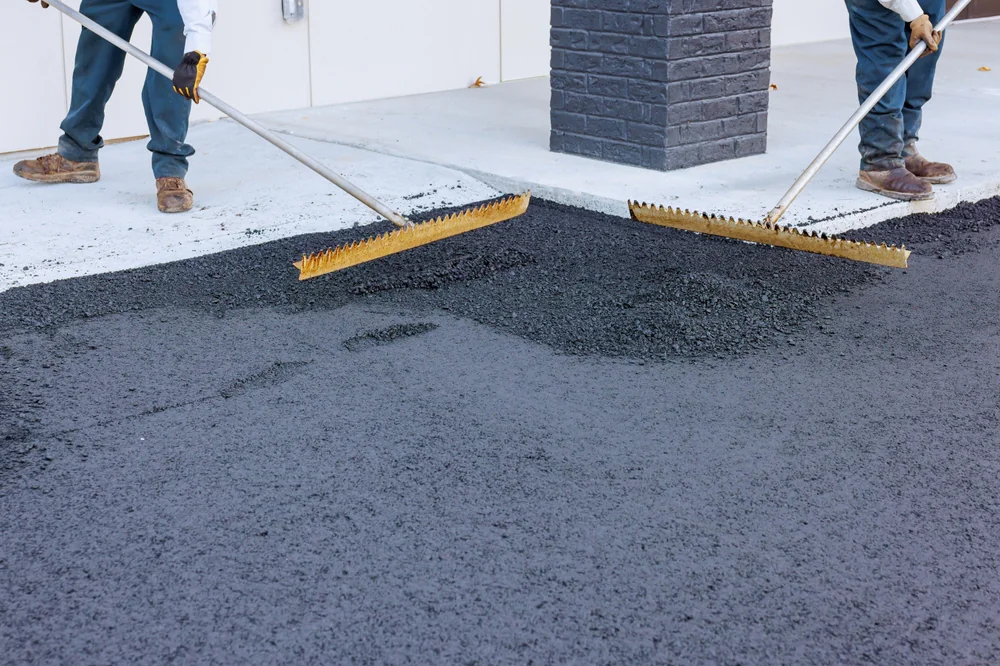
Then the asphalt goes down. Depending on the size and expected traffic load, this could be a single layer or multiple lifts. The material is spread evenly, compacted thoroughly, and finished smooth. Once cured, striping goes on—parking spaces, handicap zones, fire lanes, directional arrows—all done to meet local codes and ADA requirements.
The timeline depends on the size of your lot and weather conditions, but most projects wrap up in two to four weeks. We work to minimize disruption, and when possible, we phase the work so parts of your lot stay accessible while construction is underway.
Ready to get started?
Parking lot paving in Clifton Park isn’t just about laying down asphalt. It includes site preparation, proper grading for drainage, base installation, asphalt application, compaction, and finish work like striping and sealcoating. If your lot has existing damage, repairs get handled first—patching potholes, sealing cracks, addressing any base failures that would compromise the new surface.
For commercial properties along Clifton Park’s busy retail corridors, traffic flow design matters. That means planning entrance and exit points, creating clear driving lanes, and positioning handicap spaces where they’re accessible but not blocking main traffic. ADA compliance isn’t optional, and a properly designed lot makes sure you’re meeting those requirements from day one.
Clifton Park sees cold winters and temperature swings that are hard on asphalt. Freeze-thaw cycles cause water to expand in cracks, which makes small problems bigger fast. That’s why proper drainage and quality materials matter here more than in milder climates. A well-built parking lot in this area should give you 20 to 25 years of use with routine maintenance like sealcoating every few years and occasional crack sealing.
If you’re dealing with an aging lot that’s starting to show wear—faded lines, surface cracking, minor settling—resurfacing might be an option before full replacement is necessary. We evaluate each situation honestly and recommend the most cost-effective solution based on actual conditions, not what generates the biggest invoice.

Most commercial parking lot paving projects in Clifton Park take between two and four weeks from start to finish, but that timeline depends on the size of your lot, current site conditions, and weather. A smaller lot with good existing drainage and minimal prep work can move faster. Larger projects or lots that need significant grading, base repair, or drainage improvements take longer.
Weather plays a bigger role than most people expect. Asphalt needs certain temperature ranges to cure properly, and rain can delay work. In Clifton Park, spring through early fall offers the most predictable conditions. Winter paving is possible for repairs, but full installations are typically scheduled for warmer months.
If keeping your business accessible during construction is a priority, the work can often be phased. That means paving one section at a time so you’re never completely without parking. It extends the overall timeline slightly, but it keeps your operation running and your customers happy.
Resurfacing means adding a new layer of asphalt—usually around two inches—over your existing pavement. It’s a cost-effective option when your current lot has surface wear like minor cracking or fading, but the base underneath is still solid. Resurfacing gives you a fresh, smooth surface and extends the life of your parking lot without the expense of tearing everything out.
Repaving is a full replacement. The old asphalt gets removed completely, the base is evaluated and repaired if needed, and then new asphalt is installed from the ground up. This is necessary when your lot has deep cracks, potholes, significant settling, or drainage problems that can’t be fixed with a surface layer. Repaving costs more upfront but gives you a parking lot that’s built to last another 20-plus years.
The right choice depends on your lot’s current condition. A paving contractor should evaluate what’s actually needed instead of automatically pushing the most expensive option. We assess each situation and recommend the approach that makes the most sense for your property and budget.
Parking lot paving costs in Clifton Park typically range from $3 to $7 per square foot, depending on whether you’re doing a full installation, resurfacing, or repairs. A small commercial lot with 10 to 15 spaces might run $15,000 to $30,000. Larger lots with 50-plus spaces can easily reach $75,000 to $150,000 or more, especially if significant site prep, drainage work, or base repair is involved.
Several factors affect the final price. New construction costs more than resurfacing because it includes excavation, base installation, and grading. If your site has drainage issues or needs regrading to prevent water pooling, that adds to the cost. Asphalt thickness matters too—lots that handle heavy truck traffic need a thicker application than standard passenger vehicle parking.
Extras like striping, sealcoating, curbing, and ADA-compliant signage are sometimes included in the base quote and sometimes billed separately, so it’s important to clarify what’s covered. We provide transparent pricing with no hidden fees. You’ll know exactly what you’re paying for and why before any work starts.
Yes, sealcoating is one of the most important things you can do to extend your parking lot’s lifespan. It protects the asphalt from sun damage, water infiltration, oil spills, and general wear. Without it, asphalt becomes brittle, fades to gray, and develops cracks much faster. Sealcoating essentially adds a protective layer that keeps your pavement looking newer and performing better for longer.
In Clifton Park, where freeze-thaw cycles are hard on asphalt, sealcoating every two to four years is standard. High-traffic lots might need it more often. The process is relatively quick and affordable compared to the cost of premature repairs or resurfacing. Most sealcoat applications cure within 24 to 48 hours, depending on weather conditions.
Timing matters. Sealcoating needs warm, dry conditions to cure properly, so spring through early fall is ideal. Trying to sealcoat too late in the season or during cool, damp weather leads to poor adhesion and a finish that won’t hold up. A good paving contractor will tell you when conditions are right instead of rushing the job just to get it done.
Yes, phased paving is common for businesses that can’t afford to shut down completely during construction. The lot gets divided into sections, and work happens one area at a time. That way, you always have some parking available for customers and employees, even if it’s reduced capacity for a few days.
Phased paving does extend the overall project timeline because crews can only work on one section at a time. But for retail centers, office buildings, or any business that depends on steady customer traffic, it’s worth the trade-off. Clear signage and temporary traffic flow adjustments keep things moving safely while work is underway.
Communication is key. You need to know which sections will be closed on which days so you can plan accordingly and let your customers know what to expect. We coordinate phased projects carefully to minimize disruption and keep your business running as smoothly as possible throughout the process.
Drainage problems are one of the leading causes of parking lot failure, so they need to be addressed before any paving happens. Standing water on the surface means water is also getting underneath the asphalt, where it weakens the base, causes cracking, and leads to potholes. In Clifton Park’s climate, that water freezes and expands during winter, making the damage even worse.
Fixing drainage usually involves regrading the lot so water flows toward catch basins or designated drainage areas instead of pooling in low spots. Sometimes it means installing or repairing underground drainage systems. If the existing base has been compromised by water infiltration, that section may need to be excavated and rebuilt before new asphalt goes down.
Ignoring drainage issues to save money upfront is a mistake. You’ll end up paying more in repairs, resurfacing, and liability claims down the road. A proper evaluation identifies drainage problems early, and fixing them as part of your paving project ensures the new surface actually lasts as long as it should.
Other Services we provide in Clifton Park