Asphalt paving company also offering concrete work, excavating, and snow removal services.
Contact Info
-
130 Co Rd 70
Stillwater, NY 12170 - Call: 518-935-3068
- Text: 518-935-3068
- Mon - Sun: 7am - 7pm
Contact Info

Hear From Our Clients
You’re not looking for the cheapest option. You’re looking for a parking lot that doesn’t crack apart in two years or turn into a puddle farm every time it rains.
That means proper sub-base prep. Real drainage planning. And someone who knows the difference between doing it fast and doing it right.
When the foundation is solid and the water has somewhere to go, your asphalt stays intact. Your customers aren’t dodging potholes. And you’re not writing checks for emergency repairs every spring. That’s the difference between paving and paving correctly—and it’s what you get when the owner is on-site managing the work, not juggling ten other jobs.
We’ve been handling paving, asphalt, and excavation work across the Fayville area for over 25 years. We’re owner-operated, which means when you call, you’re talking to the person who’ll actually be running your job—not a sales rep reading from a script.
Our approach is straightforward. Show up, assess what your lot actually needs, give you a real number, and get the work done without dragging it out or disappearing halfway through. No gimmicks. No upselling services you don’t need.
Fayville’s freeze-thaw cycles are tough on asphalt. Between winter salt, heavy snow, and temperature swings that go from 15 degrees to 50 in a week, your parking lot takes a beating. That’s why we focus on proper base work and drainage—the stuff that keeps pavement from falling apart when the weather does what it does.

First, there’s a site visit to look at your existing lot or the area where you’re building new. That includes checking drainage patterns, measuring the space, and figuring out if the current base is salvageable or if it needs to be ripped out and rebuilt.
Once the plan is set and permits are handled, the prep work begins. If there’s old asphalt, it gets milled down to the base layer. If it’s new construction, the ground gets graded and a stable sub-base goes in—usually crushed stone that’s compacted in layers. This is the most important part. If the base isn’t solid, nothing above it will last.
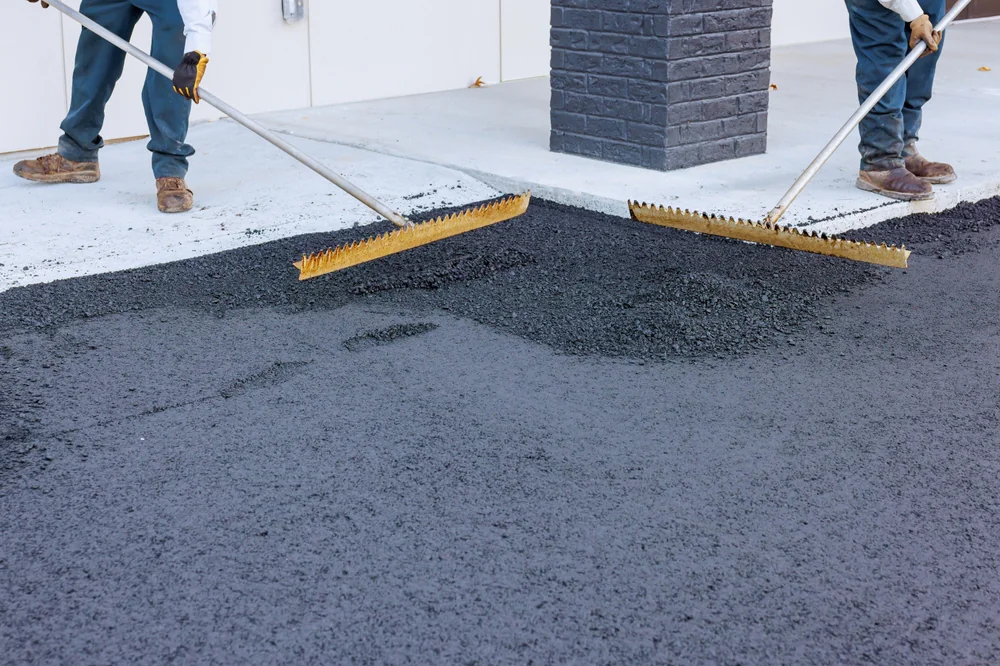
After the base is prepped and drainage is addressed, the asphalt gets installed. Hot-mix asphalt is brought in, laid in passes, and compacted with heavy rollers to eliminate air pockets and create a smooth, dense surface. Proper compaction is what keeps your lot from developing ruts and soft spots under traffic.
Finally, the surface cures, and finishing work happens—line striping, ADA-compliant markings, and any curbing or concrete work that ties everything together. The timeline depends on the size of your lot and the weather, but you’ll know the schedule upfront so there’s no guessing.
Ready to get started?
A proper parking lot paving project starts with site evaluation and drainage planning. In Fayville, that means accounting for snow melt, stormwater runoff, and making sure water moves off your lot instead of pooling in low spots. Standing water is the fastest way to destroy asphalt, so slope and drainage aren’t optional—they’re essential.
The sub-base gets built with aggregate materials that are compacted to create a stable foundation. Depending on your traffic—whether it’s mostly passenger vehicles or delivery trucks—the thickness and composition of that base will vary. Heavier traffic means a thicker, more robust base. Skipping this step to save money upfront is how you end up repaving in five years instead of twenty.
Asphalt installation involves laying hot-mix material in even passes and compacting it thoroughly. The mix itself matters—commercial-grade asphalt is designed to handle the load and temperature fluctuations that residential mixes can’t. Once it’s down, it needs time to cure properly before heavy use.
Finishing work includes line striping for parking spaces, directional arrows, ADA-compliant accessible stalls, fire lanes, and any signage or wheel stops your property requires. This isn’t just about looks—it’s about traffic flow, safety, and making sure your lot meets local codes. In Onondaga County, commercial properties need to follow specific regulations, and getting it right the first time saves you from costly corrections later.

A properly installed asphalt parking lot in Fayville typically lasts 20 to 30 years, but that lifespan depends heavily on three things: the quality of the sub-base, how well drainage was planned, and whether you keep up with basic maintenance.
The sub-base is the foundation everything else sits on. If it’s weak or poorly compacted, your asphalt will start cracking and settling within a few years no matter how good the top layer looks. In this area, freeze-thaw cycles put extra stress on pavement, so a solid base isn’t negotiable.
Drainage is the other major factor. Water is asphalt’s worst enemy. If your lot doesn’t shed water properly, it seeps into cracks, freezes, expands, and breaks apart the pavement from below. That’s why you see parking lots with potholes and alligator cracking after just a handful of winters—the drainage was never right to begin with.
Maintenance extends that lifespan significantly. Crack sealing every couple of years and sealcoating every three to five years can push a well-built lot past 30 years. Ignoring small cracks and letting them turn into big problems is how you end up needing a full replacement at year 15 instead of year 25.
Poor drainage is the number one cause of early parking lot failure in Fayville and the greater Syracuse area. When water doesn’t drain off the surface, it pools in low spots, works its way into small cracks, and then freezes during winter. Ice expands, and that expansion breaks apart the asphalt and damages the base underneath.
Inadequate sub-base preparation is the second big issue. If the base layer isn’t thick enough, properly graded, or compacted correctly, the asphalt above it will settle unevenly under traffic. That creates dips, cracks, and eventually potholes. Cutting corners on base work to save money upfront is a guaranteed way to need expensive repairs within a few years.
Freeze-thaw cycles are especially harsh here. Temperatures swing from well below freezing to above 50 degrees repeatedly throughout late winter and early spring. Asphalt expands and contracts with those temperature changes, and if there’s already moisture trapped in cracks, that movement accelerates the damage.
Skipping maintenance is the third factor. Even a well-built lot needs attention. Small cracks that go unsealed turn into bigger cracks. Faded sealcoating means the asphalt is exposed to UV rays, salt, and oil, which break down the binder and make the surface brittle. Regular crack sealing and sealcoating are inexpensive compared to repaving, but a lot of property owners wait until the damage is severe before doing anything.
It depends on how much of the lot is damaged and whether the base underneath is still solid. If you’ve got a few isolated cracks, some faded striping, and the surface is generally intact, repairs like crack sealing, patching, and sealcoating can buy you several more years without a full repaving.
If more than 25 to 30 percent of your lot shows serious damage—alligator cracking, multiple potholes, widespread settling—you’re usually better off replacing it. At that point, patching becomes a temporary band-aid that doesn’t address the underlying problem, and you’ll keep throwing money at repairs that don’t last.
Resurfacing is the middle option. If your base is still in good shape but the top layer of asphalt is worn out, an overlay can add 10 to 15 years of life. That involves milling off the old surface layer and installing a fresh layer of asphalt on top of the existing base. It’s less expensive than full replacement and a lot more effective than trying to patch a deteriorating surface.
The key is getting an honest assessment of what’s actually going on with your lot. Some contractors will push for a full replacement when resurfacing would work fine. Others will try to patch something that’s too far gone. A site visit and a straight answer about what your lot actually needs—not what makes the biggest invoice—is how you figure out the right move.
Asphalt needs warm, dry conditions to cure properly. Most paving happens between late spring and early fall when temperatures are consistently above 50 degrees. Cold weather makes asphalt cool too quickly during installation, which prevents proper compaction and leads to a weaker surface that’s more prone to cracking.
Rain is another issue. You can’t pave over wet surfaces because the asphalt won’t bond correctly to the base. Even light moisture can cause problems, so paving gets delayed if there’s rain in the forecast or if the ground is still damp from a recent storm.
In Fayville, that means the paving season generally runs from April through October, with the best conditions in late spring and early fall. Summer heat can actually make scheduling easier because the asphalt stays workable longer, but extremely hot days—over 90 degrees—can make compaction tricky.
Winter paving is possible in emergencies using specialized cold-mix asphalt for temporary repairs, but it’s not ideal for permanent work. Cold-mix doesn’t compact as well and won’t last as long as hot-mix asphalt installed in proper conditions. If you’re planning a full parking lot installation or resurfacing, waiting for decent weather is worth it.
Parking lot paving usually refers to a full installation—either building a brand-new lot from scratch or completely removing old asphalt and rebuilding from the base up. That includes excavation, grading, installing a new sub-base, laying fresh asphalt, and finishing with striping. It’s the most comprehensive option and what you need when the existing lot is too far gone to save.
Resurfacing, also called an overlay, means adding a new layer of asphalt on top of the existing pavement. It’s less invasive and less expensive because you’re not tearing everything out. Before resurfacing, any serious cracks or potholes get repaired, and sometimes the top layer is milled down to create a level surface. Then a fresh layer of asphalt—usually one to two inches thick—goes on top.
Resurfacing works well when your base is still solid but the surface layer is worn, cracked, or faded. It’s a good middle-ground option that can add 10 to 15 years of life without the cost and disruption of full replacement. But if your base has failed—meaning you’ve got widespread settling, alligator cracking, or drainage issues—resurfacing won’t fix the underlying problem. You’ll just be covering up damage that will reappear through the new layer.
The right choice depends on the condition of your lot. A site evaluation will tell you whether your base is salvageable or if you need to start over. That’s the difference between a repair that lasts and one that’s just kicking the problem down the road.
Phasing is the key. Instead of shutting down your entire lot at once, we break the work into sections so part of your parking area stays accessible while the rest is under construction. That way, customers can still park, deliveries can still happen, and your business stays operational.
The phasing plan depends on your lot’s layout and your traffic patterns. Typically, one section gets prepped, paved, and finished before moving to the next. Entrances and exits stay open, and temporary signage directs people to available parking. For larger commercial properties, weekend or overnight work can also reduce the impact on daytime business hours.
Communication matters just as much as the schedule. You’ll know ahead of time which areas will be closed and for how long, so you can let employees, customers, or tenants know what to expect. Clear signage on-site keeps people from driving onto fresh asphalt or walking into work zones.
Asphalt cures relatively quickly—usually within 24 to 48 hours for light traffic—but full curing takes longer. That means you can reopen sections faster than you might expect, as long as the work is planned correctly. The goal is to keep disruption minimal while still doing the job right, which requires upfront planning and coordination, not just showing up and hoping for the best.
Other Services we provide in Fayville