Asphalt paving company also offering concrete work, excavating, and snow removal services.
Contact Info
-
130 Co Rd 70
Stillwater, NY 12170 - Call: 518-935-3068
- Text: 518-935-3068
- Mon - Sun: 7am - 7pm
Contact Info

Hear From Our Clients
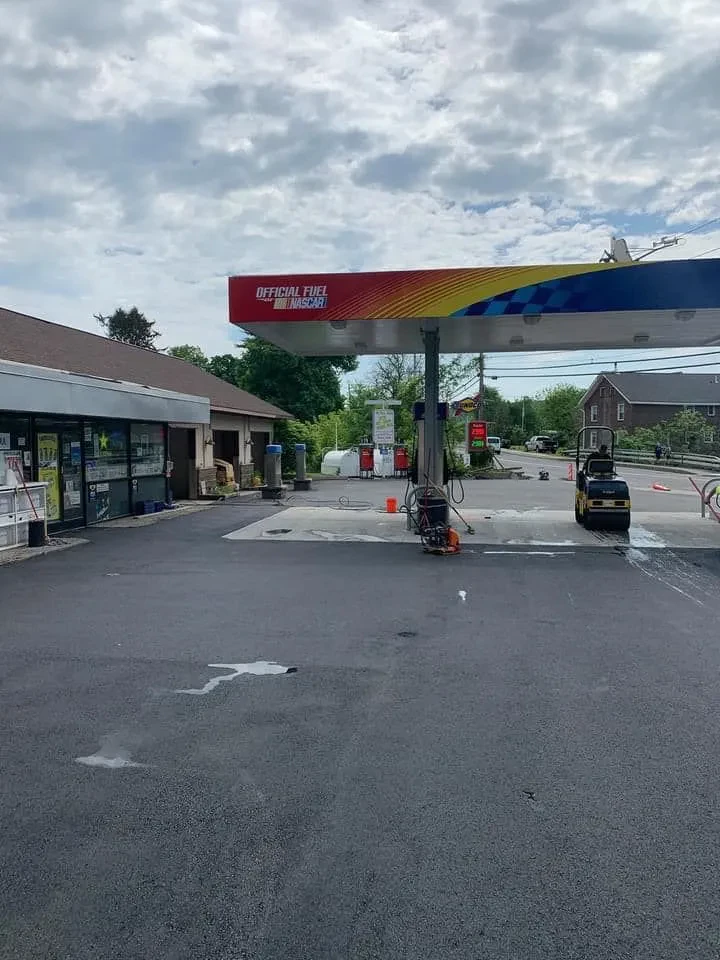
Your parking lot stops being a problem. No more potholes creating liability concerns. No more water pooling near your building entrance. No more wondering if you chose the wrong contractor.
The asphalt goes down properly—with the right base, the correct grade for drainage, and thick enough to handle delivery trucks, not just passenger cars. Striping is clean and compliant. Your property looks professional again.
You’re not calling us back in six months because sections are already failing. The surface holds up through freeze-thaw cycles because the prep work was done correctly from the start. That’s what happens when a paving contractor in Glens Falls, NY actually knows local soil conditions and climate demands.
We’ve been handling parking lot paving and excavation work in Glens Falls, NY for more than two decades. You’re working with the owner directly—from your first call through the final walkthrough. No call centers. No project managers who’ve never operated a paver.
We operate year-round. Paving season runs spring through fall. When temperatures drop, the focus shifts to foundation work and land clearing. That means you’re not trying to track down a contractor who disappeared until next April.
Glens Falls properties deal with heavy snow, road salt, and temperature swings from below zero to above 80 degrees. Your parking lot needs to be built for that, not for some generic climate. Local experience matters when you’re dealing with clay soil, drainage issues near the Hudson, or timing work around your business operations.

It starts with a site visit. You explain what you need. The owner walks the property, checks drainage, looks at soil conditions, and identifies any issues that’ll affect the work. You get a detailed estimate—what’s included, how long it takes, when access will be restricted.
If you’re replacing existing asphalt, the old surface gets milled out and hauled away. If it’s new construction, excavation and grading come first. The base goes in next—proper stone depth based on your soil type and expected traffic load. This isn’t the step to cut corners. A weak base means premature failure no matter how good the asphalt looks on top.
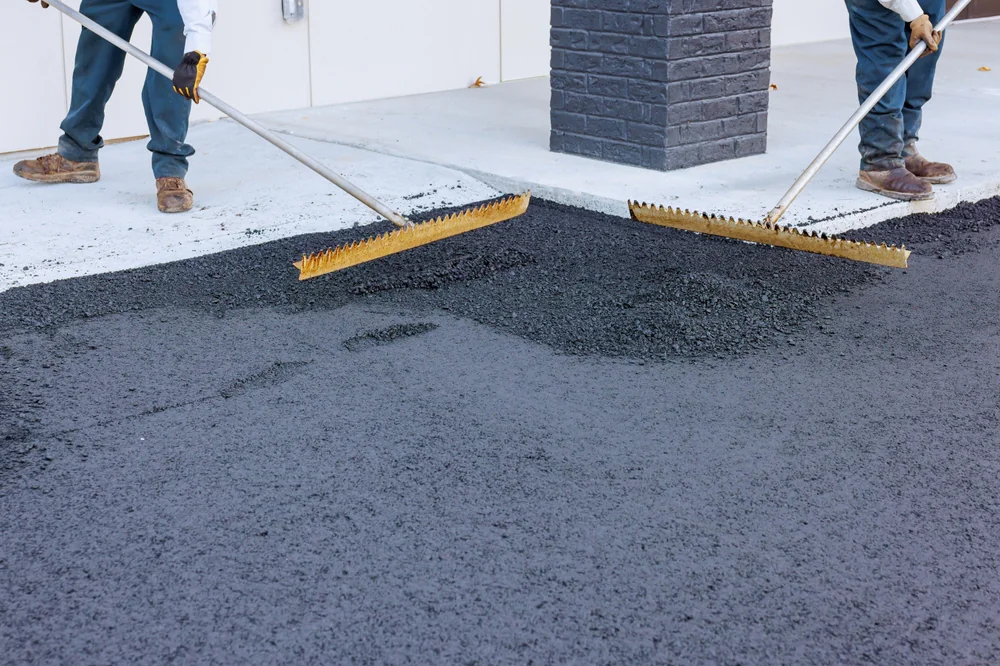
The asphalt gets laid at the right temperature and compacted correctly. Thickness depends on whether you’re parking sedans or getting regular semi-truck deliveries. Edges are tapered so water runs off instead of pooling. Once it cures, striping goes down—parking spaces, directional arrows, handicap zones, fire lanes, whatever your property requires.
You get a walkthrough before the crew leaves. Questions get answered. You know what to expect for maintenance and how long before sealcoating is needed.
Ready to get started?
Parking lot paving in Glens Falls, NY means accounting for local conditions. Winter temperatures regularly drop into the teens. Spring brings heavy runoff. Summer heat can reach the low 80s. Your asphalt needs to handle all of it without breaking down.
Site preparation includes proper grading so water moves away from your building and doesn’t pool in parking spaces. In areas with clay-heavy soil—common around Glens Falls—that often means a thicker stone base with fabric reinforcement to prevent shifting. Drainage solutions get designed into the layout, not added as an afterthought when problems show up.
We handle excavation if you’re starting from dirt, or removal if you’re tearing out failed asphalt. Base installation follows—crushed stone compacted in layers to create a stable foundation. Asphalt thickness varies based on your traffic. A small office lot needs different specs than a retail center with constant deliveries.
Striping and marking come last. ADA-compliant handicap spaces with proper signage. Directional arrows. Loading zones. Whatever your property needs to function safely and legally. You’re not figuring that out yourself or hiring another contractor to finish the job.

Timeline depends on size and complexity, but most commercial parking lots in Glens Falls get completed in 3 to 7 days once work begins. That includes milling out old asphalt if needed, base preparation, new asphalt installation, and striping.
Weather affects the schedule. Asphalt can’t be laid if temperatures are too cold or if rain is forecast within the curing window. Paving season in Glens Falls typically runs April through October. Projects scheduled for late fall risk delays if temperatures drop unexpectedly.
You’ll need to restrict access to the work area during paving and for 24 to 48 hours after while the asphalt cures. Most businesses schedule the work during slower periods or in phases to minimize disruption. We work with your operational needs instead of forcing you to shut down completely.
Poor drainage is the biggest culprit. Water that can’t run off properly seeps into the base, freezes during winter, expands, and cracks the asphalt from underneath. Once cracks form, the cycle accelerates. You see this constantly with parking lots that weren’t graded correctly or where the base wasn’t thick enough for local soil conditions.
Freeze-thaw cycles hit Glens Falls hard. Temperatures swing from below zero in January to above 80 in July. Asphalt expands and contracts with those changes. If the installation wasn’t done properly—wrong mix, poor compaction, inadequate edge support—the surface breaks down faster than it should.
Skimping on base preparation causes failures too. Some contractors cut costs by using less stone or skipping proper compaction. That saves money upfront but leads to settling, cracking, and potholes within a couple years. The base is the foundation. If it’s not right, nothing on top of it will last.
Asphalt paving typically runs $2.50 to $4.50 per square foot in this area, but that’s just the material cost. Total project cost includes site prep, excavation, base installation, grading, drainage work, and striping. A 10,000 square foot parking lot—roughly 30 to 35 spaces—usually falls between $25,000 and $45,000 depending on site conditions and specifications.
Prices go up if you’re dealing with poor soil that needs extra base depth, significant drainage issues, or removal of old pavement. Properties requiring ADA upgrades, new curbing, or extensive grading cost more than simple overlay projects. The only way to get an accurate number is a site visit where someone evaluates your specific conditions.
Cheaper isn’t always better. A low bid often means shortcuts on base preparation, thinner asphalt, or a contractor who’ll disappear when problems emerge. You’re making an investment that should last 15 to 20 years with proper maintenance. Paying a bit more upfront for quality work beats replacing a failed parking lot in five years.
Asphalt makes more sense for most commercial properties in Glens Falls. It costs less upfront—typically $3 to $6 per square foot versus $4 to $8 for concrete. It handles freeze-thaw cycles better because it has some flexibility. Concrete tends to crack more easily when temperatures swing from winter lows to summer highs, especially with road salt exposure.
Asphalt is ready to use within a few days. Concrete takes at least a week to cure, sometimes longer depending on weather. If you can’t afford extended downtime, that matters. Asphalt is also easier and cheaper to repair. You can patch sections or mill and overlay the surface. Concrete repairs are more visible and often require replacing entire panels.
The tradeoff is maintenance. Asphalt needs sealcoating every 2 to 3 years to protect against UV damage and water penetration. Concrete requires less frequent sealing but shows oil stains more readily. For most businesses dealing with regular traffic and Glens Falls weather conditions, asphalt offers better value and performance over the long term.
Sealcoating is the main ongoing maintenance. Plan on having your parking lot sealed 6 to 12 months after initial installation, then every 2 to 3 years after that. Sealcoating protects the asphalt from UV damage, prevents water penetration, and extends the surface life significantly. Skipping it means you’ll need resurfacing or replacement much sooner.
Crack filling should happen as soon as you notice cracks forming. Small cracks turn into big problems once water gets in and freezes. Hot rubberized crack fill prevents moisture intrusion and stops cracks from spreading. This is a relatively inexpensive fix that prevents costly repairs later.
Keep the surface clean. Sweep regularly to remove debris and sand, especially after winter. Oil and fuel spills should be cleaned up quickly—they break down asphalt binders over time. Make sure drainage areas stay clear so water can run off properly. Address any settling or low spots before they become potholes. Regular attention keeps your parking lot functional and professional-looking for 15 to 20 years or more.
If your parking lot has widespread alligator cracking, major potholes, or significant settling, you’re likely looking at full replacement. Surface issues that extend through to the base can’t be fixed with an overlay. You need to remove the failed asphalt, address base problems, and start fresh. Trying to pave over structural failure just wastes money.
Resurfacing works when the base is still solid but the surface is showing age—minor cracking, fading, some roughness. An overlay adds a new layer of asphalt over the existing surface, giving you a fresh appearance and extended life at lower cost than full replacement. This typically makes sense for parking lots that are 10 to 15 years old with good bones but worn surfaces.
The decision requires an honest assessment from someone who knows what they’re looking at. Some contractors push replacement because it’s more profitable. Others suggest overlays when the base is actually failing. We’ll walk the property, evaluate the real condition, and explain what’s actually necessary versus what’s optional. That’s where working with an experienced local paving contractor makes a difference.
Other Services we provide in Glens Falls