Asphalt paving company also offering concrete work, excavating, and snow removal services.
Contact Info
-
130 Co Rd 70
Stillwater, NY 12170 - Call: 518-935-3068
- Text: 518-935-3068
- Mon - Sun: 7am - 7pm
Contact Info

Hear From Our Clients
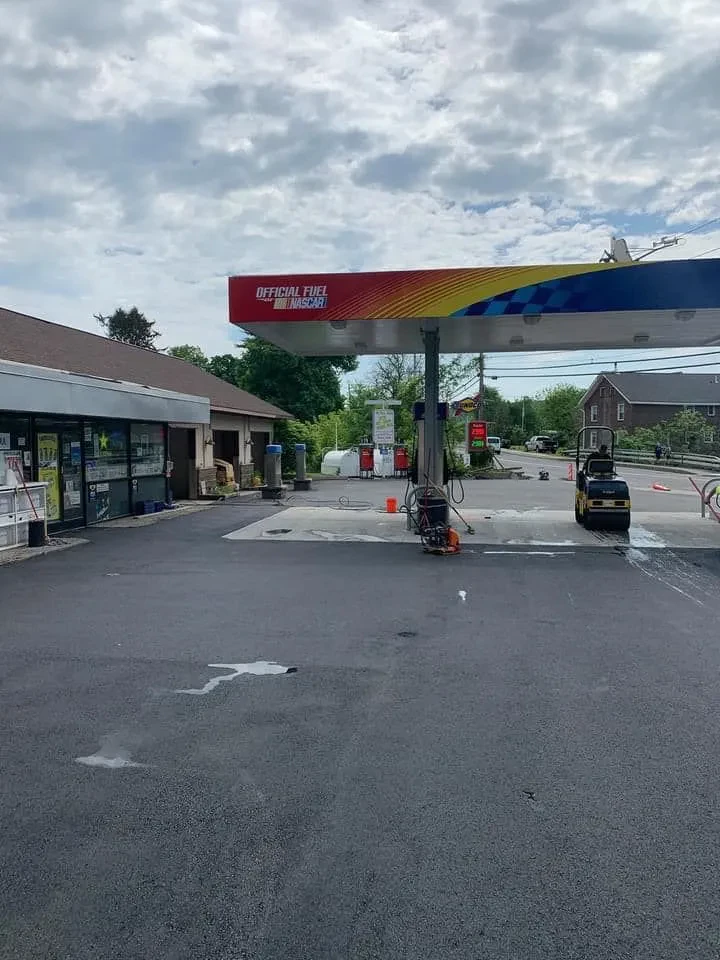
You get a parking lot that handles freeze-thaw cycles without cracking apart in two years. Proper drainage that doesn’t leave puddles where customers walk. A surface that stays smooth under daily traffic because the base was prepared correctly from day one.
Your property looks professional. Customers aren’t dodging potholes or questioning whether you care about maintenance. And you’re not calling for repairs every spring because someone cut corners on installation.
That’s what happens when the work is done by someone who’s been doing this for 25+ years and actually understands what fails in upstate New York. No gimmicks. Just a parking lot built to last.
We’ve been serving Hagedorns Mills and the surrounding region for over 25 years. This isn’t a corporate crew passing through—the owner is involved from your first call through final cleanup, and you have direct access the entire time.
That matters when questions come up, timelines shift, or you need straight answers about what your lot actually needs. No runaround. No passing you off to someone who doesn’t know your project.
We operate year-round, shifting focus to foundations and land clearing when temperatures drop. That seasonal flexibility means projects aren’t rushed to beat the weather, and you’re working with a stable operation that’s been part of this community for decades.

It starts with an honest assessment. The owner comes out, looks at your existing surface or site, and tells you what you’re actually dealing with. If you need full reconstruction, that’s what you’ll hear. If resurfacing works, you won’t be sold more.
Next comes base preparation—the part most people never see but that determines whether your lot lasts 30 years or fails in five. Proper grading, compacted aggregate, and drainage planning happen before any asphalt gets laid. This is where experience separates quality work from cheap jobs that crack the first winter.
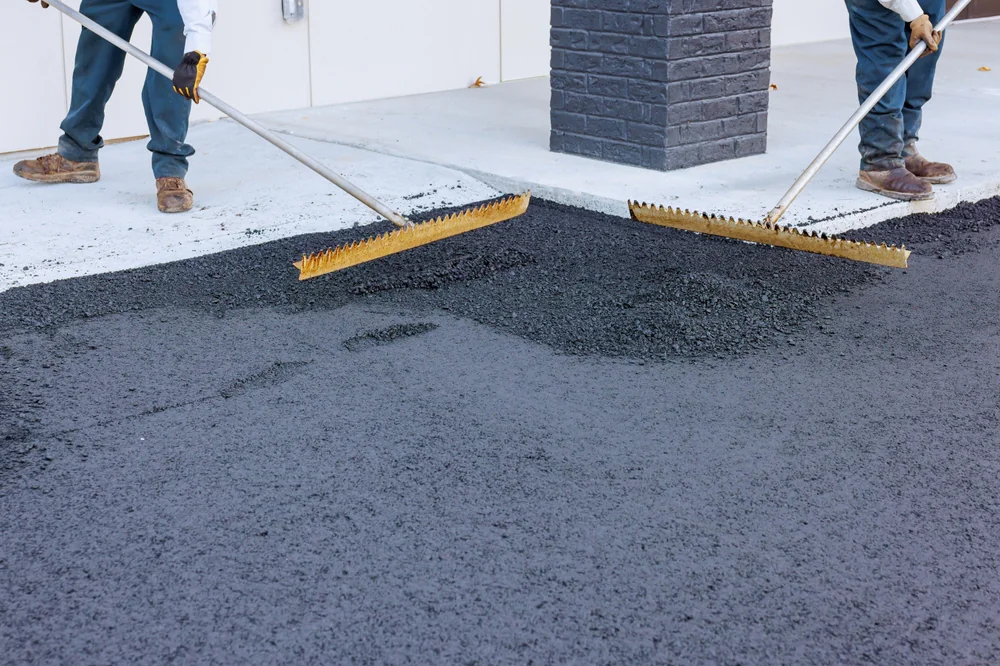
Asphalt goes down when conditions are right—temperatures above 50°F, dry weather, proper equipment. The material is compacted while hot to achieve density and eliminate air pockets that turn into cracks later. Striping, curbing, and final grading follow once the surface cures. You get a parking lot that works, looks professional, and holds up under real-world use.
Ready to get started?
A quality parking lot installation includes proper site evaluation, drainage planning, and base construction before any asphalt is placed. In Hagedorns Mills and throughout upstate New York, that base work is critical—freeze-thaw cycles will destroy improperly prepared surfaces within a few seasons.
The asphalt thickness depends on your traffic load. Light-duty commercial lots typically need 4 inches over a solid base. Heavy-duty areas with truck traffic require 6-7 inches or more. Proper compaction at the right temperature ensures density and durability.
Drainage design prevents water from pooling and seeping into the base, which causes the majority of pavement failures. A minimum 2% slope directs water away from the surface. Catch basins, grading, and proper integration with existing drainage systems keep your lot functional through New York’s wet springs and heavy snowmelt.
Striping, ADA-compliant spaces, and clear traffic flow markings complete the project. You get a lot that’s safe, functional, and built to handle the conditions it’ll actually face.

A properly installed asphalt parking lot lasts 15 to 30 years in upstate New York, depending on traffic load, maintenance, and installation quality. The key word is “properly installed.”
Parking lots that fail early almost always have base problems—poor drainage, inadequate compaction, or installation during cold weather. New York’s freeze-thaw cycles are brutal on pavement. Water gets into cracks, freezes, expands, and breaks the asphalt apart. If the base wasn’t prepared correctly or drainage wasn’t planned right, you’ll see premature cracking and pothole formation.
Regular maintenance extends lifespan significantly. Sealcoating every 2-4 years protects the surface from oxidation and water infiltration. Crack filling prevents small issues from becoming big ones. But no amount of maintenance fixes a poorly installed lot—you’re just delaying the inevitable repaving.
Resurfacing adds a new layer of asphalt over your existing pavement. It costs $1-$3 per square foot and works when your base is still solid but the surface is worn. Think of it as a facelift—you’re covering surface damage without rebuilding the foundation.
Repaving means tearing out the old asphalt down to the base and starting over. It costs $3-$8 per square foot but gives you a completely new parking lot. You need this when the base has failed, drainage problems exist, or the lot has already been resurfaced before.
Here’s how to know which you need: if you have widespread cracking, base settlement, or drainage issues, resurfacing just covers up problems temporarily. You’ll be back in a few years dealing with the same failures. If surface wear is your main issue and the base is sound, resurfacing makes sense. An honest contractor will tell you which situation you’re in, not just sell you the more expensive option.
Technically yes, but it’s rarely a good idea. Asphalt needs to be installed when air temperatures are consistently above 50°F for proper compaction. Below that threshold, the material cools too quickly, preventing proper density and creating weak spots that crack and fail prematurely.
New York winters make quality paving nearly impossible. Cold ground temperatures, frozen base layers, and unpredictable weather all work against proper installation. The asphalt mix arrives at 250-300°F but loses heat rapidly in cold air. If it cools before compaction is complete, you get air pockets, poor bonding, and a surface that won’t last.
The optimal paving season in upstate New York runs from late spring through early fall. That’s when you get the stable temperatures needed for quality work. Emergency repairs can sometimes be handled with cold-mix asphalt in winter, but that’s a temporary patch, not a permanent solution. If a contractor is pushing to pave your lot in January, they’re either desperate for work or don’t care about quality—neither is good for you.
It depends entirely on your traffic load. A light-duty commercial parking lot with mostly passenger vehicles needs about 4 inches of asphalt over a properly prepared base. Heavy-duty lots with regular truck traffic, loading docks, or delivery vehicles need 6-7 inches or more.
The base layer matters just as much as the asphalt thickness. Most contractors use a compacted aggregate base under the asphalt to distribute weight and prevent settling. For commercial applications, that base is typically 6-8 inches of crushed stone, properly graded and compacted.
Skimping on thickness is a common way contractors cut costs and win bids. A lot that’s too thin will show rutting, cracking, and depressions within a few years—especially in areas where vehicles stop and turn. You end up paying for the cheap installation twice when you have to repave sooner. The right thickness costs more upfront but delivers decades of service instead of years.
Poor drainage causes the majority of parking lot failures. Water is asphalt’s worst enemy. When it seeps into the base layer, it weakens the foundation. Freeze-thaw cycles in New York make this worse—water freezes, expands, and breaks apart the pavement structure from below.
Inadequate base preparation is the second major cause. If the subgrade isn’t properly compacted or graded, settling occurs. That creates low spots where water pools, which accelerates deterioration. A parking lot is only as good as what’s underneath it.
Cold-weather installation also leads to premature failure. Asphalt installed below 50°F doesn’t compact properly, leaving air pockets and weak spots that crack under traffic. Insufficient thickness for the traffic load causes rutting and surface breakdown. And lack of maintenance—skipping sealcoating, ignoring small cracks—allows minor issues to become major problems. Most of these failures are preventable with proper installation and basic upkeep.
Commercial parking lot paving typically costs $3-$8 per square foot in upstate New York, depending on size, site conditions, and specifications. A 10,000 square foot lot generally runs $30,000-$80,000 for complete installation, including base preparation, asphalt, and striping.
Resurfacing an existing lot costs less—usually $1-$3 per square foot—because you’re adding a new layer over a solid base rather than rebuilding from scratch. But resurfacing only works if your base is sound. If you have drainage problems or base failure, resurfacing just postpones the inevitable.
Several factors affect pricing: site preparation needs (grading, excavation, demolition), asphalt thickness required for your traffic load, drainage system installation, accessibility for equipment, and project timing. Larger lots benefit from economies of scale and typically fall toward the lower end of the per-square-foot range. The best way to get accurate pricing is an on-site evaluation where someone who knows what they’re looking at can assess your specific situation and give you honest numbers.
Other Services we provide in Hagedorns Mills