Asphalt paving company also offering concrete work, excavating, and snow removal services.
Contact Info
-
130 Co Rd 70
Stillwater, NY 12170 - Call: 518-935-3068
- Text: 518-935-3068
- Mon - Sun: 7am - 7pm
Contact Info
Your parking lot faces harsh winters and heavy use. These 10 maintenance secrets help Saratoga County property owners extend pavement life and avoid costly repairs.
Before you can protect your parking lot, you need to understand what’s actually destroying it. Asphalt doesn’t just wear out from traffic. The real damage happens when water gets underneath the surface.
Here’s what happens. Small cracks form from normal use, temperature changes, and UV exposure. Rain and snowmelt seep into those cracks and work their way down to the base layer. In warmer climates, that’s bad enough. In Saratoga County and Warren County, it’s catastrophic.
When temperatures drop below freezing, that trapped water expands by about nine percent. That expansion creates tremendous pressure inside your pavement, forcing cracks wider and breaking the bond between asphalt layers. When it thaws, the water drains deeper, and the cycle repeats. Every freeze-thaw cycle throughout winter makes the damage worse.
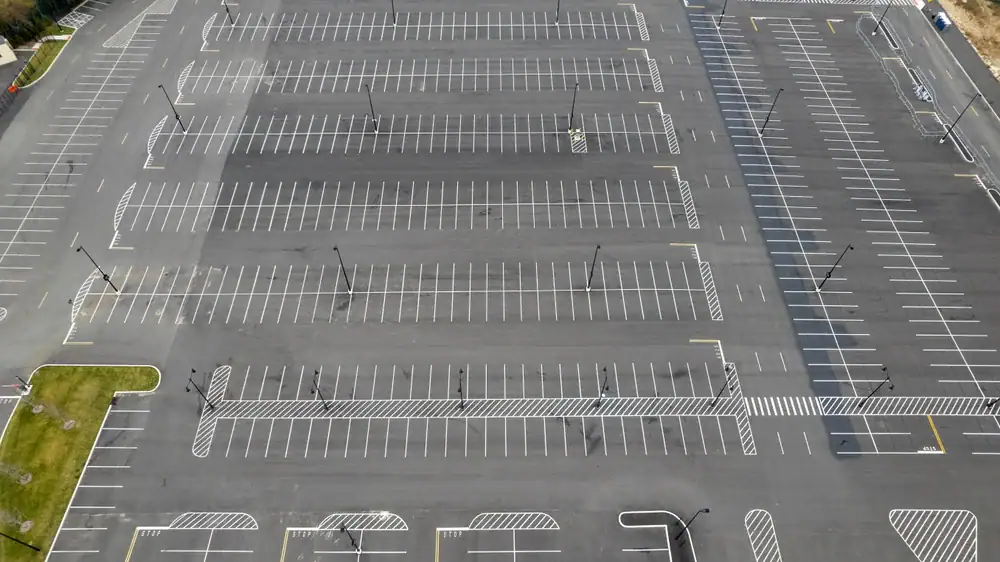
New York doesn’t get one big freeze that lasts all winter. You get constant temperature swings above and below freezing, sometimes multiple times in a single week. That’s the worst possible scenario for asphalt.
Each time temperatures cross that 32-degree threshold, water trapped in your pavement goes through another freeze-thaw cycle. The expansion breaks apart more material. The thaw allows water to penetrate deeper into the base and subgrade layers. By spring, what started as hairline cracks has undermined entire sections of your parking lot.
This is why you see so many potholes appear right after winter. They didn’t form overnight. They developed gradually through dozens of freeze-thaw cycles that weakened the pavement structure from the inside out. The pothole is just the final visible failure of a process that started months earlier.
Property owners in Saratoga County face this reality every year. Your parking lot is exposed to more freeze-thaw cycles than lots in many other parts of the country. That’s why preventative maintenance matters more here. You’re not just protecting against normal wear and tear. You’re defending against an aggressive, repetitive process that specifically targets any weakness in your pavement.
The financial impact is significant too. Emergency pothole repairs cost three times more than preventative crack sealing. A single pothole repair can run anywhere from one hundred to four hundred dollars depending on size and depth. Crack sealing costs fifty cents to a dollar per linear foot. When you add up all the cracks you could seal for the price of fixing one major pothole, the math becomes pretty clear.
That small crack near your entrance doesn’t look like much. It’s maybe a quarter-inch wide, a few feet long. You’ve driven over it a hundred times without thinking about it. But that crack is costing you money every single day you leave it unsealed.
Research shows that seventy-five percent of unsealed cracks develop into potholes within three years. Only one percent of sealed cracks develop into potholes in that same timeframe. The difference is water infiltration. An unsealed crack lets water flow straight down into your base layer. A sealed crack stops water at the surface.
Here’s what happens over time. Water enters through that small crack and saturates the base material underneath. In summer, the base stays wet longer and loses its load-bearing capacity. Heavy vehicles compress the weakened base, creating depressions in the surface. In winter, that trapped water freezes and expands, pushing the pavement up and breaking it apart from below.
The crack gets wider with each cycle. More water enters. The damaged area spreads. Eventually the surface breaks down completely and you have a pothole. At that point, you can’t just seal it anymore. You need excavation, new base material, and hot mix asphalt to do a proper repair.
The timeline matters too. A crack that appears in spring will go through at least one full winter before you think about fixing it in the following spring. That’s potentially dozens of freeze-thaw cycles. By the time you get around to addressing it, you’re often looking at a repair that costs ten times more than sealing would have cost originally.
Commercial property owners face another consideration beyond just repair costs. Liability. A small crack might not cause problems, but the pothole it becomes absolutely will. Trip hazards, vehicle damage claims, and slip-and-fall accidents all create legal exposure. One injury claim can cost more than maintaining your entire parking lot for years.
Want live answers?
Connect with a Morgan Construction expert for fast, friendly support.
Let’s talk about the two maintenance practices that have the biggest impact on parking lot lifespan. Crack sealing and sealcoating. They sound similar but they do different things, and you need both.
Crack sealing fills individual cracks with a rubberized material that stays flexible as temperatures change. It creates a waterproof barrier that stops moisture from entering the pavement structure. This is your primary defense against freeze-thaw damage.
Sealcoating applies a protective layer over the entire surface. It shields asphalt from UV rays, prevents oxidation, resists oil and chemical damage, and provides a smooth surface that’s easier to maintain. Sealcoating also fills in minor surface imperfections and gives your lot a fresh, professional appearance.
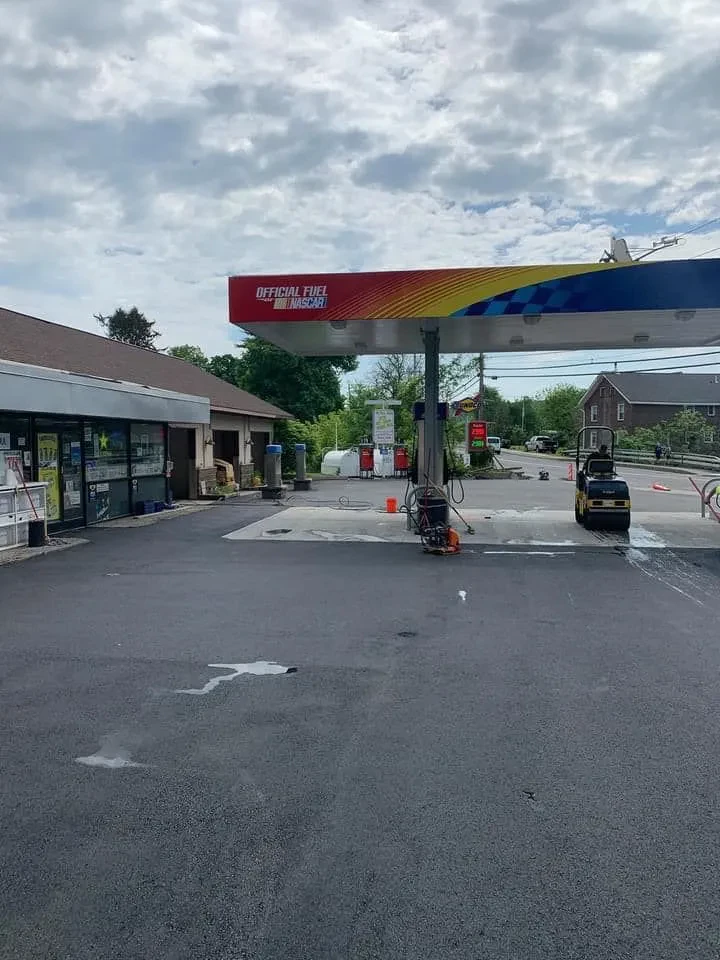
Timing matters with crack sealing. You want to seal cracks when they’re in an average position, neither fully open nor fully closed. That happens in spring and fall when temperatures are moderate.
In winter, asphalt contracts and cracks open wider. If you seal them when they’re fully open, the sealant will be under compression when temperatures warm up and the pavement expands. That can cause the sealant to buckle or push out of the crack.
In summer, asphalt expands and cracks close up. If you seal them when they’re closed, the sealant will be under tension when temperatures drop and the pavement contracts. That can cause the sealant to pull apart and fail.
Spring and fall provide the ideal conditions. Temperatures are moderate, cracks are in a neutral position, and the sealant can cure properly before extreme weather hits. We recommend crack sealing in late spring after winter damage becomes visible, or in early fall before winter arrives.
The process itself matters too. Proper crack sealing starts with cleaning. You need to remove all dirt, vegetation, and loose material from inside the crack. We use a hot air lance that cleans and dries the crack simultaneously. The heat also helps the sealant adhere better to the pavement.
The sealant should be heated to the manufacturer’s recommended temperature, usually between three hundred eighty and four hundred ten degrees. Under-heated sealant won’t bond properly. Over-heated sealant degrades and loses its protective properties. Professional equipment maintains consistent temperature throughout the application process.
Application technique affects longevity too. Some cracks need routing first, which means cutting a reservoir along the crack to create clean edges for the sealant to bond to. This can extend the life of the repair by up to fifty percent compared to just filling the crack without preparation.
Sealcoating protects asphalt from the elements that cause it to deteriorate. UV rays from the sun break down the binders in asphalt, making it brittle and prone to cracking. Rain and snow introduce moisture that penetrates the surface. Oil and gasoline from vehicles soften the asphalt and create weak spots.
A quality sealcoat creates a barrier against all of these threats. It blocks UV rays, sheds water instead of absorbing it, and resists petroleum-based chemicals. The protective layer also makes your parking lot easier to clean and maintain throughout its life.
Most commercial parking lots in Saratoga County should be sealcoated every two to three years. The exact timing depends on traffic volume, weather exposure, and the quality of the previous sealcoat. High-traffic areas wear faster and might need more frequent attention.
The application process requires proper preparation. The surface must be clean and dry. Any oil stains need treatment before sealcoating because the coating won’t adhere to contaminated areas. Cracks should be sealed first, then the entire surface gets coated.
We typically apply two thin coats rather than one thick coat. Two thin coats dry faster, cure more completely, and provide better protection than a single heavy application. The first coat penetrates into the surface and fills minor imperfections. The second coat provides a uniform protective layer.
Temperature matters here too. Sealcoating should be applied when pavement temperatures are above fifty degrees and rising, with no rain in the forecast for at least twenty-four hours. The coating needs time to cure before exposure to traffic or moisture.
One thing property owners often overlook is the timing relative to other maintenance. You want to seal cracks first, then sealcoat. If you sealcoat first and then cut into the coating to seal cracks, you’ve just created openings in your protective layer. The logical sequence is crack repair, then surface protection.
The cost-effectiveness of sealcoating becomes clear over time. Regular sealcoating can extend your parking lot’s lifespan by ten to fifteen years. That delays the need for expensive resurfacing or reconstruction. When you factor in the cost of a sealcoat application versus the cost of replacing your parking lot, the return on investment is substantial.
Your parking lot is one of your property’s biggest assets. It’s also one of the first things people see when they visit. Cracks, potholes, and standing water don’t just create safety hazards. They send a message about how you maintain your property.
The maintenance secrets we’ve covered here aren’t complicated. Seal cracks before winter. Apply sealcoating every few years. Address drainage issues before they cause structural damage. These straightforward practices prevent the expensive failures that force property owners into emergency repairs or premature replacement.
New York’s climate is tough on asphalt. But with the right maintenance approach, your parking lot can last twenty to thirty years instead of failing in under a decade. The key is catching problems early, before water infiltration and freeze-thaw cycles do permanent damage to your pavement structure.
If you’re seeing cracks, drainage issues, or signs of deterioration in your parking lot, now is the time to address them. We’ve been helping property owners in Saratoga County and Warren County protect their paving investments for over twenty-five years. Straightforward communication, honest pricing, and quality work that lasts.
Summary:
Article details:
Share: