Asphalt paving company also offering concrete work, excavating, and snow removal services.
Contact Info
-
130 Co Rd 70
Stillwater, NY 12170 - Call: 518-935-3068
- Text: 518-935-3068
- Mon - Sun: 7am - 7pm
Contact Info
Your parking lot is telling you something. Cracks, standing water, and faded striping aren't just eyesores—they're red flags that could cost you customers, money, and legal headaches.
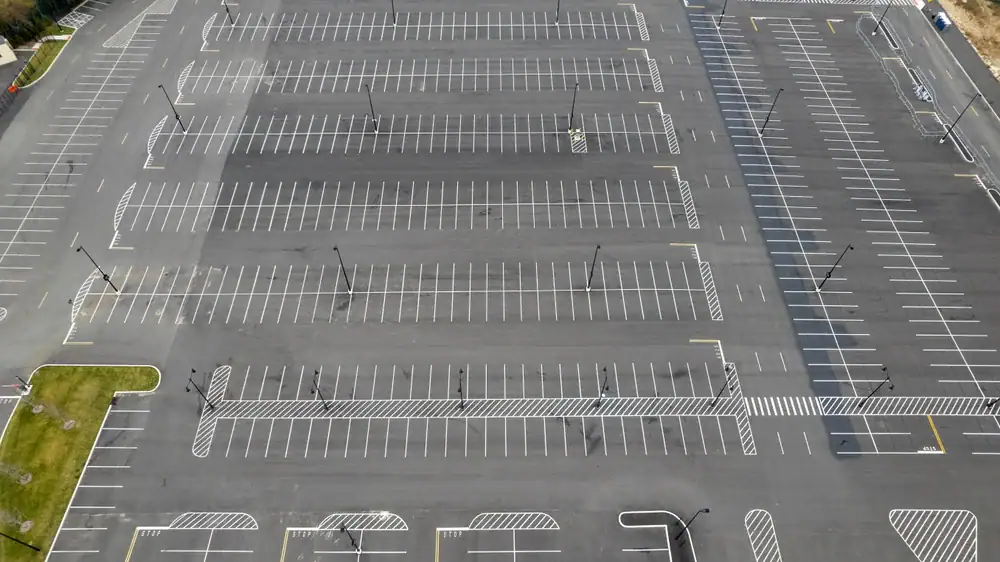
Not all cracks are created equal. Some you can patch and forget. Others signal deeper structural problems that won’t go away with a quick fix.
Hairline cracks might seem harmless, but they’re entry points for water. Once moisture seeps below the surface, freeze-thaw cycles do the real damage. That tiny crack you ignored in spring becomes a pothole by winter.
Alligator cracking is the big one. When your pavement starts looking like reptile skin, you’re dealing with base failure. This isn’t a surface issue anymore—it’s structural. And structural problems don’t respond well to patch jobs.
Water is asphalt’s worst enemy. It doesn’t matter how well your parking lot was installed—if water gets underneath, deterioration accelerates fast.
Here’s what happens: water seeps through cracks and sits on the base layer. When temperatures drop, that water freezes and expands. The pavement lifts. When it thaws, voids form underneath. Traffic rolls over those voids, and suddenly you’ve got potholes, sinkholes, or complete pavement failure.
Standing water after rain is a massive red flag. If you see puddles that stick around for hours or days, your drainage is compromised. Maybe the lot was graded wrong from the start. Maybe the base has settled unevenly. Either way, you’re looking at accelerated deterioration that’ll only get worse.
The cost difference is staggering. Sealing a crack costs pennies per linear foot. Replacing failed pavement costs dollars per square foot. Research shows that annual crack-filling prevents up to 75% of untreated cracks from becoming potholes. That’s not just smart maintenance—it’s basic math.
Property owners who ignore early water damage end up paying for it later. The base layer weakens. The asphalt loses structural support. What started as a drainage issue becomes a full-depth replacement project. We see it all the time across Saratoga County, NY: catch it early, or pay the price later.
Let’s talk about what happens when you kick the can down the road. Small cracks spread. They deepen. They multiply. And every day you wait, the repair bill grows.
A single crack might cost $200 to seal properly. Wait six months, and that crack has branched into three. Now you’re looking at $600. Wait another year, and water damage has compromised the base. Suddenly you need a full-depth patch that runs $2,000 or more.
The financial hit goes beyond repair costs. Damaged pavement creates liability exposure that keeps lawyers busy. Over 50,000 accidents happen in parking lots every year—20% of all car accidents nationwide. Many involve trips, falls, or vehicle damage from pavement defects. Property owners get sued. Insurance premiums climb. Legal fees pile up.
Your customers notice too. They’re judging your business from the moment they pull in. Cracked, deteriorating pavement sends a clear message: this place doesn’t care about details. If you can’t maintain your parking lot, what else are you cutting corners on?
Commercial property values take a hit as well. Well-maintained pavement can boost property values by up to 15%. Damaged pavement does the opposite. Potential buyers see deferred maintenance and factor repair costs into their offers. Tenants choose properties that look professional and well-cared-for.
The smart play is addressing cracks early. Seal them when they’re small. Keep water out of your base layer. Extend your pavement’s lifespan by years or even decades. A well-maintained asphalt parking lot can last 30 years with proper care. Neglected lots fail in half that time.
Want live answers?
Connect with a Morgan Construction expert for fast, friendly support.
See puddles in your parking lot after it rains? That’s not normal, and it’s not something you can ignore.
Standing water accelerates every form of pavement damage. It weakens the asphalt surface. It infiltrates the base. It creates freeze-thaw cycles that tear your lot apart from the inside out. And it’s a liability nightmare when someone hydroplanes or slips.
Proper drainage isn’t optional. Your parking lot should be graded so water flows off the surface and into drainage systems. When that doesn’t happen, you’ve got problems that patching won’t fix. Quality commercial paving starts with proper drainage design—something many property owners in Warren County, NY learn the hard way.

Potholes don’t appear overnight. They’re the end result of a process that started months or even years earlier with a crack you probably noticed and forgot about.
Water gets in through cracks. It saturates the base material. Freeze-thaw cycles create voids under the surface. Traffic pounds the weakened pavement until chunks break free. What’s left is a hole that damages vehicles, creates trip hazards, and screams “this property owner doesn’t care.”
Liability exposure is real and costly. Potholes cause vehicle damage that property owners can be held responsible for. Customers who trip and fall can sue. In 2021 alone, pothole damage cost U.S. drivers $26.5 billion, with 44 million drivers reporting damage to their vehicles. When that damage happens on your property, you’re the one dealing with angry customers and potential legal claims.
Business reputation takes a beating too. Nobody wants to park where their car might get damaged. You lose customers before they even walk through your door. Online reviews mention your “terrible parking lot.” Competitors with better-maintained properties get the business you should have had.
Fixing potholes isn’t as simple as throwing some cold patch in the hole. That’s a temporary Band-Aid that’ll fail in weeks or months. Proper pothole repair requires cutting out the damaged area, addressing any base issues, and installing new asphalt that’s properly compacted and sealed. For severe pothole problems, full resurfacing or repaving becomes the only real solution.
The pattern is clear: small problems ignored become big problems guaranteed. A $200 crack repair avoided becomes a $2,000 pothole fix. Multiple potholes across your lot mean you’re looking at resurfacing costs in the tens of thousands. If your base layer is compromised, full-depth replacement can run even higher.
Here’s something that catches business owners off guard: ADA compliance isn’t just about having the right number of handicapped spaces. It’s about maintaining those spaces and the routes to your building in safe, accessible condition.
Cracked pavement in accessible parking areas violates ADA standards. Uneven surfaces that create trip hazards are non-compliant. Standing water that blocks accessible routes is a problem. Faded or missing striping in accessible spaces puts you at risk. First-time violations can cost up to $75,000—penalties that make commercial paving investments look downright affordable.
The Americans with Disabilities Act requires that parking spaces and access aisles have surfaces that are firm, stable, and slip-resistant. Slopes can’t exceed 1:48 in any direction. When your pavement deteriorates, you fall out of compliance. When you resurface or repave, you need to bring everything up to current standards.
Beyond avoiding fines, this is about doing right by all your customers. Accessible parking that’s actually accessible means people with disabilities can use your business safely and independently. That’s good for them, good for your business, and required by federal law.
Property owners who ignore ADA issues face lawsuits, fines, and forced compliance that costs more than proactive maintenance would have. The smart approach is addressing accessibility as part of your regular pavement maintenance. When you’re fixing cracks or resurfacing, make sure your accessible spaces meet current requirements. When you’re restriping, verify that your markings and signage are compliant.
Your parking lot is talking. Those cracks, that standing water, those faded lines—they’re all telling you something needs attention.
The question isn’t whether to address these issues. It’s when, and how. Catch problems early, and you’re looking at affordable repairs that extend your pavement’s life. Wait too long, and you’re facing expensive emergency work that could have been prevented.
Smart property owners in Saratoga County, NY and Warren County, NY know that pavement maintenance isn’t an expense—it’s an investment. It protects property values, reduces liability, keeps customers happy, and avoids the kind of emergency repairs that blow budgets and disrupt business.
If you’re seeing any of these warning signs, it’s time to get a professional assessment. We’ve spent over 25 years helping commercial property owners make informed decisions about their paving needs. Sometimes that means a simple repair. Sometimes it means resurfacing. And sometimes it means full replacement. But it always starts with understanding what you’re dealing with and what your options are.
Summary:
Share: