Asphalt paving company also offering concrete work, excavating, and snow removal services.
Contact Info
-
130 Co Rd 70
Stillwater, NY 12170 - Call: 518-935-3068
- Text: 518-935-3068
- Mon - Sun: 7am - 7pm
Contact Info
Not all paving materials survive upstate New York winters. Learn which option handles 30-40 annual freeze-thaw cycles without requiring a therapist for your wallet.

Most paving advice assumes your driveway faces “normal” weather. New York doesn’t do “normal.” We do “four seasons in a single Tuesday.”
Between November and April, your pavement is essentially a sponge in a freezer. Water seeps into tiny pores during the day when it’s 40°F. Then overnight, it drops to 15°F, that water expands by 9%, and your driveway effectively tries to explode from the inside out. Repeat that 40 times, and you’ll see why some driveways look like they’ve gone twelve rounds with a heavyweight boxer after just five years.
The material you choose either flexes with that movement or fights against it. One survives by being adaptable; the other tries to stand its ground until it literally snaps. It’s the difference between a yoga instructor and a marble statue—one handles a stretch much better than the other.
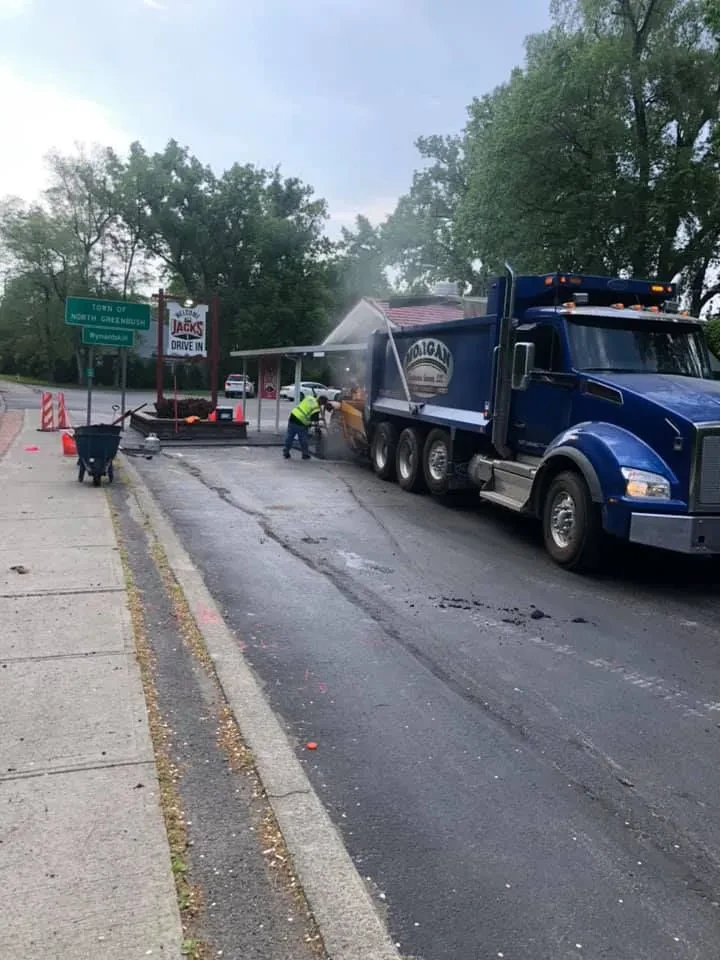
Asphalt is petroleum-based, which gives it a “go with the flow” attitude that concrete lacks. When the ground freezes and shifts, asphalt can flex without throwing a tantrum. It’s like the sweatpants of paving materials—comfortable, flexible, and surprisingly resilient.
During warm weather, asphalt softens slightly. It even has a limited “self-healing” quality where small cracks can press back together under the heat and weight of a vehicle. It’s not quite Wolverine-level regeneration, but it helps.
The dark color also provides a hidden winter bonus: Solar heating. Asphalt absorbs sunlight, melting snow and ice significantly faster than lighter surfaces. That means less time spent with a shovel and fewer opportunities for ice to form.
What the “cheap guys” won’t tell you: Even the best asphalt can’t fix a “budget” foundation. If your contractor didn’t prep the base properly, no amount of flexibility will save you from the inevitable sinkhole. Also, timing is everything. Trying to install asphalt in late November in Upstate NY is like trying to bake a cake in a freezer—it just won’t set right, and you’ll be left with a crumbly mess by May.
Concrete is rigid. It’s the “suit and tie” of driveways—it looks incredibly sharp and professional, but it doesn’t handle sudden movement very gracefully.
To survive NY, modern concrete uses “air entrainment”—millions of microscopic bubbles that act like tiny shock absorbers for expanding ice. If your contractor knows what they’re doing, they’ll also include expansion joints. Think of these as “pre-planned cracks” so the concrete can move without looking like a shattered mirror.
The problem? Concrete is a bit of a diva during installation. It needs temperatures above 50°F to cure properly. In Saratoga or Warren County, that gives us a work window about as wide as a New York City parking spot.
The Salt Factor: Concrete hates traditional rock salt. It eats the surface for breakfast. If you go with concrete, you’ll need to switch to safer (read: slightly more expensive) de-icers like calcium magnesium acetate. Otherwise, your beautiful driveway will start “scaling” (peeling) like a bad sunburn.
Want live answers?
Connect with a Morgan Construction expert for fast, friendly support.
Everyone focuses on the upfront quote. That’s like buying a printer based on the price of the machine without checking the cost of the ink.
Asphalt: Usually 40% cheaper upfront ($7–$13 per sq. ft.).
Concrete: The premium option ($8–$18+ per sq. ft.).
For a standard 600-square-foot driveway, you’re looking at a price gap that could pay for a very nice vacation—or a lot of snow tires. But the “cheaper” option requires a subscription to maintenance.
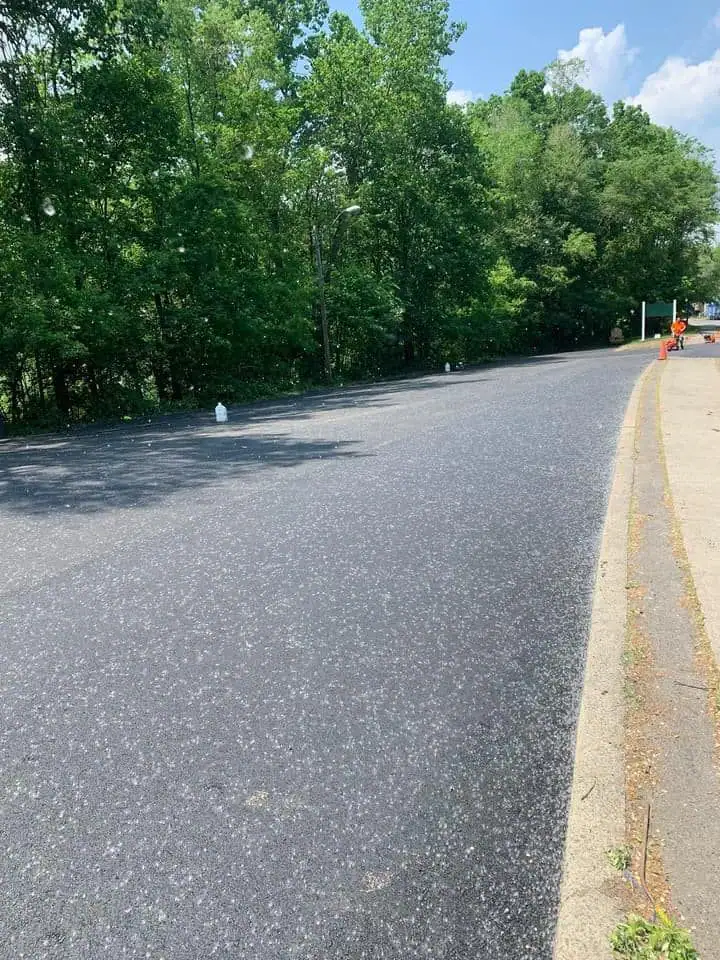
Asphalt maintenance is a marathon, not a sprint. You’ll need to sealcoat it every three to five years. It’s like putting sunscreen on your driveway; it keeps the UV rays and water out. The good news? It’s a DIY-able job if you’re brave, or a relatively cheap pro service. If a crack appears, you can patch it for the price of a decent steak dinner.
Concrete maintenance is more “set it and forget it”—until you can’t. You don’t have to seal it as often, but when a heavy-duty crack appears, there’s no “quick patch” that doesn’t look like a giant grey Band-Aid. Repairing decorative or stamped concrete is an art form that requires a specialist (and a specialist’s invoice).
The Snowplow Test: Asphalt takes a beating from metal plow blades like a champ. Concrete? One aggressive plow driver can chip your decorative edges faster than you can yell “Wait!”
If you live in Saratoga or Warren County and want the best bang for your buck in a climate that actively tries to destroy infrastructure, Asphalt is usually the local favorite. It handles the frost heave better and won’t break the bank.
Concrete makes sense if you’re building your “forever home” and want a driveway that will likely outlast your mortgage. It’s also the winner if you’re parking a 40-foot RV or heavy machinery, as it won’t “rut” or dent under extreme weight during a July heatwave.
The Golden Rule: A great material with a bad installation is just an expensive future headache. Ask your contractor: 1. “How deep is the sub-base?” (If they say ‘don’t worry about it,’ start running). 2. “How are you handling drainage?” (Because water is the enemy). 3. “Is this mix rated for freeze-thaw?”
The asphalt vs. concrete debate isn’t about finding a perfect material—there isn’t one. It’s about choosing which set of pros and cons you’d rather live with for the next twenty years.
Asphalt offers flexibility and lower entry costs; Concrete offers longevity and a “premium” look. Both will fail if they aren’t installed by someone who understands that “Upstate New York” is a different beast than “Downstate.”
We’ve spent over 25 years installing pavement that actually survives our local winters. If you’re ready for an honest assessment of your property—without the high-pressure sales tactics—we’re here to help.
Summary:
Article details:
Share: