Asphalt paving company also offering concrete work, excavating, and snow removal services.
Contact Info
-
130 Co Rd 70
Stillwater, NY 12170 - Call: 518-935-3068
- Text: 518-935-3068
- Mon - Sun: 7am - 7pm
Contact Info
Large-scale paving projects demand more than basic skills. Learn the five critical reasons experienced paving contractors deliver better results, tighter timelines, and longer-lasting durability.

Experience shows up in ways you don’t always see on paper. It’s the contractor who walks your site and immediately spots drainage issues that would cause problems two years down the line. It’s the crew that knows exactly how to prep a subgrade in Upstate New York soil conditions, where freeze-thaw cycles can destroy improperly installed pavement.
When you’re investing in a large-scale project, you’re not just paying for asphalt and labor. You’re paying for the knowledge that comes from decades of solving problems, managing timelines, and delivering results that hold up under real-world conditions. An experienced paving contractor brings pattern recognition—we’ve seen what works, what fails, and how to avoid the mistakes that cost you time and money.
Project management isn’t glamorous, but it’s what keeps large-scale paving projects from turning into expensive disasters. When you’re coordinating equipment, materials, crews, permits, and weather windows, a lot can go wrong. Experienced contractors know how to sequence tasks, allocate resources, and adjust on the fly when conditions change.
Good project management starts before the first truck arrives. It’s about understanding the scope, identifying potential bottlenecks, and building contingency plans. On a large commercial project, that might mean staging materials to avoid delivery delays or scheduling paving during off-hours to minimize disruption to your business. It’s coordinating with utility companies, managing subcontractors, and keeping everyone informed so there are no surprises.
The contractors who’ve been doing this for 25+ years have systems in place. We know how to read weather patterns and adjust schedules before a storm hits. We maintain relationships with suppliers so materials show up when promised. We communicate clearly with property managers and business owners, so you always know what’s happening and when. That level of coordination doesn’t come from a handbook—it comes from managing dozens of complex projects and learning what works.
When project management breaks down, everything else suffers. Crews sit idle waiting for materials. Equipment gets double-booked. Timelines slip. Costs creep up. The property owner ends up frustrated, and the contractor scrambles to catch up. An experienced paving contractor builds buffer into schedules, tracks progress daily, and solves problems before they cascade into delays. We understand that your time matters and that every day a parking lot is torn up costs you money in lost business or operational headaches.
Industrial paving isn’t just “bigger” residential work. It’s an entirely different category that requires specialized knowledge of load-bearing requirements, material specifications, and site conditions. If you’re paving a distribution center, manufacturing facility, or logistics hub, the pavement needs to handle continuous heavy truck traffic, turning movements, and point loads that would destroy a standard parking lot in months.
Heavy-duty asphalt for industrial applications uses different mix designs, thicker lifts, and reinforced subgrade preparation. The asphalt needs to be engineered based on actual load factors—how much weight, how often, and where the stress concentrates. An experienced paving contractor knows how to calculate equivalent single axle loads and design pavement sections that won’t rut, crack, or fail under the specific demands of your operation. We understand that a loading dock area needs different specs than a truck staging zone, and we build accordingly.
Site preparation for industrial paving goes deeper—literally. The subgrade needs to be properly compacted and stabilized to support the weight above it. Drainage becomes critical because water infiltration under heavy loads accelerates failure. Experienced contractors test soil conditions, install proper drainage systems, and ensure the base is built to handle decades of use. We don’t cut corners on thickness or compaction because we know what happens when you do—premature failure, costly repairs, and downtime that disrupts operations.
Industrial clients also need contractors who understand construction site safety at a different level. You’re often working around active operations, forklifts, delivery schedules, and employees. Proper barricading, traffic control, and coordination with site management aren’t optional—they’re essential to keeping everyone safe and operations running. Experienced paving contractors have safety protocols in place, trained crews, and the ability to work in phases so your facility doesn’t shut down completely during construction.
Want live answers?
Connect with a Morgan Construction expert for fast, friendly support.
Durability isn’t something you add after the fact. It’s built into the project from day one through proper installation techniques, quality materials, and attention to details that most people never see. When pavement fails prematurely, it’s almost always because something went wrong during installation—poor compaction, inadequate drainage, wrong material specs, or shortcuts that seemed harmless at the time.
An experienced paving contractor knows that long-term durability starts with the base. If the subgrade isn’t properly prepared and compacted, everything above it will eventually fail. We understand drainage patterns and how to grade surfaces so water moves away from the pavement instead of pooling and infiltrating. We know that proper compaction of asphalt layers is essential—even small reductions in air voids can extend pavement life by years.
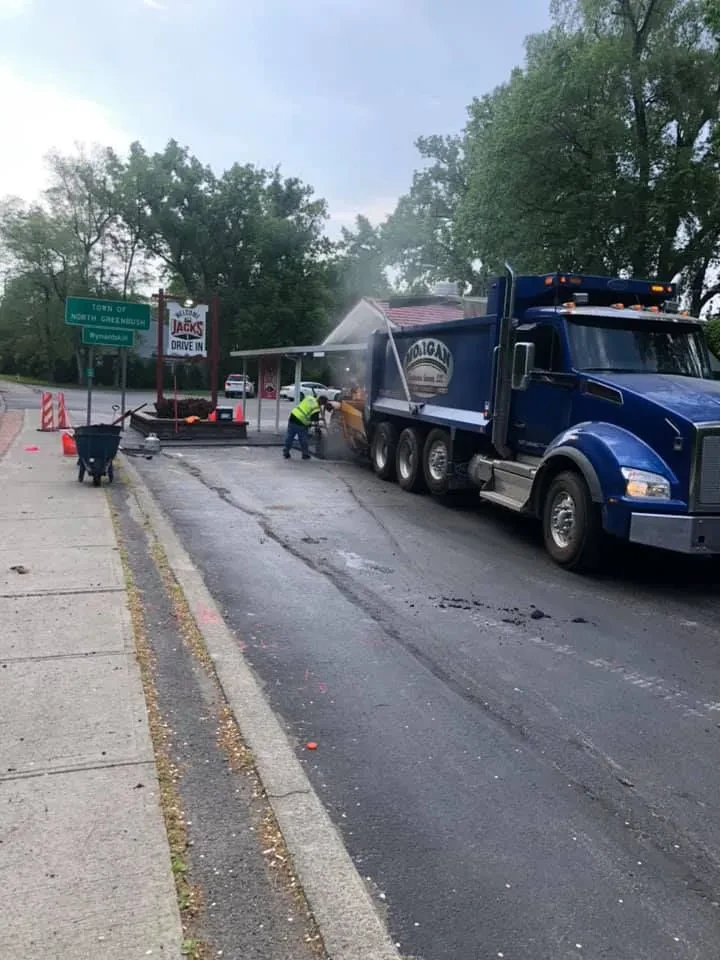
Site preparation is where most pavement failures begin, even if they don’t show up for years. The ground beneath your asphalt determines how well it performs under load and how long it lasts. In Saratoga County, NY and Warren County, NY, soil conditions vary, and freeze-thaw cycles put extra stress on improperly prepared bases. Experienced contractors know how to assess soil stability, remove unsuitable materials, and build a foundation that won’t shift or settle.
Drainage might be the single most important factor in pavement longevity that property owners overlook. Water is asphalt’s worst enemy. When it seeps into the base, it weakens the structure, accelerates cracking, and creates potholes. In winter, water freezes and expands, causing even more damage. Proper drainage design ensures water moves off the surface quickly and doesn’t infiltrate the subgrade. That means grading the surface with the right slope, installing catch basins where needed, and sometimes adding subsurface drainage to handle groundwater.
Experienced paving contractors don’t just pour asphalt and hope for the best. We evaluate the site, identify potential drainage problems, and engineer solutions before construction starts. We understand that spending a little more on proper site prep saves a lot more on future repairs. We’ve seen what happens when drainage is ignored—soft spots, sinking sections, and pavement that fails years before it should. So we do it right the first time.
Compaction is another critical piece that separates quality contractors from those who rush through projects. Proper compaction of both the base and asphalt layers creates a dense, stable structure that resists deformation and cracking. Studies show that even a one percent improvement in compaction can extend pavement life by 10 percent or more. Experienced contractors use the right equipment, follow proper techniques, and don’t move on until compaction meets specifications. That attention to detail is what makes pavement last 20 to 30 years instead of needing major repairs in a decade.
Construction site safety isn’t just about avoiding accidents—it’s about professionalism, planning, and protecting everyone who comes near the work zone. Large-scale paving projects involve heavy equipment, hot materials, truck traffic, and often work near active businesses or roadways. One safety incident can halt a project, create liability, and put lives at risk. Experienced paving contractors take safety seriously because we’ve seen what happens when it’s treated as an afterthought.
Proper safety starts with planning. Before work begins, experienced contractors develop traffic control plans, set up barricades to separate the work zone from the public, and ensure all crew members have the right personal protective equipment. We train operators on equipment safety, establish communication protocols, and conduct daily safety briefings. These aren’t bureaucratic checkboxes—they’re practices that prevent injuries and keep projects running smoothly.
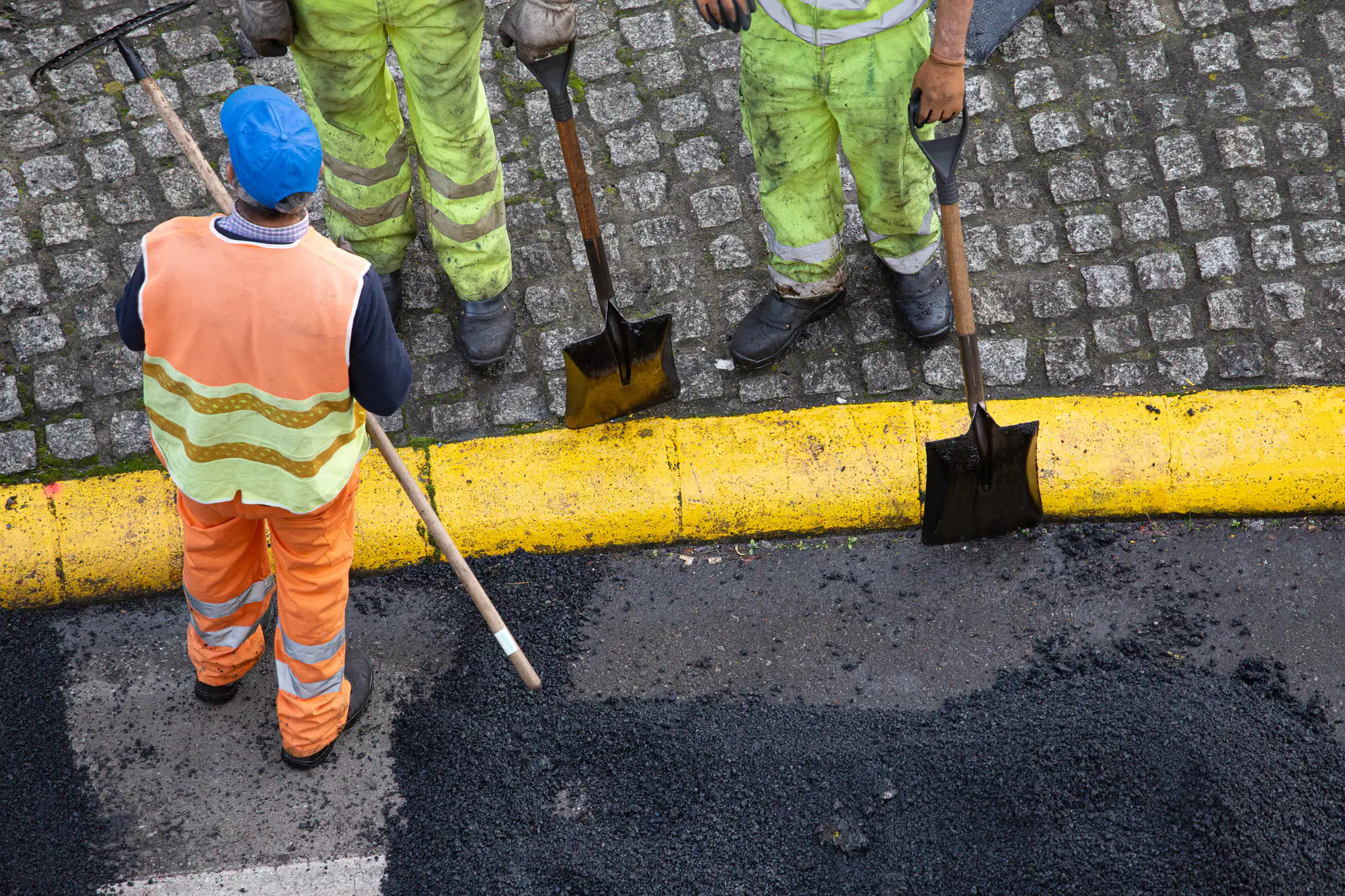
On active job sites, visibility is critical. Workers wear high-visibility vests so equipment operators and the public can see them. Barricades and signage alert drivers and pedestrians to stay clear. Lighting is installed for night work. All of these measures protect workers, but they also protect your business or property from liability. If someone gets hurt because safety protocols weren’t followed, you could be looking at lawsuits, fines, and reputational damage that far exceeds the cost of doing things right.
Experienced contractors also understand that safety and efficiency go hand in hand. When crews feel safe, they work more confidently and productively. When the site is well-organized and hazards are controlled, there are fewer delays and disruptions. Safety isn’t a burden—it’s a sign that the contractor knows what they’re doing and respects everyone involved in the project. It’s one of the clearest indicators that you’re working with professionals who’ve been in the business long enough to understand what matters.
Large-scale paving projects are significant investments, and the contractor you choose determines whether that investment pays off for decades or becomes a source of frustration and expense. Experience matters because it shows up in every phase of the project—from accurate estimates and realistic timelines to proper installation techniques and long-term durability. An experienced paving contractor brings the knowledge, systems, and judgment that only come from years of solving real-world problems.
When you’re evaluating contractors, look beyond the lowest bid. Ask about their project management process, safety protocols, and how they handle site-specific challenges like drainage and soil conditions. Find out who will be managing your project and whether you’ll have direct access to decision-makers when issues arise. The contractors who’ve been doing this for 25+ years aren’t afraid to answer those questions—we welcome them because we know our track record speaks for itself.
If you’re planning a large-scale paving project in Saratoga County, NY or Warren County, NY, Morgan Construction brings over 25 years of experience, hands-on owner involvement, and a commitment to quality that shows in every project. Reach out to discuss your needs and see how experienced project management and honest communication make all the difference.
Summary:
Share: