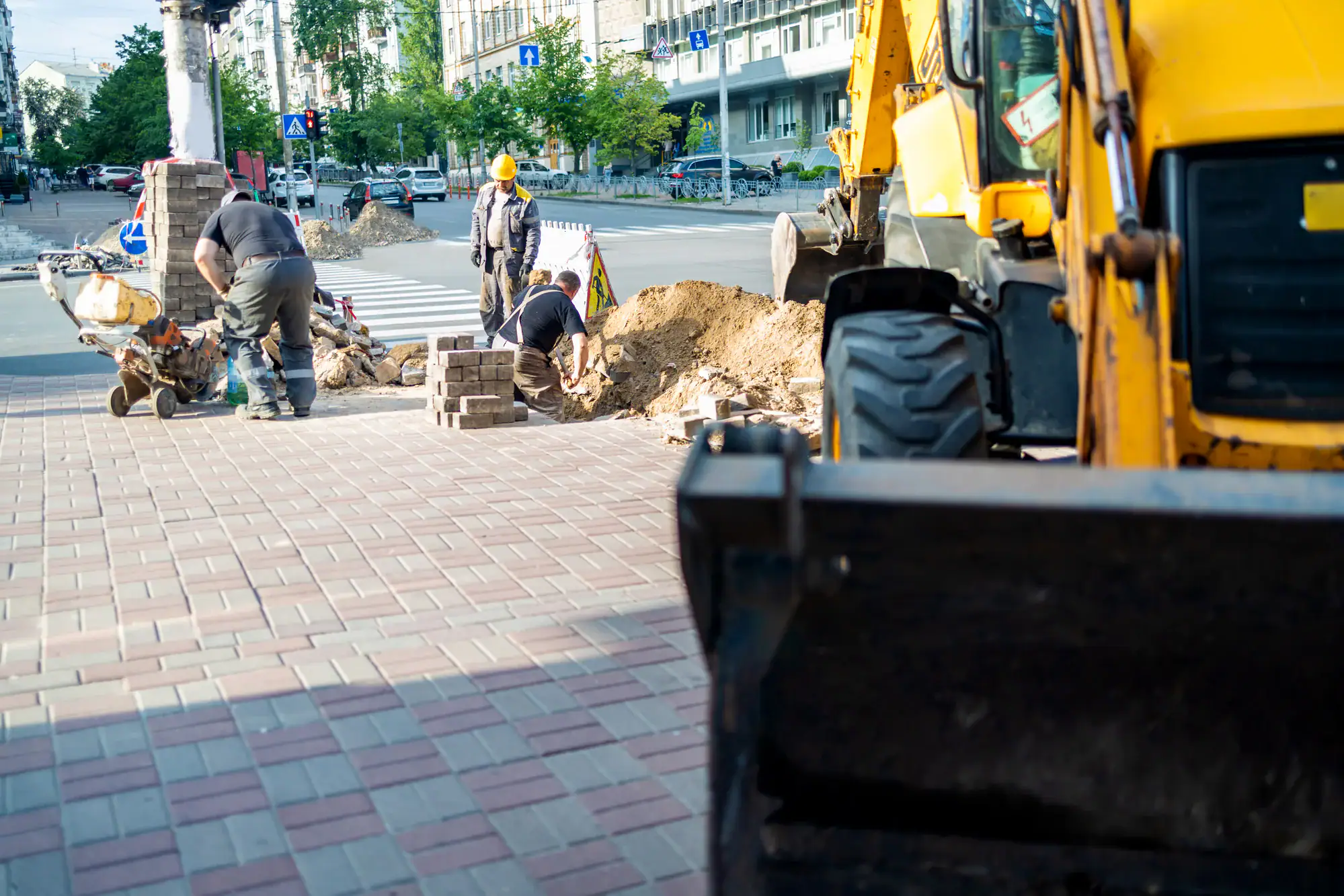
You’re looking at a piece of ground where something needs to be built. Maybe it’s a foundation for your new home, a driveway that won’t heave after the first winter, or site prep for a commercial project. Whatever it is, the excavation work that happens before anything else shows up will determine whether your project stands strong for decades or starts cracking before you’ve made your first mortgage payment.
Excavating in Albany County isn’t the same as excavating in warmer climates. The freeze-thaw cycles here don’t forgive shortcuts. Clay-heavy soil doesn’t drain like sand. And when contractors skip the details that matter—proper depth, compaction, drainage—you’re the one who pays for it later. Let’s walk through what actually goes into professional excavating and paving work, and why getting it right the first time matters more than you might think.
What Professional Excavating Actually Involves
Excavating is the process of removing earth to create space for construction—foundations, driveways, utility lines, drainage systems, or site preparation. It’s the first step in nearly every building project, and it’s where most problems start if it’s done wrong.
Professional excavating means more than showing up with heavy equipment and digging a hole. It requires understanding soil conditions, managing water, working around existing utilities, and preparing a stable base that won’t shift when the ground freezes. In upstate New York, that last part isn’t optional—it’s the difference between a foundation that lasts and one that cracks.
The work involves demolition and removal of existing surfaces, grading to establish proper elevations and drainage, excavation to the required depth for your project, base preparation with the right aggregate materials, and compaction to create a stable surface. Miss any of these steps, and you’re building on a foundation that’s already compromised.
Excavation Cost Per Square Foot and Project Pricing
Excavation costs in Albany County typically run between $3.94 and $7.68 per square foot for driveway work, though the total project cost depends on several factors. Most residential excavation projects fall between $1,500 and $6,300, with an average around $3,978 for standard work.
Contractors price excavation work in different ways depending on the project. Some charge by cubic yard—typically $2.50 to $15.00 per cubic yard—which accounts for the volume of earth that needs to be moved. Others use hourly rates ranging from $100 to $300 per hour, including equipment and operator. For larger projects like foundation excavation, many contractors provide a flat project rate after evaluating the site in person.
What drives these costs? Soil type matters significantly. Rocky or clay-heavy soil adds $200 to $1,200 to excavation work compared to loose, sandy soil. Depth requirements increase costs—shallow excavation for a patio runs far less than deep foundation work that needs to go 42 to 48 inches below grade to reach below the frost line. Site accessibility affects pricing too. If heavy equipment can’t easily reach your property, expect to pay more for smaller machines and additional labor time.
The average cost of asphalt per square foot for a completed driveway, including excavation, base preparation, and paving, typically runs $5 to $12 per square foot. That’s significantly less than concrete at $6 to $15 per square foot, though concrete lasts longer. Tar and chip driveways cost $2 to $5 per square foot installed—a middle ground between gravel and asphalt that works well for rural properties and long driveways.
Don’t forget the hidden costs that catch people off guard. Permits typically run $50 to $200 depending on your municipality. Soil testing adds $150 to $400 but reveals problems before you start digging. Utility location services are often free through 811, but private utility locating for lines on your property costs a few hundred dollars. Hauling away excess soil runs $8 to $25 per cubic yard depending on distance to the disposal site.
Smart property owners get at least three detailed paving quotes before choosing a contractor. Those quotes should break down costs by task—excavation, grading, base material, compaction, hauling—not just provide one lump sum. Ask how they’re measuring the work and what’s included. A contractor who can’t explain their pricing probably hasn’t thought through your project carefully enough.
The Excavation Process from Start to Finish
Professional excavation follows a specific sequence, and skipping steps or rushing through them creates problems that show up later. Here’s what actually happens on a properly managed excavation project in Albany County.
First comes site evaluation and planning. Before any equipment arrives, we need to understand your soil type, existing drainage patterns, utility locations, and project requirements. We call 811 to mark public utilities and may recommend private utility locating if you have underground lines for pools, sheds, or landscape lighting. This step prevents the kind of disasters that happen when someone hits a gas line or severs a water main.
Demolition and removal comes next if you’re replacing an existing driveway or working on a site with old pavement. Heavy machinery—bobcats, excavators, dump trucks—breaks up and hauls away the old surface. The debris gets recycled when possible. Asphalt and concrete from demolition often get crushed and reused as base material for new projects.
Then the actual excavation begins. We remove soil to the depth required for your project. For foundations in upstate New York, that means digging deep enough to place footings below the frost line—typically 42 to 48 inches in Saratoga and Warren Counties. For driveways, excavation depth depends on the base thickness needed and existing grade. The excavator creates the rough shape of your project, establishing the footprint and removing unstable soil until we reach firm ground.
Grading shapes the excavated area to match design elevations and establish drainage. This is where experience with local conditions matters. Albany County’s clay-heavy soil doesn’t drain like sand, so proper grading creates subtle slopes that move water away from foundations and prevent pooling. We use laser levels and GPS equipment to ensure accuracy. Even a small grading mistake can send water toward your basement instead of away from it.
Base preparation follows grading. We add aggregate material—typically crushed stone or gravel—in layers. Each layer gets compacted before the next one goes down. Compaction is critical. Loose base material settles over time, causing the pavement or structure above it to crack and shift. We use vibratory compactors and proof rolling—driving heavy equipment over the base to test its stability—to ensure the base can handle the load it’ll carry.
For asphalt paving projects, the base serves as a frost barrier. Properly compacted aggregate doesn’t hold water, so it doesn’t expand when temperatures drop. That’s what protects your driveway from the freeze-thaw heaving that destroys improperly prepared surfaces every winter.
Final inspection and quality control wrap up the excavation phase. We verify that elevations match the plan, drainage works as intended, and the base is stable and ready for the next phase of construction. On foundation projects, this is when building inspectors often come out to approve the work before concrete gets poured.
The entire excavation process for a residential foundation typically takes one to two weeks from start to backfill, depending on size, weather, and complexity. Driveway excavation moves faster—often completed in a few days for standard residential work. Commercial projects with larger footprints and more complex drainage requirements take longer.
Asphalt Paving: Installation, Costs, and What to Expect
Asphalt paving starts with excavation, and the quality of that excavation work determines how long your pavement lasts. You can’t pour quality asphalt over a poorly prepared base and expect good results. The real work happens below the surface.
We know that proper excavation prevents the cracking, settling, and water damage that show up within the first few years on rushed jobs. The excavation depth for asphalt driveways typically ranges from 6 to 12 inches depending on soil conditions and expected traffic loads. That depth accommodates the base material and asphalt layers needed for a durable surface.
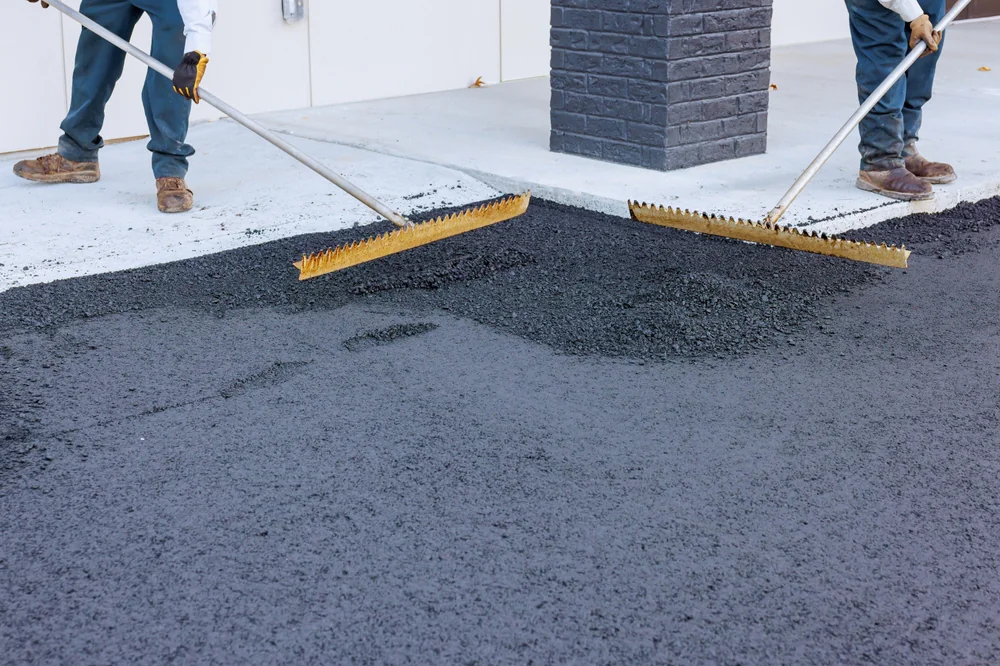
The asphalt installation process starts with removing existing material if you’re replacing an old driveway. Then excavation to the proper depth, followed by grading to establish drainage away from buildings and toward appropriate areas. Base installation comes next—usually 4 to 8 inches of compacted aggregate. Finally, the asphalt itself goes down in layers: a binder course of larger aggregate mixed with asphalt, then a surface course of finer material that creates the smooth, finished appearance.
Asphalt Cost and Installation Timeline
Asphalt installation cost for a complete driveway, including excavation and base preparation, runs $5 to $12 per square foot in Albany County. That breaks down to roughly $2,500 to $6,000 for a standard two-car driveway of 400 to 500 square feet. Larger driveways or those requiring significant excavation and grading work cost more.
The asphalt cost question often leads to comparisons with other paving materials. Asphalt typically costs less upfront—about $5,000 average for installation compared to $6,500 for concrete. But the long-term cost calculation gets more complex. Asphalt requires sealing every 3 to 5 years at $400 to $800 per treatment. Over 30 years, those maintenance costs add up. Concrete costs more initially but requires less frequent maintenance, potentially making it more cost-effective over time if you’re planning to stay in your home long-term.
Residential asphalt paving projects typically take one to three days for standard driveways once excavation is complete. The asphalt needs to cure for 24 to 48 hours before you can drive on it, and you should avoid parking heavy vehicles in the same spot for the first week.
Asphalt paving price per square foot varies based on thickness, aggregate quality, and site conditions. A standard 2-inch surface course over a proper base costs less than a thicker installation designed for heavy vehicle traffic. Recycled asphalt cost runs lower than virgin asphalt—crushed asphalt from old pavement costs $10 to $20 per ton compared to $40 to $80 per ton for new hot-mix asphalt. Some contractors offer recycled asphalt as a cost-saving base material, though it doesn’t provide the same finished appearance as new asphalt.
The average price for asphalt fluctuates with oil prices since asphalt is petroleum-based. When crude oil prices rise, asphalt costs follow. That’s why getting multiple quotes from local asphalt paving companies during the same timeframe gives you a better sense of fair market pricing than comparing quotes months apart.
Residential Asphalt Paving and Maintenance Requirements
Residential asphalt paving differs from commercial work in scale but not in the fundamentals. Your driveway still needs proper excavation, a stable base, correct asphalt thickness, and regular maintenance to reach its full lifespan of 15 to 30 years.
The biggest mistake homeowners make? Skipping asphalt sealcoating. This protective layer should be applied 6 to 12 months after installation, then every 3 to 5 years after that. Sealcoating protects the asphalt from UV damage, prevents water infiltration, and fills small cracks before they become bigger problems. It costs $400 to $800 for a standard driveway—far less than the $8 to $15 per square foot you’ll pay for asphalt replacement when neglected pavement fails prematurely.
Asphalt sealcoating isn’t just about appearance, though a freshly sealed driveway does look significantly better than faded, weathered asphalt. The real value is protection. Asphalt is petroleum-based, and those oils oxidize over time when exposed to sun and weather. Oxidation makes the surface brittle, leading to cracking. Sealcoating slows that process and extends the life of your pavement.
Beyond sealcoating, residential asphalt paving requires basic maintenance. Keep the surface clean—dirt and debris trap moisture. Fill cracks promptly before water gets underneath and causes more damage during freeze-thaw cycles. Avoid parking heavy vehicles in the same spot repeatedly, especially during hot weather when asphalt is softer. And be careful with sharp objects like snowplow blades that can gouge the surface if used too aggressively.
Asphalt vs Concrete: Which Material Makes Sense for Your Project
The asphalt vs concrete decision comes down to budget, climate, and how long you plan to own the property. Both materials work for driveways, but they perform differently in Albany County’s freeze-thaw conditions.
Asphalt handles cold weather better. It’s flexible, so it expands and contracts with temperature changes without cracking as easily as concrete. When temperatures drop below freezing and the ground shifts, asphalt moves with it. Concrete is rigid and more prone to cracking in extreme cold, especially when de-icing salt accelerates surface deterioration. For upstate New York winters, that flexibility matters.
Concrete lasts longer—30 to 40 years compared to 15 to 30 for asphalt—but it costs more upfront and repairs are more expensive when damage does occur. Asphalt is easier to patch and resurface. When an asphalt driveway starts showing its age, you can often add a new surface layer for a fraction of the cost of complete replacement.
Is Asphalt Cheaper Than Concrete?
Is asphalt cheaper than concrete? Yes, for initial installation. Asphalt driveways cost an average of $5,000 to $5,250 compared to $6,400 to $6,500 for concrete. That $1,000 to $1,500 difference matters when you’re managing a tight budget.
But what is cheaper concrete or asphalt over the long term? That calculation depends on maintenance costs and lifespan. Asphalt needs sealcoating every 3 to 5 years at $400 to $800 per application. Over 30 years, you’re looking at 6 to 10 sealcoating treatments—$2,400 to $8,000 in maintenance costs. Add in the possibility of resurfacing around year 15 to 20 at $2 to $5 per square foot, and your total cost for asphalt over 30 years might reach $8,000 to $10,000.
Concrete requires less maintenance—occasional cleaning and optional sealing every 5 to 7 years. Over 30 years, concrete maintenance might total $1,000 to $2,000. Add the higher initial cost of $6,500, and you’re at $7,500 to $8,500 total over 30 years—potentially less than asphalt despite the higher upfront price.
The decision isn’t purely financial. Asphalt performs better in freeze-thaw climates. Concrete offers more customization options with colors, stamps, and finishes. Asphalt is easier to repair when damage occurs. Concrete provides a lighter surface that stays cooler in summer heat.
For Albany County properties, asphalt typically makes more sense unless you’re prioritizing maximum lifespan and aesthetic options over cold-weather performance. The flexibility that helps asphalt survive winter freeze-thaw cycles outweighs the maintenance requirements for most homeowners in this region.
Cost of Asphalt vs Concrete: Breaking Down the Numbers
The cost of asphalt vs concrete breaks down differently depending on whether you’re looking at installation, maintenance, or total lifetime cost. Here’s what the numbers actually look like for a standard 500-square-foot driveway in Albany County.
Asphalt installation: $2,500 to $6,000 ($5 to $12 per square foot). Concrete installation: $3,000 to $7,500 ($6 to $15 per square foot). Right there, concrete costs $500 to $1,500 more for the same project.
Maintenance over 30 years changes the calculation. Asphalt sealcoating every 3 to 5 years at $400 to $800 per treatment adds $2,400 to $8,000. Potential resurfacing at year 15 to 20 adds another $1,000 to $2,500. Total asphalt cost over 30 years: $5,900 to $16,500.
Concrete maintenance is lighter—optional sealing every 5 to 7 years at $300 to $600 per treatment, plus occasional crack repair. Total concrete cost over 30 years: $4,500 to $11,100.
These numbers assume proper installation and regular maintenance for both materials. Skip the sealcoating on asphalt, and you’ll need replacement sooner. Neglect concrete crack repair, and you’ll face expensive damage from water infiltration and freeze-thaw expansion.
The cost comparison also depends on your property’s specific conditions. Steep slopes, poor drainage, or unstable soil increase costs for both materials but affect them differently. Asphalt’s flexibility handles minor settling better. Concrete requires more careful base preparation to prevent cracking from uneven support.
Tar and Chip Driveway Cost and Installation
Tar and chip driveways—also called chip seal or macadam—offer a middle ground between gravel and asphalt. The tar and chip driveway cost runs $2 to $5 per square foot, making it roughly 30% to 40% less expensive than asphalt paving. For a standard 600-square-foot driveway, that translates to $1,200 to $3,000 compared to $3,000 to $7,200 for asphalt.
The process involves spreading hot liquid asphalt over a prepared base, then covering it with crushed stone or aggregate that gets rolled into the asphalt and compacted. The result is a textured surface with excellent traction and a more rustic appearance than smooth asphalt.
Tar and chip works particularly well for long rural driveways where the lower cost per square foot makes a significant difference on large areas. It’s also a good choice when you want better stability and less maintenance than gravel but don’t need the smooth surface of traditional asphalt.
Chip Seal Driveway Cost: Single vs Double Application
Chip seal driveway cost depends on whether you choose single or double application. Single chip seal runs $1.50 to $2.50 per square foot and works well for low-traffic driveways and rural properties. The contractor applies one layer of asphalt emulsion followed by aggregate, then compacts it.
Double chip seal costs $2.50 to $4.00 per square foot and provides extra durability. The process involves two complete applications—first layer of emulsion and larger aggregate, compacted, then a second layer with finer aggregate. The double application creates a thicker, more protective surface that handles heavier traffic and lasts longer.
The chip and seal driveway cost also varies based on aggregate choice. Standard crushed stone costs less than specialty aggregates like granite or colored stone. Local materials keep costs down—imported stone adds transportation expenses that increase your total project cost.
Tar and chip offers some advantages over traditional asphalt. It costs less, installs quickly, provides excellent traction in all weather conditions, and requires less maintenance. Small cracks often self-seal as the tar softens in warm weather and fills gaps. The stone aggregate comes in various colors, giving you aesthetic options beyond standard black asphalt.
The downsides? Tar and chip doesn’t last as long as asphalt—typically 7 to 10 years compared to 15 to 30 for asphalt. Snowplows can damage the surface if operators aren’t careful, ripping up stones and leaving bare spots. And not all paving contractors have experience with chip seal installation, so finding a qualified contractor takes more research than finding standard asphalt paving companies.
Asphalt Sealing and Driveway Sealing: Why It Matters
Asphalt sealing is the single most important maintenance task for extending the life of your driveway. Skip it, and you’ll watch your pavement deteriorate years before it should. Stay on top of it, and you’ll get the full 20 to 30 year lifespan that properly maintained asphalt can deliver.
Driveway sealing protects asphalt from the elements that break it down. UV rays from the sun oxidize the petroleum binders in asphalt, making the surface brittle. Water infiltrates small cracks and expands when it freezes, turning hairline cracks into major damage. Oil and gas from vehicles degrade the asphalt surface. De-icing salt accelerates deterioration. Sealcoating creates a protective barrier against all of these threats.
The timing matters. New asphalt needs 6 to 12 months to cure before the first sealcoating application. Sealing too early traps moisture and gases that need to escape during the curing process. After that initial application, reseal every 3 to 5 years depending on traffic, weather exposure, and the quality of the previous sealcoating job.
Asphalt Sealcoating Process and Cost
Asphalt sealcoating costs $0.15 to $0.35 per square foot for materials, with total project costs ranging from $400 to $800 for a standard residential driveway when you include labor. That’s a small investment compared to the $5,000 to $12,000 you’ll spend on replacement when neglected asphalt fails.
The sealcoating process starts with cleaning. The driveway needs to be completely free of dirt, debris, oil stains, and vegetation. Pressure washing removes surface contaminants. Oil spots get treated with a degreaser or primer—sealcoat won’t adhere properly over oil. Cracks wider than a quarter inch get filled before sealcoating begins.
Then the sealcoat application. We use commercial-grade sealers—typically coal tar or asphalt emulsion based. We apply it with squeegees or spray equipment, working in two thin coats rather than one thick coat. Thin coats dry faster and bond better. The entire process takes a day, and you need to stay off the driveway for 24 to 48 hours while it cures.
Some contractors cut corners with cheap sealer or single-coat applications. You’ll pay less upfront but get protection that doesn’t last. Quality sealcoating uses proper materials, includes crack filling, and applies two coats for maximum protection. It’s worth paying for the job done right.
Asphalt Driveway Contractors: How to Find Reliable Paving Companies
Finding reliable asphalt driveway contractors in Albany County means looking past the lowest bid and evaluating who’s actually going to show up, do the work properly, and stand behind it when you call with questions.
The best contractors share certain characteristics. They’ve been in business locally for years—long enough that their reputation matters. They own their equipment instead of renting it, which means they have the resources to handle your project without delays. They provide detailed written estimates that break down costs by task. They can explain their process and answer questions without getting defensive. And they’re properly licensed and insured, which you can verify before signing anything.
Red flags? Contractors who demand large upfront payments before starting work. Estimates that seem too good to be true compared to other bids. Inability to provide references from recent local projects. Vague timelines or reluctance to commit to a schedule. Pressure tactics pushing you to sign immediately. These are the contractors who disappear mid-project or deliver substandard work that fails within a few years.
Local Asphalt Paving Companies vs National Chains
Local asphalt paving companies offer advantages that national chains can’t match. When your driveway develops a problem, you can reach the owner directly instead of navigating a corporate phone tree. Local contractors depend on their reputation in the community—we can’t afford to deliver poor work and disappear. We understand regional conditions like Albany County’s freeze-thaw cycles and clay soil. And we’re more likely to stand behind our work years later when you need service.
National chains have their place. They often have more resources, standardized processes, and corporate oversight. But you sacrifice direct communication with decision-makers. The crew working on your property might be subcontractors with no connection to the company name on the truck. And when problems arise, you’re dealing with corporate customer service instead of the person who actually did the work.
For residential projects in Albany County, local owner-operated contractors typically deliver better results. You get direct access to the person responsible for your project. You work with crews who understand local conditions. And you build a relationship with a contractor who’ll be around when you need future work or have questions about maintaining your investment.
Getting an Accurate Paving Quote
A paving quote should provide enough detail that you understand exactly what you’re paying for and what’s not included. Vague estimates with a single lump sum don’t give you that information.
Quality quotes break down costs by task: excavation and site prep, base material and installation, asphalt material and paving, grading and drainage work, and any additional services like sealcoating or crack filling. They specify materials—what type of asphalt, what base depth, what aggregate. They include a timeline with start and completion dates. And they outline payment terms—how much upfront, when progress payments are due, when final payment is expected.
Compare at least three quotes before deciding. The lowest bid isn’t automatically the best value if it’s cutting corners on base preparation or using lower-quality materials. The highest bid isn’t necessarily better quality—it might just include profit margins that local competition won’t support. Look for the quote that provides the most detail, comes from a contractor with solid local references, and falls in the middle of the pricing range.
Ask questions about anything you don’t understand. How deep will they excavate? What base thickness are they proposing? What asphalt thickness? How will they handle drainage? What happens if they encounter unexpected conditions like rock or poor soil? A contractor who can’t answer these questions clearly probably hasn’t thought through your project carefully enough.
Professional Paving Company vs Quality Paving Company: What’s the Difference
The terms “professional paving company” and “quality paving company” get thrown around, but what do they actually mean? Anyone can claim professionalism or quality. The difference shows up in how we operate.
A professional paving company handles business properly. We’re licensed and insured. We provide written estimates and contracts. We show up when scheduled. We communicate clearly about timelines and any issues that arise. We clean up the job site when finished. These are basics, but plenty of contractors fail at one or more of them.
A quality paving company goes further. We don’t just meet minimum standards—we exceed them. Our excavation goes deep enough to protect against freeze-thaw damage. Our base preparation includes proper compaction testing, not just eyeballing it. We use quality materials instead of cutting costs with inferior asphalt or thin applications. Our work passes inspection the first time because we know the codes and follow them.
Finding a Reliable Paving Company in Albany County
A reliable paving company shows consistency. We deliver what we promise, when we promise it, at the price we quoted. That reliability comes from experience, proper resources, and a business model that depends on repeat customers and referrals rather than one-time sales.
Look for contractors who’ve been operating locally for at least 10 years. A decade in business means we’ve survived economic downturns, seasonal fluctuations, and the natural winnowing that eliminates contractors who don’t deliver quality work. It means we have a track record you can verify through references and completed projects you can see.
Check that we own our equipment. Contractors who own excavators, pavers, compactors, and trucks have made significant investments in our business. We’re not fly-by-night operations renting equipment for your job then disappearing. Equipment ownership also means we can handle your project on our schedule instead of waiting for rental availability.
Verify licensing and insurance before signing anything. In New York, you can check contractor licensing through state and local databases. Insurance verification takes a phone call to the contractor’s insurance company—ask for a certificate of insurance naming you as additional insured for the duration of your project. Contractors who resist providing this documentation aren’t worth the risk.
Asphalt Replacement Cost: When Repair Isn’t Enough
Asphalt replacement cost runs $8 to $15 per square foot for complete removal and replacement of a failed driveway. That’s significantly more than the $5 to $12 per square foot for new installation because you’re paying for demolition and disposal of the old pavement in addition to the new work.
When does asphalt need replacement instead of repair? Widespread cracking covering more than 30% of the surface. Major settling or heaving creating uneven areas that hold water. Base failure causing the pavement to flex and move under traffic. Extensive deterioration where the surface is crumbling and aggregate is exposed. These conditions can’t be fixed with patching or resurfacing—you need to start over.
The replacement process mirrors new installation. Demolition and removal of old asphalt, excavation to verify base condition and address any problems, new base installation if the existing base has failed, grading to correct drainage issues, and new asphalt installation. Done properly, replacement gives you another 20 to 30 years of service.
Asphalt Paving Companies Near My Location: Why Local Matters
Searching for “asphalt paving companies near my location” makes sense for several reasons beyond convenience. Local contractors understand your specific climate challenges. We know Albany County’s freeze-thaw cycles, clay soil conditions, and drainage requirements. We’re familiar with local building codes and permit processes. And we’re available when you need follow-up service or have questions years after installation.
Distance matters for project costs too. Contractors traveling from distant areas charge more for mobilization—getting their equipment to your site. Local companies already operate in your area, so those costs stay lower. We can also respond faster when you need emergency work or have scheduling flexibility.
Local contractors build our business on reputation in the community. We can’t afford to deliver poor work and disappear—our next customer might be your neighbor, and word travels fast in smaller communities. That accountability drives better service than you’ll get from distant contractors who’ll never work in your area again.
When evaluating local options, look for contractors serving Albany, Rensselaer, Saratoga, and Warren Counties specifically. These are the companies that understand upstate New York conditions and have built our processes around delivering work that survives the region’s challenging climate.
Paving Specialist Expertise: Why Experience with Local Conditions Matters
A paving specialist with 25+ years of experience in upstate New York approaches your project differently than a contractor who learned the trade in warmer climates. We know that excavation depth matters more here because frost penetrates deeper. We understand that clay soil requires different drainage solutions than sandy soil. We’ve seen what happens when contractors cut corners on base preparation, and we’ve fixed enough failed driveways to know which shortcuts cause which problems.
This local expertise shows up in the details. Proper frost line depth for foundations. Adequate base thickness for driveways that handle freeze-thaw cycles. Drainage grading that accounts for clay soil’s poor percolation. Asphalt mix specifications that perform in extreme temperature swings. These aren’t things you learn from a manual—they come from years of working in these specific conditions.
Choosing the Right Excavating and Paving Partner for Your Albany County Project
Professional excavating and paving set the foundation for everything that comes after. Proper depth below the frost line, correct base preparation, effective drainage, thorough compaction—these aren’t optional extras. They’re the difference between a driveway that lasts twenty years and one that starts cracking after the first winter.
In Albany County, you need contractors who understand freeze-thaw cycles, clay soil, and the specific challenges of building in upstate New York. You need someone who answers the phone when you call, shows up when they say they will, and does the work right instead of cutting corners to move on to the next job. You need direct access to decision-makers, not corporate phone trees and project managers who can’t answer your questions.
We’ve been handling excavating, asphalt paving, and foundation work in Saratoga and Warren Counties for over 25 years. Owner-operated means you talk to the person who’s actually responsible for your project from first contact through final completion. Available year-round, including winter foundation work when other contractors shut down. Transparent pricing without hidden fees, emergency response capability when urgent needs arise, and the kind of straightforward communication that comes from caring about our reputation in a community where word travels fast.