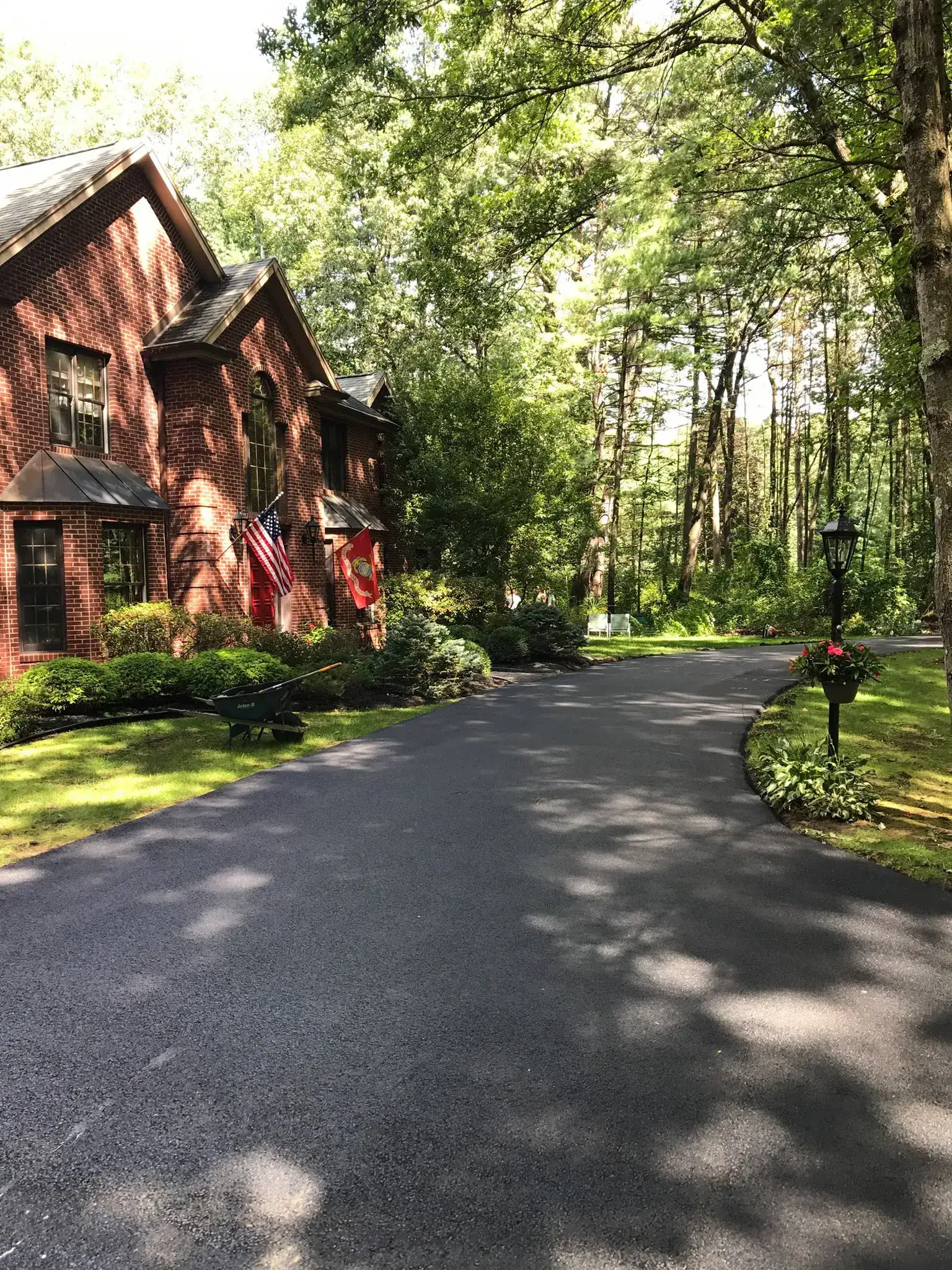
Asphalt paving company also offering concrete work, excavating, and snow removal services.
Contact Info
-
130 Co Rd 70
Stillwater, NY 12170 - Call: 518-935-3068
- Text: 518-935-3068
- Mon - Sun: 7am - 7pm
Contact Info
Discover expert-backed maintenance strategies that extend asphalt life by years and save thousands in repair costs for New York property owners.
Asphalt doesn’t fail overnight. It deteriorates gradually through exposure to elements that New York delivers in abundance—freeze-thaw cycles, UV radiation, moisture infiltration, and temperature swings that stress the binder holding everything together.
When water seeps into small cracks and freezes, it expands with about 30,000 pounds of pressure per square inch. That’s enough force to widen hairline cracks into structural problems. This happens repeatedly throughout winter, and each cycle does more damage than the last.
Without maintenance, you’re looking at a typical lifespan of 10 to 15 years. With a solid plan, that same asphalt can deliver 25 years or more. The difference isn’t luck—it’s understanding what your pavement needs and when it needs it.
Freeze-thaw damage is the silent killer of asphalt in upstate New York. It starts small—a hairline crack you barely notice. Water finds its way in because that’s what water does. When temperatures drop below 32 degrees, that water freezes and expands by roughly 10%.
The expansion forces the crack wider. When it thaws, more water seeps deeper into the now-larger opening. The cycle repeats daily during spring and fall when temperatures cross the freezing point multiple times. Each freeze pushes the damage further into your pavement’s base layers.
This isn’t just surface-level cosmetic damage. Once water reaches the base course beneath your asphalt, it compromises the foundation. You’ll see the pavement heave upward during freezing, then sink and crack when it thaws. Potholes form in these weakened areas, and they grow rapidly under traffic and additional freeze-thaw cycles.
The damage compounds quickly. What starts as a small crack in October can become a pothole by March. Property owners who address cracks before winter avoid this progression entirely. Those who wait face repair bills that are 5 to 10 times higher than simple crack sealing would have cost.
Temperature fluctuations also make the asphalt itself more brittle. Cold weather hardens the binder that holds aggregate together, reducing flexibility. When heavy vehicles drive over brittle asphalt, it cracks more easily than it would during warmer months. This is why you’ll often see more damage appear in spring—it’s the cumulative effect of winter stress finally showing itself.
Most property owners only look at their asphalt when something’s obviously wrong. By that point, you’re past prevention and into damage control.
Regular inspections—at minimum twice per year—let you catch problems while they’re still manageable. A crack that’s a quarter-inch wide in May might be an inch wide by November. Filling it early takes minutes and costs next to nothing. Waiting until it’s compromised the base course means you’re looking at excavation, base repair, and patching that costs hundreds instead of dollars.
Inspections also reveal drainage issues before they cause serious damage. Standing water is one of the fastest ways to destroy asphalt. It seeps into any available crack, weakens the base, and accelerates deterioration from below. During an inspection, you’ll notice where water pools after rain. Addressing drainage problems early—whether through regrading, installing drains, or adjusting slopes—prevents the kind of base failure that requires complete reconstruction.
You’re also checking for surface oxidation. Fresh asphalt is deep black. As it ages and oxidizes from sun exposure, it fades to gray. That color change isn’t just cosmetic—it indicates the binder is breaking down and the surface is becoming more porous and vulnerable. Catching oxidation early means sealcoating can restore protection before cracks develop.
Traffic patterns matter too. You might notice certain areas wearing faster than others—where vehicles turn, where heavy trucks park, or where tires consistently track. These high-stress zones need attention sooner than low-traffic areas. An inspection identifies these spots so you can prioritize maintenance where it’s needed most.
The inspection itself doesn’t require special equipment. Walk your driveway or parking lot. Look for cracks, color changes, rough or pitted surfaces, areas where aggregate is coming loose, and any spots where water doesn’t drain properly. Take notes or photos so you can track changes over time. This simple habit is the difference between staying ahead of problems and constantly reacting to failures.
Want live answers?
Connect with a Morgan Construction expert for fast, friendly support.
Sealcoating creates a protective barrier between your asphalt and everything trying to destroy it—UV rays, water, oil, chemicals, and oxidation. It’s not optional if you want your pavement to last.
The timing matters as much as doing it at all. New asphalt needs 6 to 12 months to cure before the first sealcoat application. Applying too early traps oils that need to evaporate, leaving you with pavement that stays too soft. After that initial application, plan on resealing every 2 to 3 years.
That timeline shifts based on your specific situation. High-traffic areas wear through sealcoat faster. Parking lots with constant vehicle movement might need attention every 2 years, while a residential driveway with light use can go 3 years between applications.
Sealcoat needs specific conditions to cure properly. Temperature and weather determine whether you get a durable protective layer or a waste of time and money.
The ideal window is late spring through early fall. You need air temperatures consistently above 50 degrees Fahrenheit, preferably in the 60 to 80 degree range. The asphalt surface should be warm and completely dry. Rain within 24 hours before or after application will ruin the bond and leave you with a sealcoat that peels or wears off prematurely.
In upstate New York, that typically means May through September, with June through August being optimal. Avoid the extreme heat of mid-summer when temperatures exceed 90 degrees—the sealcoat can dry too quickly and not bond properly. Early fall works well if you can guarantee dry weather and moderate temperatures, but once leaves start falling, you’re risking contamination of the fresh sealcoat.
Humidity plays a role too. High humidity slows the curing process. If you’re scheduling professional sealcoating, check the forecast for several days of dry, moderate weather. The surface needs at least 24 hours to cure before any rain, and 48 hours is better. Traffic should stay off the surface for at least 24 hours as well, sometimes longer depending on temperature and humidity.
Morning application often works best. It gives the sealcoat a full day to begin curing before evening temperatures drop. Starting late in the day means the sealcoat sits through cooler nighttime temperatures, which can extend curing time and leave the surface vulnerable to dew or unexpected weather changes.
Don’t wait until you see significant damage to schedule sealcoating. If your asphalt is fading from black to gray, if small cracks are appearing, or if it’s been 3 years since the last application, get it on the calendar for the next suitable weather window. Proactive sealcoating prevents the damage that reactive repairs have to fix.
Your asphalt will tell you when it needs protection. You just have to know what to look for.
Color is the most obvious indicator. Fresh or recently sealed asphalt is rich black. As the sealcoat wears and the asphalt oxidizes, that color fades to gray. The grayer it gets, the more vulnerable the surface becomes. If your driveway or parking lot looks washed out compared to when it was new, sealcoating is overdue.
Surface texture changes too. Run your hand across the asphalt. It should feel relatively smooth, with aggregate held firmly in place by the binder. If it feels rough, gritty, or if small stones are coming loose, the binder is deteriorating. Sealcoat restores that protective layer and stops the aggregate from raveling away.
Small cracks are another clear sign. Hairline cracks mean the surface is drying out and becoming brittle. Once cracks appear, water infiltration accelerates deterioration. Sealcoating fills these minor cracks and prevents them from widening, but it only works on small surface cracks—not structural failures or deep cracks that need proper filling first.
Check for oil and chemical stains. If spills are penetrating the surface and leaving dark spots that won’t wash away, your sealcoat is gone. Fresh sealcoat creates a barrier that prevents petroleum products from soaking into the asphalt and breaking down the binder.
Water beading is a good test. After a light rain, look at how water behaves on the surface. If it beads up and runs off, your sealcoat is still working. If water soaks into the asphalt instead of shedding, you’ve lost that protective barrier. This is especially important before winter—you want water running off, not seeping in where it can freeze and cause damage.
Time is a factor even if everything looks fine. If it’s been 3 years since your last sealcoat and you’re in a moderate-use situation, don’t wait for visible damage. Preventive sealcoating is cheaper and more effective than waiting until problems force your hand.
Asphalt maintenance isn’t complicated, but it is necessary. The strategies that work are the ones you actually implement—regular inspections, timely crack repairs, sealcoating on schedule, and addressing drainage before it becomes a structural problem.
The difference between pavement that lasts 15 years and pavement that delivers 25 is consistency. Small investments in prevention save you from large expenses in replacement. Most property owners know this intellectually but wait until damage forces action. By then, you’re paying more to fix what could have been prevented.
If you’re looking at cracks, fading, or you simply haven’t had your asphalt evaluated in years, now’s the time to address it. We’ve been helping property owners across the region protect their asphalt investments for over 25 years with honest assessments and quality work.
Summary:
Share: